Weather and astronomical events remind us just how connected our world is to the universe, don’t they? From stunning solar eclipses to sudden snowstorms, these phenomena aren’t just beautiful—they’re clues about our planet’s behavior and space’s mysteries. Think about how auroras dance across polar skies or a comet’s tail streaks past Earth—each event offers a chance to understand nature’s forces. Ready to explore what’s happening above and around us? There’s much more than meets the eye.
Solar Eclipses: Nature’s Disappearing Act
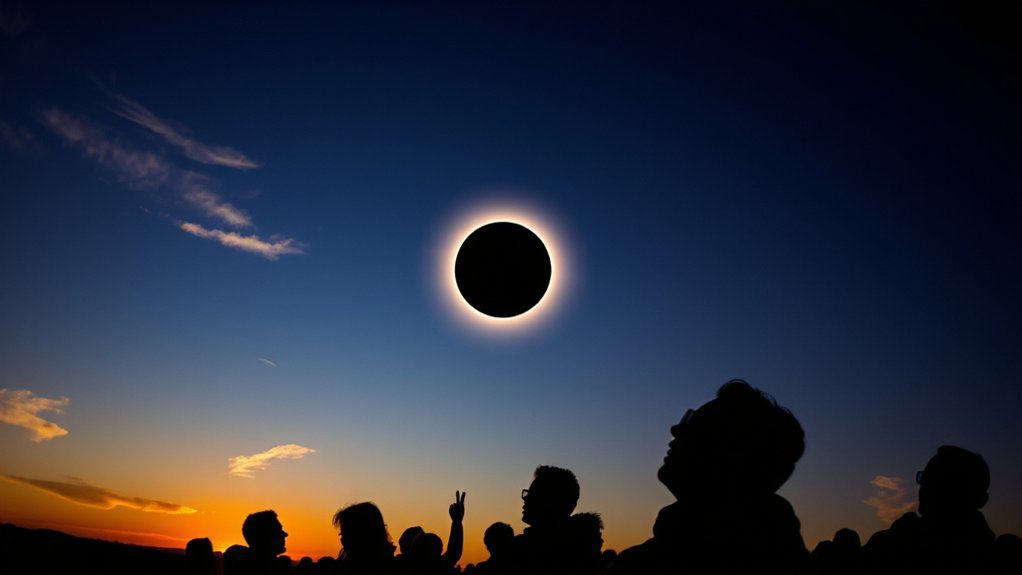
Have you ever looked up at the sky and wondered what it would be like if suddenly, the sun disappeared? Solar eclipses offer that sense of wonder—nature’s disappearing act.
During an eclipse, the Moon slides between Earth and the Sun, blocking out its light. It’s a rare, awe-inspiring moment that sparks curiosity and questions.
Researchers, especially in Corona Studies, observe how the sun’s atmosphere reacts during these events, uncovering secrets about solar storms and magnetic fields.
But it’s not just scientists who are intrigued; animal behavior changes too. Birds might go quiet, and nocturnal creatures could become active, confused by the sudden darkness. It’s like nature hits pause, giving us a strange, temporary glimpse into a world without sunlight.
These moments remind us how interconnected life is with the sun, and how much we still have to learn from the sky’s dramatic performances.
The Aurora Borealis and Aurora Australis
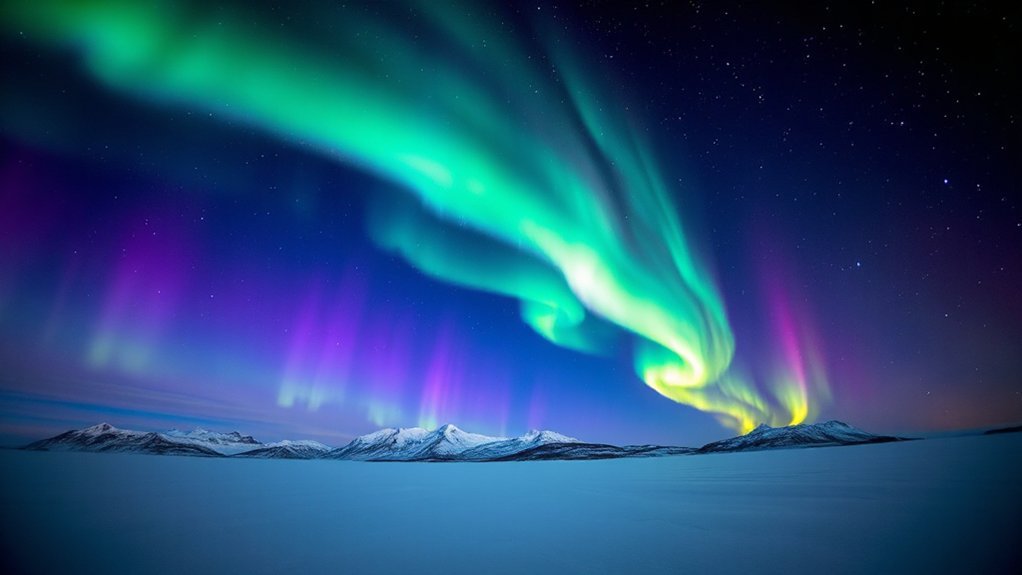
After watching a solar eclipse, it’s impossible not to feel amazed by how brief yet powerful those moments of darkness are.
The same goes for the mesmerizing Aurora Borealis and Aurora Australis—nature’s own light shows.
These shimmering curtains of color happen when Ionospheric Dynamics kick into gear, guiding charged particles from the sun toward Earth’s poles.
Once they collide with gases in the upper atmosphere, spectacular patterns, or Auroral Morphology, emerge.
Sometimes it’s a dancing ribbon, other times a swirling crown—each display unique.
The shape and intensity depend on solar wind strength and how particles interact with Earth’s magnetic field.
It’s a vivid reminder that our planet isn’t static but a dynamic, living system.
When we watch the auroras flicker and ripple, we’re witnessing the dance of energy, magnetism, and atmosphere—an extraordinary, natural light spectacle, both brief and breathtaking.
Supermoon Phenomena: Brightest and Closest Moons
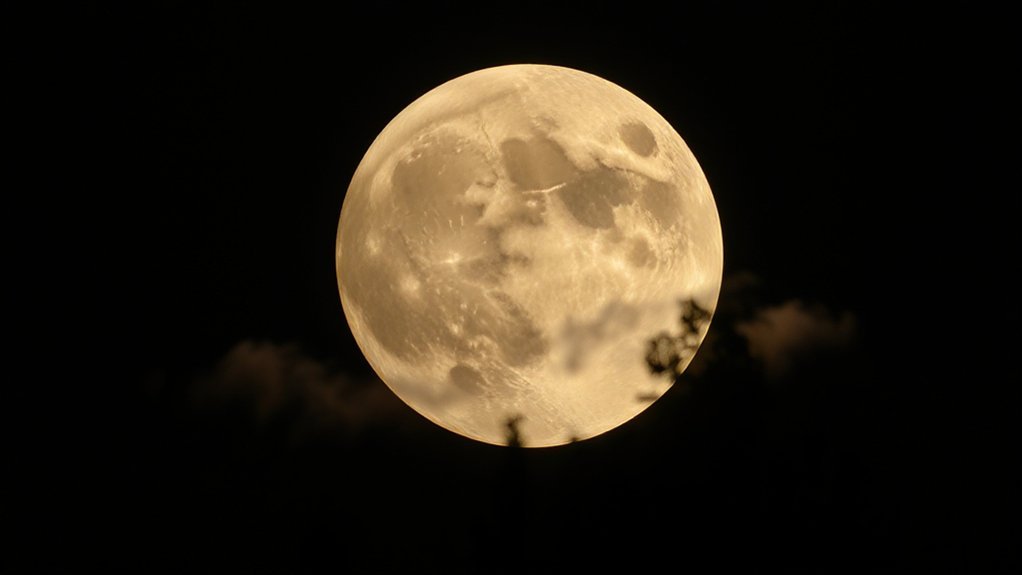
When a supermoon appears, it’s impossible not to stop and stare. You notice how it shifts, getting brighter and bigger — it’s no ordinary full moon.
That’s because of Perigee Timing: the moment when the moon is closest to Earth in its orbit. During this time, the moon’s apparent size grows larger—up to 14% bigger—and Lunar Brightness skyrockets.
The difference is stunning; the moon radiates an intense glow, almost forgiving you for missing the stars. You might think, “Wow, this looks closer than ever.”
That’s because it truly is. When it’s a supermoon, it’s like seeing a familiar face, but up close, more vivid.
The whole experience reminds us nature’s grandeur is just waiting for us—if we look up at the right time, around Perigee, and catch that intensely bright, majestic glow. It’s an event you won’t forget—seriously, it’s breathtaking.
Meteor Showers: Stellar Fireworks
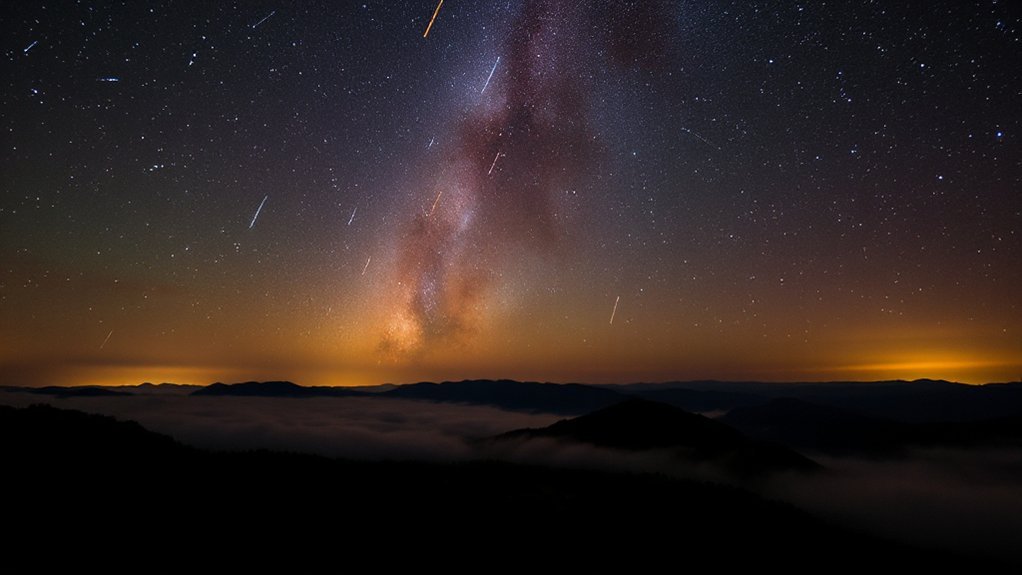
Meteor showers are one of the most spectacular shows the night sky has to offer—like nature’s own fireworks display, but better because there’s no noise, just light streaking across the darkness.
What makes these streaks so mesmerizing? It’s all about Composition Signatures—each meteor’s unique chemical makeup, which tells us where it comes from.
When Earth passes through a trail of debris from a comet or asteroid, those particles ignite upon hitting our atmosphere, creating dazzling flashes.
Scientists use Radiant Mapping to trace the origin points of meteor showers, which appear clustered in a specific part of the sky—the radiant. Want to catch the next big display? Check the sky near that radiant point at the right time. It’s like chasing stars that dance just for us. Believe us, spotting a meteor shower is worth staying up for—stellar fireworks, indeed.
Comet Appearances: Visitors From the Deep Space
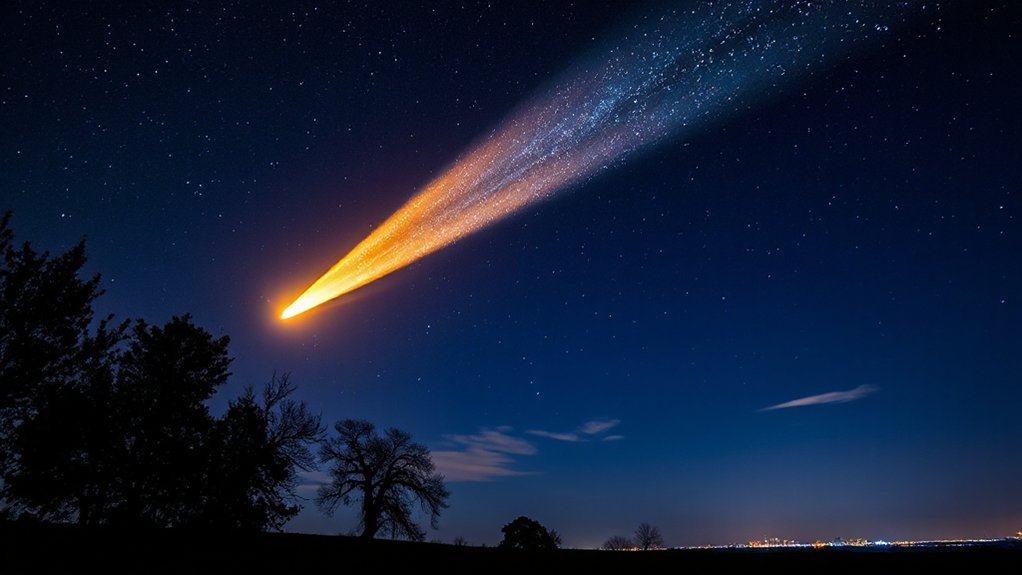
Have you ever looked up at the night sky and wondered about those mysterious visitors from deep space? Comets are precisely that—they’re like cosmic messengers, traveling through our solar system from distant regions.
What makes them special? Let’s start with their tails.
Comet tails are made of gas, dust, and icy particles, shaped by solar wind and heat. As comets approach the Sun, these materials vaporize, creating long, glowing tails that stretch across the sky.
Their orbital origins are just as fascinating—they come from the Kuiper Belt and Oort Cloud, zones teeming with icy bodies much like frozen reservoirs. When they swing inward toward the Sun, they light up our skies with streaks of brilliance and remind us of the universe’s grandeur.
Lightning and Thunderstorms: Power of Nature
Lightning and thunderstorms show us nature’s raw power in full force. Imagine jagged bolts tearing across the sky, thunder rolling like a giant drum.
Sometimes, these storms produce rare phenomena like ball lightning—a glowing sphere that dances unpredictably, sometimes lasting seconds longer than typical lightning. It’s mysterious and awe-inspiring.
Then there are Gigantic Jets—massive electrical arcs that leap from storm clouds toward space, reaching incredible heights. These jets remind us how strong and uncontainable nature can be.
Thunderstorms might seem chaotic, but they follow powerful principles, like atmospheric instability and electrical charge buildup. Lightning acts as a giant spark, discharging energy between clouds or to the ground.
Whether it’s a quick flash or this spectacular display of Gigantic Jets, understanding these storms helps us respect their power. They’re reminders that, despite technology and our knowledge, nature still holds surprises we can only marvel at—and sometimes get caught in!
Rare Atmospheric Optical Phenomena
Have you ever stared at the sky and wondered if what you see is real?
That’s where rare atmospheric optical phenomena like mirages, sun dogs, and haloes come in—they’re illusions created by light bending in clever ways.
These stunning tricks of nature not only awe us but reveal just how fascinating and mysterious our atmosphere really is.
Mirage and Fata Morgana
Ever wonder how travelers on distant horizons sometimes see shimmering castles or underwater cities instead of real landscapes? That’s a mirage or fata morgana at work. These optical illusions happen when light bends due to temperature differences between the air layers—kind of like how sensor calibration affects vehicle perception.
When conditions are just right—hot days over deserts or cold seas—light gets warped, creating images that seem to float or stretch. It tricks the eye, making distant objects appear distorted or places look like magical worlds. Pilots, sailors, even travelers have all fallen for these illusions. They remind us how impressionable our perception is, and how vital it’s to understand these phenomena—whether we’re using sensors or simply enjoying the view on a long drive.
Sun Dogs and Haloes
Sun dogs and haloes are stunning, rare displays of how our atmosphere can put on a beautiful show. They appear when sunlight interacts with ice crystals high in the sky—perfect for capturing with the right camera settings.
To create a timelapse, set your camera to a low ISO, a narrow aperture (f/11 or higher), and a slow shutter speed. Use a tripod to keep your shot steady, especially if you’re shooting over hours.
Sun dogs, with their vibrant spots on either side of the Sun, and the circular halo around the Sun, are mesmerizing. They remind us how atmospheric conditions can surprise us.
Got your camera? Great. Now, focus on patience and watch the sky — these are the moments worth waiting for!
Planetary Conjunctions and Alignments
This year, there are some exciting planetary conjunctions that you won’t want to miss—they offer a rare chance to see planets almost lining up in the sky.
We’ll share the key dates and the best times to look, so you can plan ahead and catch these celestial events before they slip away.
Ready to get your binoculars or telescope, because these alignments make for spectacular viewing, and you’ll want to see them with your own eyes!
Notable Conjunctions This Year
Throughout this year, the night sky will put on some remarkable shows with planetary conjunctions and alignments that are worth watching. Predictive models, backed by extensive data repositories, help astronomers forecast these events with surprising accuracy.
Think of it like a cosmic GPS for stargazers—letting us know when planets will appear close, almost touch, or line up in stunning formations. For example, this year features a rare conjunction of Jupiter and Saturn in December—an event to mark on your calendar!
We rely on these models to plan our sky-watching, making sure we don’t miss the best moments. So, while the universe prepares to dazzle us, we’re armed with data, ready to enjoy the spectacle—no telescope required, just a curious look up!
Viewing Tips and Best Practices
Getting the best view of planetary conjunctions and alignments takes more than just looking up; it’s about preparation and knowing where to focus your gaze.
First, think about comfort considerations—wear warm layers, bring a lawn chair, and avoid straining your neck.
Timing strategies are key too. These events often happen late at night or early morning, so plan ahead and arrive early to settle in.
Check local weather for clear skies, and use star maps or apps to pinpoint the planets’ positions.
Sometimes, a little patience rewards you with perfect sights. Keep an eye on the moon phase; a new moon means darker skies, making planets pop.
With these tips, you’ll maximize your viewing experience and maybe even catch a surprise planetary dance.
Transits of Planets Across the Sun
Have you ever wondered what it means when a planet passes directly in front of the Sun? That’s called a transit, and it’s one of the coolest sights in astronomy.
During a transit, astronomers use a technique called Transit Spectroscopy, where they analyze the sunlight filtering through a planet’s atmosphere. This helps us understand the gases present, which could even hint at habitability.
Timing is critical here—tiny shifts known as Timing Variations tell us if a planet has moons, rings, or if there’s something else tugging on its orbit. We track these movements with precision, sometimes years apart, to gather clues about the planet’s path and environment.
Transits are like cosmic clues, revealing secrets about distant worlds. They also remind us how dynamic our universe is—a dance of planets, light, and time playing out right in front of us.
Night Sky Viewing and Star Clusters
Now that we’ve explored the fascinating events happening in our solar system, like planet transits, it’s the perfect time to look up—at the night sky. But beware of light pollution; city lights can wash out the stars, so find a dark spot away from city glow if you can. It makes a huge difference!
When we look up, star clusters stand out as dazzling groups of stars, sometimes easy to spot with the naked eye, other times needing binoculars or a telescope. Trying to identify clusters? Start with the Pleiades, also called the Seven Sisters — they’re bright and unmistakable.
Or look for the Beehive Cluster; it’s a little fuzzball of light, but in the right conditions, a real treat. Remember, patience is key.
With a little practice and a dark, clear night, you’ll start recognizing these stellar family pictures and truly appreciate the universe’s vast beauty.
Solar Flares and Space Weather
When the Sun emits a solar flare, it’s like a giant cosmic fireworks show—only it’s not just pretty lights in the sky.
These eruptions happen during a process called magnetic reconnection, where twisted magnetic fields suddenly snap and realign, releasing huge amounts of energy.
That energy accelerates particles towards Earth, causing space weather events that can affect our satellites, radio signals, and power grids.
But here’s the kicker: solar flares also produce radiation hazards.
These high-energy particles can pose risks to astronauts and airline passengers flying at high altitudes, especially near the poles.
That’s why space agencies closely monitor solar activity.
Knowing when a flare occurs helps us prepare for potential disruptions.
It’s like catching a storm before it hits—but in space, with invisible forces that can still impact life down here on Earth.
Phases of the Moon and Lunar Eclipses
The moon’s journey across the night sky isn’t random; it follows a set pattern called the lunar cycle, and understanding it can turn any stargazer into a lunar expert. This cycle influences not just tides, but also our agricultural calendars—think planting and harvesting tied to moon phases.
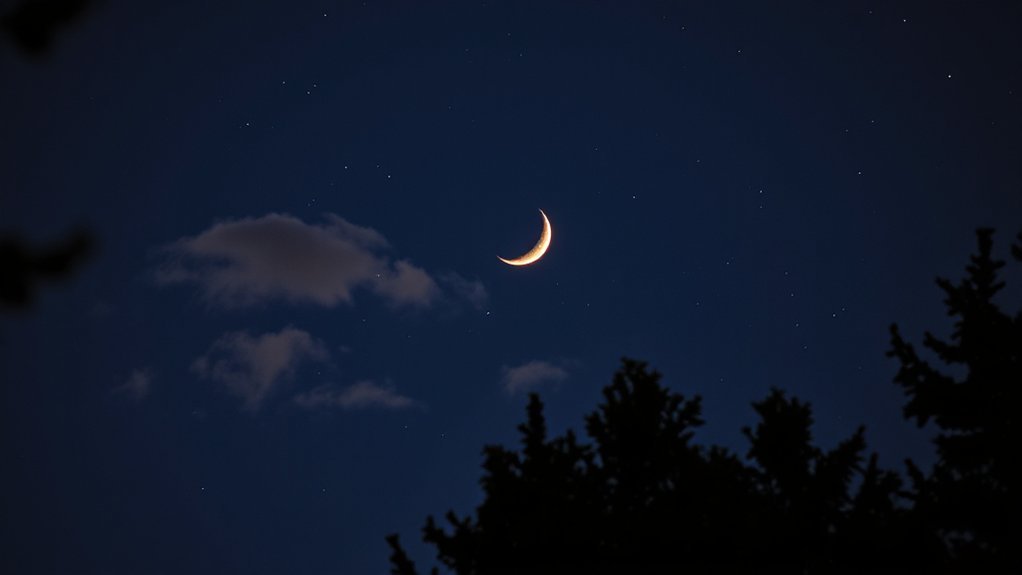
There are four main phases: New Moon, Waxing Crescent, Full Moon, and Waning Crescent. Each one affects tidal rhythms, with high tides occurring during the New and Full Moons—crucial for fishermen and sailors alike.
Knowing when a full moon rises helps farmers time planting and harvesting, especially in traditional cultures. Lunar eclipses, which happen during a full moon, are rare and spectacular, showing Earth’s shadow blotting out the moon.
They remind us how the moon’s dance with Earth, sun, and shadow impacts life and guides our rhythms—be it tides or planting, science or tradition. It’s more than celestial; it’s practical, powerful, and downright fascinating.
Hailstorms and Their Tempestuous Moments
Hailstorms can turn a peaceful sky into chaos in just a few minutes, and understanding how they form helps us stay prepared for their wild, unpredictable power.
When hail crashes down, scientists often use hail microscopy—examining tiny hailstones under microscopes—to understand their structure and growth. This reveals the size distribution of hail, showing us how big the stones can get during a storm.
Surprisingly, hailstones start small but grow as they bounce inside thunderstorms, layering ice with every pass through supercooled clouds. Knowing the size distribution helps meteorologists forecast potential damage—bigger hail, bigger trouble.
And it’s fascinating to see how varied hailstones can be—some almost pea-sized, others softball-sized. The next time you hear about a hailstorm moving in, you’ll know there’s more happening than just rain; it’s a complex battle of ice, air, and time, all captured in tiny, frozen moments.
Fog and Its Mystical Veils
Have you ever looked out the window and been swallowed by a thick, silent shroud of fog?
It’s like stepping into a mysterious world where everything feels softer, quieter, and a little secretive.
Fog isn’t just visual—it’s an important part of our environment, especially in coastal areas where it plays a huge role in fog ecology.
This coastal fog supports unique plant and animal life, creating tiny ecosystems right above our heads.
Scientists study how fog collects moisture on leaves or cliffs, nourishing plants in otherwise dry places.
Less obvious but equally fascinating: as that fog drifts in, it acts like a giant, natural air filter.
So, when we see fog rolling in, think of it as a mystical veil that connects weather, ecology, and our own everyday lives.
Nature’s quiet, chilly sentinel—mysterious yet essential.
Unusual Snowfalls and Ice Formations
Unusual snowfalls and ice formations aren’t just pretty sights; they tell us stories about the weather’s wild side. Think of the rare ice pattern formations that look like frozen sculptures, or sudden snowstorms that hit without warning, transforming familiar landscapes overnight.
These unexpected events remind us that nature keeps us on our toes—sometimes, it’s downright fascinating, and other times, a little intimidating.
Rare Ice Pattern Formations
Rare ice pattern formations are one of nature’s most fascinating surprises. Have you ever seen frazil crystals swirl in a river, tiny ice shards forming in agitated water? Or marveled at hoarfrost feathers—delicate ice structures that resemble frozen leaves—draped on trees during cold mornings?
These rare patterns develop under specific conditions: still water for hoarfrost, rapid freezing for frazil crystals. Sometimes, warm moisture hits sub-zero air, creating these stunning displays that seem almost magical.
They don’t happen every day, but when they do, they remind us of nature’s artistry and patience. Spotting these formations isn’t just a thrill; it’s a lesson in how cold, moisture, and time craft temporary masterpieces that evaporate with the first warmth. Truly, nature’s fleeting sculptures.
Sudden Snowstorm Events
Sometimes, the weather throws us a curveball and dumps an unexpected blanket of snow that sticks around longer than forecasted, or creates stunning ice formations overnight.
These sudden snowstorm events can catch everyone off guard—cars slide, flights get canceled, and visibility drops fast.
For pilots, they’re aviation hazards, demanding sharp adjustments and extra caution.
Plus, the snow’s high albedo—its reflectivity—can cause shifts in local temperature, sometimes cooling the area further or affecting weather patterns.
Ice formations, while beautiful, threaten power lines and trees with weight, adding risks.
We all learn quickly: when these storms hit, slow down, stay updated with weather alerts, and remember, Mother Nature still loves her surprises.
Preparedness keeps us safe, and even in chaos, there’s beauty—and lessons.
Atmospheric Haloes and Sun Dogs
When the sky displays shimmering arcs and colorful patches, you’re witnessing atmospheric haloes and sun dogs in action.
These optical illusions happen when sunlight interacts with ice crystals high in the atmosphere, bending and splitting light into vibrant displays.
You’ll often see them during cold weather or clear winter days — even in urban occurrences where pollution and atmospheric conditions add a splash of drama.
Want to capture these dazzling sights? Adjust your camera settings: use a small aperture (f/8 to f/16), increase exposure slightly, and shoot in daylight mode or manual.
Get rid of any filters that might dull the colors, and focus sharply.
The good news? You don’t need perfect weather or remote landscapes.
Even city streets or parks work.
Just be quick—these phenomena can fade fast.
They remind us that, even amid urban hustle, nature still throws spectacular surprises—sometimes with a rainbow twist.
Ready to look up?
The Symmetry of Planetary Rings
The way planetary rings stay perfectly symmetrical is nothing short of fascinating.
How do they keep that balanced, delicate look?
Well, a big part of it’s Resonant Sculpting — where gravitational forces from moons and nearby bodies influence ring particles, creating neat, repeating patterns.
These resonances lock particles into specific orbits, maintaining the overall shape.
But it’s not just about resonance.
Particle collisions play a key role, too.
Constant nudges and bumps among ring particles help smooth out irregularities, making the rings appear unified and symmetrical.
Imagine a crowded dance floor: everyone’s moving, bumping, adjusting — yet somehow, the pattern stays consistent.
All this happens in real-time, on a cosmic scale.
These subtle gravitational tricks combined with collision dynamics craft the stunning, symmetrical beauty we see in planetary rings.
Nature’s choreography, right?
It’s intricate, precise, and endlessly mesmerizing.
Wild Weather Events: Cyclones and Tornadoes
When cyclones and tornadoes form, it’s like nature’s wild orchestra — warm, moist air, wind shear, and a dash of chaos come together.
These powerful events don’t just shake the skies; they reshape communities, leaving hits and scars that last years.
That’s why understanding how they develop, their impact, and how we can get ready isn’t just smart — it’s essential.
Formation Mechanisms
Wild weather events like cyclones and tornadoes come about through fierce and intricate processes in the atmosphere. Imagine how stars form from collapsing gas clouds—gravity pulls particles together, creating energy and spinning motions. Similarly, planet formation involves dust and debris swirling, clumping, and growing into larger bodies.
Now, think of thunderstorms brewing: warm, moist air rises, cools, and creates instability. When wind shear—those changing wind speeds—is just right, it causes rotating columns of air, forming tornadoes. Cyclones develop over warm oceans, where heat fuels massive systems, just like star nurseries ignite new stellar bodies.
These weather phenomena aren’t random; they’re guided by familiar cosmic principles—gravity, energy, momentum—only in a much narrower, atmospheric dance. Nature’s patterns repeat, whether in stars or storms. Fascinating, isn’t it?
Impact on Communities
Powerful weather events like cyclones and tornadoes don’t just shake the sky—they shake communities to their core. Homes are damaged, roads blocked, and basic services disrupted.
That’s not just inconvenience; it’s a mental health challenge. People often feel overwhelmed, anxious, or helpless after such disasters. The strain on mental health can last long after the storm passes.
Infrastructure takes a punch too—bridges, power lines, hospitals—things that keep society moving start to crack under the pressure. Recovery isn’t quick or easy. It takes resources, effort, and time.
Communities have to rebuild physical spaces and support individuals emotionally, often with limited funds or personnel. These events remind us how fragile our comfort zone really is—and how essential strong, resilient communities are, in both storms and calm.
Safety and Preparedness
Natural disasters like cyclones and tornadoes remind us that safety isn’t something to wait for when the storm hits—it’s something we actively prepare for, long before the clouds gather. We practice community drills regularly, so everyone knows what to do fast—whether it’s securing windows or finding the safest spot.
Clear communication plans are essential; everyone should know who to call, where to meet, and how to get updates. It’s about being proactive, not reactive.
We set up alerts, share information, and trust our neighbors to look out for each other. No one expects disaster, but with solid prep, we can lessen its impact.
Preparedness isn’t fear — it’s peace of mind, knowing we’ve done our part to stay safe, together.
Asteroid Watch and Near-Earth Objects
When it comes to keeping an eye on space rocks zooming around Earth, we’re more active than ever. Thanks to advanced orbital mapping, scientists can track Near-Earth Objects (NEOs) with remarkable precision.
We assess their paths, sizes, and potential threat levels—sort of like cosmic GPS. This helps us prepare and decide whether to monitor or intervene.
But it’s not just about safety; these space rocks hold promise too. Experts are exploring their mining potential, considering asteroid metals for Earth’s needs—think rare minerals or water.
The key is identifying the right candidates early, so we can plan missions and capitalize on resources. This ongoing surveillance gives us a clearer picture of what’s out there and what could impact us.
It’s a mix of caution and curiosity—safety, science, and opportunity all rolled into one. And right now, that’s how we stay ahead of the game.
Historical Celestial Events That Changed Perspectives
Throughout history, certain celestial events have stunned observers—and forever changed how we see the universe.
Think of how the appearance of comets like Halley’s or the supernovae that lit up the sky made people question what lies beyond our world—missions, beliefs, entire cultures shifted because of these sightlines.
These moments are more than just eye candy; they sparked scientific breakthroughs, inspired art, and even shifted societal norms—proof that the sky’s stories are powerful, and they’re still shaping us today.
Notable Ancient Sightings
Ancient civilizations watched the sky with awe, and their sights often changed how they saw the universe—and themselves.
Imagine spotting ghost ships sailing across the clouds or phantom armies marching in the sky, stories born from visions or rare atmospheric events. These sightings weren’t just entertainment; they shook beliefs, sparked fears, or inspired legends.
Sometimes, what looked like mysterious ships or armies were celestial phenomena, like meteor showers, optical illusions, or even eclipses that played tricks on the eyes.
People wondered if these ghost ships or armies were signs from spirits or divine messages. Such sightings rewired ancient perceptions of reality—reminding us that our ancestors looked skyward with wonder, trying to decode a universe filled with strange, unforgettable sights.
Scientific Revelations Unveiled
Many of the biggest shifts in how we see the universe came from celestial events that finally made sense—thanks to science.
Quantum breakthroughs, for example, completely changed our understanding of physics. Suddenly, particles behaved in ways that seemed bizarre—like being in two places at once. This opened the door for new ideas about reality itself.
Meanwhile, gene editing technologies like CRISPR emerged from studying the tiny building blocks of life, revealing how we can alter DNA with precision.
These discoveries didn’t happen overnight but came through decades of research, observation, and “aha” moments. They changed how we think about the universe and ourselves, proving that curiosity and perseverance really do pay off. Science keeps revealing mysteries—it’s like we’re finally turning on the lights.
Cultural Impact Moments
When a bright comet streaked across the sky, centuries ago, it wasn’t just a pretty light show—it was a wake-up call.
People saw these celestial events as signals from the universe, sparking weather rituals and climate art.
Societies created stories, myths, even rituals to interpret these cosmic messages, believing they could predict seasons or warn of storms.
Artistic expressions, like paintings and carvings, also captured these moments, making them part of cultural memory. Over time, such sights shaped perspective—helping communities understand nature’s power and unpredictability. Today, we still honor these moments with astronomical festivals and climate-inspired art. These shared experiences remind us we’re not separate from nature, but woven into its ever-changing story. Comets, after all, are history’s most beautiful wake-up calls.
Conclusion
Weather and space events are awe-inspiring, sure, but they’re also reminders of nature’s power and our place in the cosmos. By paying attention — whether it’s spotting a meteor shower or understanding how a supermoon affects tides — we connect more deeply with the universe around us. Staying curious, prepared, and a little amazed keeps us grounded. So, look up, stay safe, and never stop questioning what’s out there — because the sky’s full of stories waiting for us to discover.