Like turning the page in your favorite story, you get two “first days” of spring in 2026: meteorological spring on March 1, and astronomical spring at the vernal equinox on March 20 at 14:45 UTC. Convert that to your local time—watch daylight saving rules—so you know your exact moment. I used to mix these up, too (no shame, calendars are messy). Want the simple why behind it—and what it means for your daylight, exactly?
Meteorological vs. Astronomical Spring in 2026

While the calendar stays simple, the seasons don’t: in 2026, you’ve got two “first days” of spring to work with. Meteorological spring is the tidy one: it runs March 1 to May 31, built for neat records, clean comparisons, and planning that doesn’t wobble. Astronomical spring begins when Earth crosses that sun-marked threshold, a sky rule, not a calendar rule. Both are real, useful, and can guide you differently depending on what you need.
Here’s the heart of it: definition differences shape habits, while public perception shapes feelings. You plan gardens, runs, road trips; meteorological dates give you steady guardrails. You chase light, warmth, the birdsong; astronomy gives you that symbolic spark. Choose the frame that frees you. Use both if you like—I do, shamelessly. Mark March for action, then let the cosmos crown your momentum. Ritual and data, rhythm and reason, discipline and bright delight, working together.
Exact Date and Time of the 2026 Vernal Equinox

On March 20, 2026, at 14:45 UTC, the vernal equinox arrives—the exact moment the sun crosses the celestial equator and tips the Northern Hemisphere toward longer days. You’re not waiting for a symbol; you’re meeting a real, measurable instant. Thanks to orbital mechanics, Earth’s tilt and speed line up just right, and the balance clicks. I’ll admit, I set reminders for it—because fresh starts deserve a timestamp.
Mark 14:45 UTC, March 20, 2026—the instant orbit and tilt hand you a reset.
Here’s how you can hold that moment in your hands:
- Note the precise UTC time, then mark your calendar without guesswork.
- Remember leap years and tiny calendar adjustments; they nudge dates over generations.
- Picture Earth’s path: a tilted globe circling the sun, reaching equal day and night.
- Celebrate with a small ritual—step outside, breathe, choose one bold promise.
You don’t need permission. You need a minute of courage, a sky, and a clock, then the brave step. Let yourself begin now.
How Time Zones Affect the Moment Spring Begins

You’ve got the moment pinned—March 20, 2026 at 14:45 UTC—now make it yours where you live. Translate that instant into your clock, your calendar, your celebration. Time zones don’t blunt the equinox; they just shift the label. So claim the label that fits your life.
Here’s the twist: DST shifts and timezone politics can nudge your schedule, not the sky. Lawmakers argue, clocks jump, you still choose how to mark the minute. I’ve messed this up before—showed up an hour late—so learn from me, not the hard way. Check your offset, set an alert, breathe. Want sunrise yoga or midnight tea? Cool. Just align the stamp, then do you.
| Region | Local Date & Time | Note |
|---|---|---|
| North America (ET) | Mar 20, 2026, 10:45 AM | After DST |
| Europe (CET) | Mar 20, 2026, 3:45 PM | Pre-DST in some |
| Australia (AEDT) | Mar 21, 2026, 1:45 AM | Southern DST |
Set it, start fresh.
What the Equinox Means for Daylight and Sun Position

Look east at dawn on the 2026 spring equinox; you’ll see the sun rise due east, a clean line on your compass and your calendar. You’ll get almost equal day and night—about 12 hours each where you live—so plan a walk, a call, a small promise kept. By noon the sun climbs higher than it has in months, warming your face and your mood, and yes, I need that boost too, so tilt your chin up and feel the season turn.
Equal Day and Night


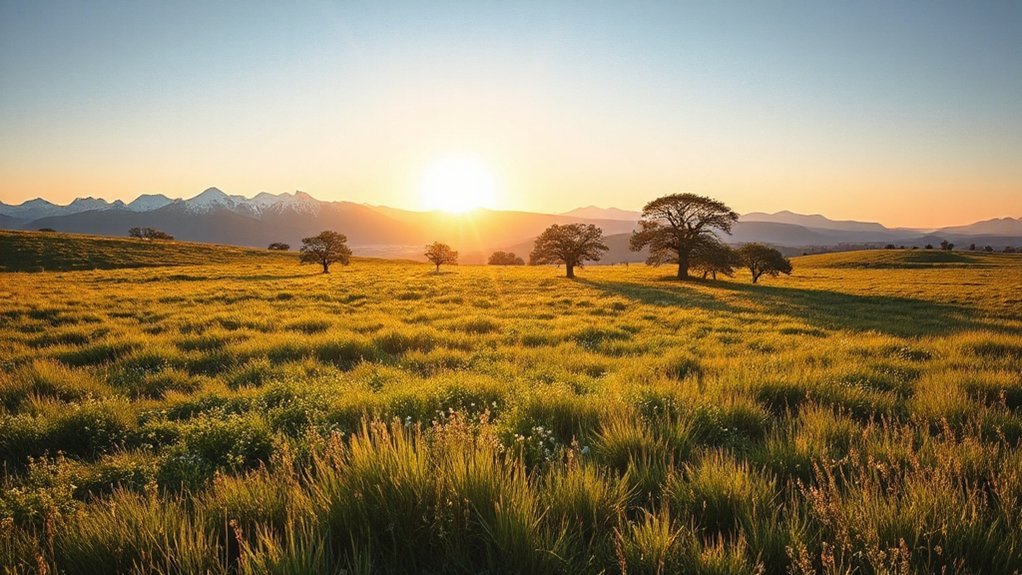
How does “equal day and night” actually play out on the equinox? You hear balance, you crave it, but nature’s math is messy. Day is usually a few minutes longer. Why? The Sun’s disk isn’t a point, and Earth’s air bends light, giving you bonus dawn and lingering dusk. Still, the message lands: pause, breathe, recalibrate. I’m with you—hungry for a clean reset, ready to move.
What can you notice, and use, right now?
- Slightly longer daylight, enough to nudge your routine without chains.
- Sharper shadows at midday, a cue to stand tall, then act.
- Cultural festivals that turn balance into practice, shared meals, open doors.
- Mythic symbolism—light meeting dark—reminding you to choose, to begin, to keep becoming with courage.
Sun Rises Due East
Balance may be messy, but it’s enough to reset; now lift your eyes to the horizon—on the equinox, the Sun rises due east and sets due west. You get a clean line, a true bearing, a chance to reorient. Take a simple walk at dawn, watch the glow break right where “east” lives. Bring a compass if you like; notice magnetic declination tug the needle while your eyes hold steady on true east. That contrast feels honest, doesn’t it? Use streets, river bends, and old architectural alignments to guide you. Many plazas and temples echo this moment, and you can, too. Mark a doorway, chalk a line, promise yourself a start. I’ll admit, I need these resets as much as you do. Step outside.
Higher Midday Sun Angle
Even before you check a clock, you can feel it: at the equinox the Sun climbs higher at midday, and your world brightens from above instead of just from the side.
That higher arc frees your day, lifting shadows, stretching your options. You stand taller, because light arrives direct, not timid. With the Sun steeper, solar intensity jumps, streets warm faster, moods follow. You plan bolder: lunch outside, later rides. Tilt your panels, tilt your face, say yes to sky. I’ll admit, I chase that noon blaze like a compass.
- Shorter shadows: edges crisp, contrast high, detail pops.
- Longer usable light: mornings wake quicker, afternoons fade earlier.
- Better panel efficiency: adjust tilt, match latitude, harvest power.
- Truer directions, freer steps.
Seasonal Signs to Watch For as Winter Fades
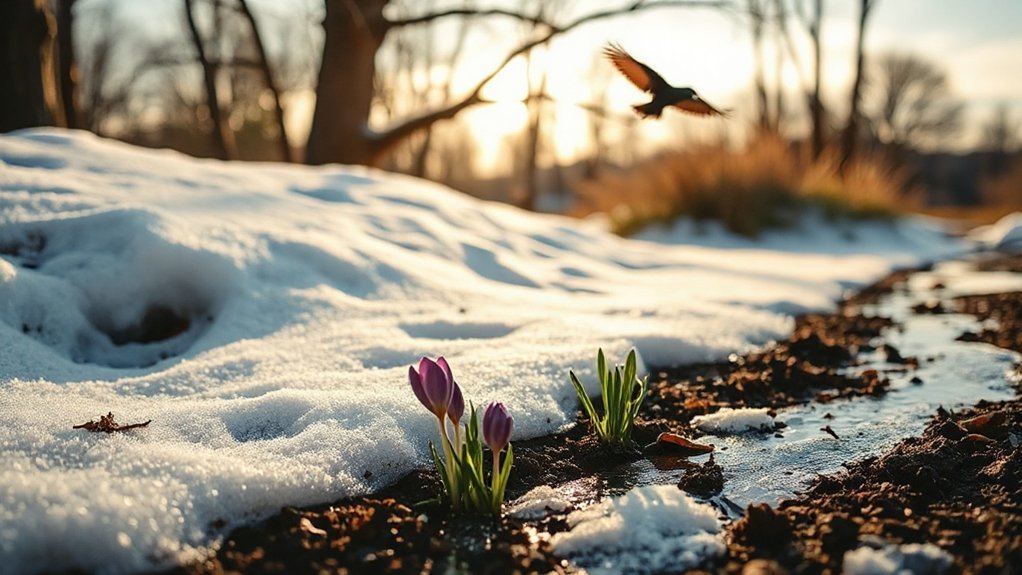
Step outside and scan the branches: you’ll spot tight green buds on maples, lilacs, and the scrappy shrubs by the sidewalk, small promises you can actually count. Hear that quick, bright chatter overhead, the V-shaped lines at dawn and dusk—migratory birds are back, and I still fumble for my binoculars like it’s my first spring. Let these signs coach you forward—look up, look close, keep noticing—because when trees swell with life and travelers return to the sky, you remember you’re allowed to start again, to warm up slowly, to move, gently but steadily, into what’s next.
Budding Trees and Shrubs
With winter loosening its grip, start scanning branches on your walks—really look at the tips.
You’ll spot fat buds swelling, scales loosening, color shifting from gray to bronze or green.
Touch a twig; feel that snap soften.
I do this each year; it still shocks me how stubborn life is.
Lean into it.
- Notice bud types: flower buds on cherries look round, leaf buds on maples look pointed, and catkins dangle like tassels.
- Time Dormant pruning now; remove dead or crossing wood to channel energy into strong spring push, and yes, it feels brave.
- Practice Pest control the gentle way—inspect for eggs, scrape lightly, use horticultural oil only if needed.
- Water deeply during thaws, mulch lightly, then wait, watch, breathe.
Migratory Birds Return
As the light stretches a little farther each evening, you’ll hear the season before you see it—sharp “konk-la-ree” from the marsh where red-winged blackbirds stake their turf, a brisk “fee-bee” from the phoebe under the eaves, the V of geese scribbling across dusk. You feel your shoulders drop. You look up, you listen, you breathe. Freedom rides those wings.
Watch the skyways near rivers and fields; these are stopover habitats, little gas stations for travelers. Put out fresh water, keep windows bird-safe, skip the pesticides. Small conservation measures add up. I forget that, too, then a swallow loops past and reminds me to try again. Log arrivals, set alarms, invite a friend. Protect their flight, protect your own. Because migration is a promise kept.
Key Spring Dates and Events to Mark on Your Calendar
Although winter still nips some mornings, your calendar is about to bloom with can’t‑miss dates: the spring equinox on March 20, Earth Day on April 22, and those sky‑watching treats like the Lyrids in late April and the Eta Aquariids in early May. You want fresh air, open roads, fewer shoulds. Mark your freedom windows now, so work and life bend a little. I’ll nudge, you choose.
Spring is loading: mark freedom windows, chase dawn, bend life toward open skies.
- Vernal reset: watch sunrise on March 20, set one brave goal, and plant a pot of herbs you’ll actually use.
- Earth Day, April 22: join a cleanup, swap to a low‑waste habit, then celebrate outside—bare feet, big grin.
- Meteor nights: Lyrids peak around April 21–22; Eta Aquariids glow May 5–6—bring a blanket, brew, and a wish.
- Community flow: map spring festivals and school breaks, book a quick trip, or block a staycation with friends.
Now breathe, go.