The peak lasts just six minutes—16:43 to 16:49 UTC on August 12, 2026. You’re chasing a total solar eclipse, with the Moon’s shadow crossing Greenland and Iceland, then targeting northern Spain and the Balearic Sea, while much of Europe and North Africa get a partial. Set alarms, plan for clouds, use proper eye protection. And convert UTC carefully—I’ve learned the hard way. Want the best spots, local times, and no-stress gear tips next?
Date and Time of the 2026 Solar Eclipse

On August 12, 2026, set a reminder you won’t forget. The sky’s clock hits its cue in the afternoon, pegged to UTC, with first contact sweeping into view around midafternoon and the show peaking late afternoon to early evening, depending on where you stand. You want freedom? Lock in the time, then roam where you like. Check your city’s forecast and your local offset from UTC; I like using world clocks because they keep me honest. Anchor your plans to Timekeeping Standards, not guesswork.
In Historical Calendars, folks argued about days; now we sync to atomic seconds, and that’s your edge. Convert carefully if you’re traveling, because borders change time zones even when the sun doesn’t. Set two alarms, label them with location, and backstop with a paper note—yes, I still do that. Breathe, prepare, show up. This moment runs on schedule, and you can meet it. Own it.
What Type of Eclipse It Is

This one’s a total solar eclipse—the kind where the Moon fully covers the Sun along a narrow path and the corona blooms like a secret you’re finally ready to hear. You’ll witness the simplest truth: shadow reveals light. In strict terms, its astronomical classification is “total,” no halves, no hedging. In human terms, it’s a reset button you’re brave enough to press. I’ll admit, I need that button too.
| Aspect | Astronomical classification | Cultural symbolism |
|---|---|---|
| Type | Total solar eclipse | Moment of union, shadow as teacher |
| Scale | Umbra reaches Earth | Threshold, breath before change |
| Light | Day turns twilight | Permission to pause, to reset |
| Feeling | Awe, smallness, relief | Courage to start again |
You’ll see the stars wake, you’ll feel the temperature dip, and your plans suddenly go quiet. Breathe. Let the hush work on you. Ask what you’re ready to release, and what you’re ready to claim. Carry that freedom forward.
Path of Visibility and Maximum Eclipse

You want to know where you’ll stand, where you’ll look, so we’ll map the global visibility regions together—I’ll admit, I get a little nerdy about this. Track the totality path trajectory, that narrow ribbon of shadow that races across Earth, and picture how it cuts through sky and land while the rest see only a partial. Then lock in the peak eclipse timing—in UTC and in your local time—because the moment of maximum comes quick, lasts only minutes, and you deserve to be ready when the world goes dim.
Global Visibility Regions
Where will the Moon’s shadow run in 2026? You’ll see its reach stretch across the North Atlantic world—touching Greenland and Iceland, then lighting up northern Spain with total darkness for precious minutes. Across most of Europe, North Africa, and the Middle East, you’ll catch a strong partial bite; eastern Canada and the northeastern U.S. will glimpse a smaller arc near sunset. The maximum eclipse peaks over open ocean, a wild stage for freedom-seekers.
Plan your spot, honor Cultural Traditions, join pop-up Scientific Collaborations. I’ll say it: chase what stirs you, but prepare. Check local horizons, weather patterns, safe-viewing gear. Rally friends, book flexible routes, keep options open. Because when the sky changes, you change too—and that change, you’re allowed to claim as your own.
Totality Path Trajectory
From the broad visibility you just scoped, narrow your focus to the razor edge—the path of totality that carves a bold arc across the North Atlantic. This ribbon is where daylight surrenders, and you stand fully free beneath a noon-night sky. It springs from Arctic seas, brushes Greenland’s coast, sweeps across Iceland, then dives toward northern Spain, skimming cities and high plains before sliding over the Balearic Sea. Out here, orbital mechanics becomes personal: the Moon’s shadow is precise, the lunar limb jagged, the corridor narrow but generous if you chase it. Choose your ground. Coast, city, mountain—each offers a different silhouette, a different gasp. I’ll admit, I love the chase, but you choose the view that makes your spirit run. Go claim it.
Peak Eclipse Timing
By late afternoon UTC, the show hits its stride as the Moon’s shadow tightens and the eclipse reaches peak strength over the North Atlantic between Greenland and Iceland.
You aim north, chase that ribbon, and find maximum totality over cold water, not cities.
Still, you’ve got a shot: Iceland sees partials, Greenland’s coast nears the bull’s-eye, and ships in the path win.
Thanks to orbital mechanics, the peak lands around 16:43–16:49 UTC, sliding minute by minute as latitude shifts.
Predictions hinge on delta T, the tiny clock fix that nudges contact times by seconds.
So plan tight, move light, stay flexible.
I’ll be real—I once missed totality by ten miles; it hurt, but it taught me to pivot.
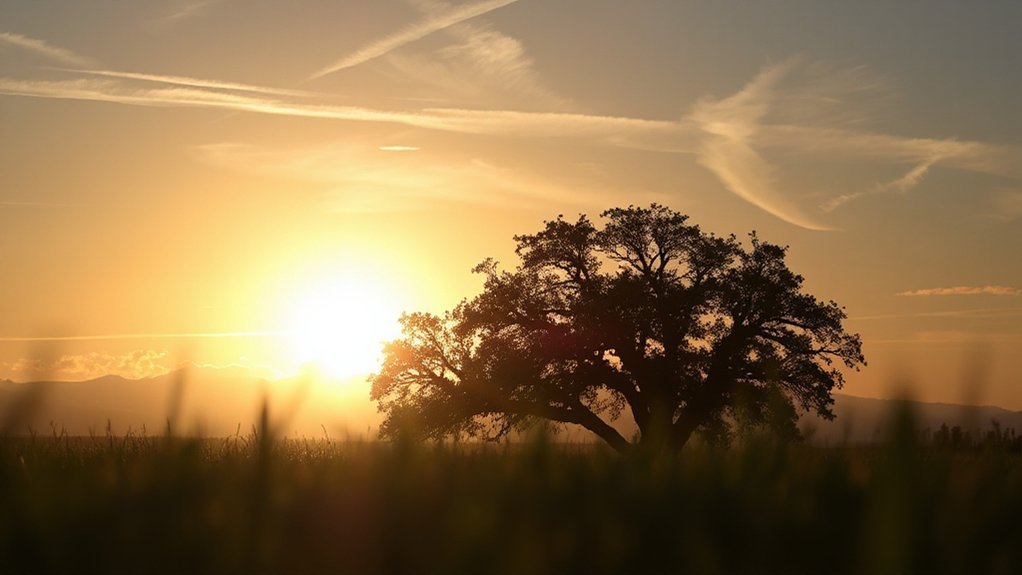
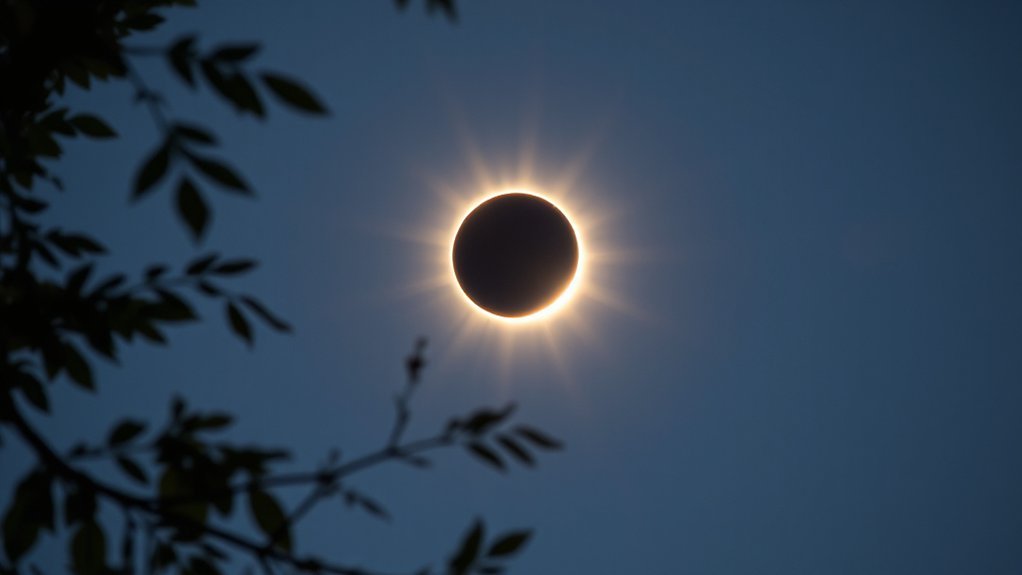


Watch the shadow race, breathe, grin.
Best Places to Watch Around the World

How do you choose a front-row seat for the 2026 eclipse? Start with the path of totality, then pick a place that lights you up. Chase big skies in Iceland’s lava fields, or claim a cliff above Spain’s wild Atlantic. Seek solitude in Greenland’s icy hush if you crave space, silence, and a little glory. Favor towns with clear horizons, dry air, and easy escape routes—because freedom loves options.
Blend science and soul. Visit Historical Observatories like Madrid’s treasures or Reykjavik’s stargazing hubs, then step outside for the main event. Say yes to Cultural Celebrations: music in plazas, stories by bonfires, strangers turning into teammates as the light thins. Pack layers, hand warmers, and filters; bring curiosity, flexibility, and a backup plan.
And breathe. You’re not just watching darkness cross the sun, you’re claiming a memory that won’t let go. I’ll be the one crying, grinning, cheering, too.
Local Viewing Times by Region

Set your plan now—you’re going to catch it on time, and I’m right here cheering you on (I’ve set two alarms before, no shame). For North America viewing times, look late morning to early afternoon in most cities; Europe’s peak visibility leans midday into early evening; Asia Pacific timings cluster near sunrise in the west and late afternoon to early evening farther east, so note your city’s zone and the path’s edge. Ready to circle your calendar and clock—check the map, check the time, check your gut—because missing those few minutes would sting, and you won’t let that happen.
North America Viewing Times
On eclipse day, you’ll want exact windows, not guesswork, so you know when to step outside and look up. Across North America, aim your plans at local afternoon hours, with the strongest views in eastern Canada and the U.S. Northeast. Think late afternoon to near sunset there; farther west, the bite comes earlier and smaller. In Atlantic Canada, expect a deeper show before evening; in the Midwest and Southeast, it’s a modest crescent near day’s end. Alaska? Late morning into midday, crisp if skies cooperate.
Europe Peak Visibility
While Europe won’t share one clock, you can anchor your plans to a simple rule: the show builds late in the day. In Spain’s north and the Balearics, aim for 7:20–8:00 p.m. CEST as totality nears sunset; it’s dramatic, low, golden. In Iceland, watch 4:40–5:50 p.m. UTC. Across France and Germany, the partial peaks about 7:00–8:10 p.m. CEST; in the UK and Ireland, 6:30–8:00 p.m. BST. Scandinavia hits around 6:00–7:30 p.m. CEST, Eastern Europe closer to 7:10–8:20 p.m. local.
Plan your horizon, pick high ground, keep moving if clouds crowd you—I would. Bring friends, eyes wide, phones down. Let media narratives buzz while you make your own. Pair pop-up viewing with street music or art installations, and give yourself to wonder. Right here, now.
Asia Pacific Timings
Toward evening on August 12, the eclipse plays its main act over Europe—so across most of Asia-Pacific, the Sun’s already down and there’s nothing to see in person. You in Australia, NZ, Japan, Korea, China, Southeast Asia—no luck; twilight has passed. In Western Asia and far-eastern Russia, a sliver at sunset might flicker, then fade. So what do you do? You own the moment anyway. Plan watch parties with livestreams timed to your evening, pour tea, invite friends, make it yours. I’ll be right there with you, cheering. If you manage operations, consider light workday adjustments the following morning; late-night viewing is real. If you run a campus, weigh brief school closures or flexible starts. Set alarms for streams: around 20:00–22:00 UTC, per feed.
Weather and Cloud Cover Considerations
Usually, clouds decide whether your eclipse turns into magic or a near miss, so treat the sky like a teammate you brief before game day. You want mobility, options, and a plan that bends, not breaks. Start with seasonal forecasting, then zoom into microclimate impacts: valleys trap fog, coasts breed marine layers, mountains build pop-up storms. I’ve chased under all three; I’ve misread them.
Scout satellite loops the week before, then sunrise updates on eclipse morning. Ask: where does wind push moisture, where does terrain wring it out, where does sun burn it back? Drive early, pivot fast, celebrate choices. Pick two backup sites along different elevations and airflows. Favor dry fronts, leeward slopes, and roads that keep you free. And remember—clouds may flirt, stall, or break open in the hour, and that’s your opening.
| Dawn haze | Noon cumulus | Sunset clarity |
|---|---|---|
| Ridge | Coast | Desert |
| Plan B | Patience | Joy |
Safe Viewing Equipment and Eye Protection
Because your eyes don’t get do-overs, treat eclipse gear like your lifeline. Start with certified eclipse glasses or a handheld solar viewer, not sunglasses, not smoked glass. Check the Filter Certification: it should say ISO 12312-2, clearly printed, no sketchy logos. Inspect lenses in bright light; toss them if you see scratches, pinholes, or creases. Use a camera, binoculars, or a telescope? Add a front-mounted solar filter, never behind the eyepiece—I once tried that in college, and yikes, lesson learned. Put the viewer on before you look up, keep it on while the Sun’s showing, remove it only when you’re safely turned away.
Protect your freedom to look again tomorrow with Proper Storage. Seal glasses in a clean sleeve, keep them flat, keep them dry. Label them, share them mindfully, and guard them from kids, keys, and pets. Simple gear, simple habits, powerful safety. You’ve got this. Always.
Travel and Trip-Planning Tips
If you want the eclipse to feel easy, start with the map. Trace the path of totality, then circle two or three towns that call to you—places with open skies, flexible lodging, and roads that don’t bottleneck. Pick a primary spot and a backup, maybe even a dawn-of plan if clouds tease the horizon. Book rooms early, but free-cancel if you can; I like keeping options, not anchors.
Next, build your timeline. Drive the day before, breathe, arrive with daylight to spare. Fuel up, charge devices, download offline maps. Pack light, pack smart: a packing checklist keeps you honest—layers, sunblock, hats, water, snacks, meds, cash. Bring patience, too; traffic happens.
Do budget planning with heart. Price gas, rooms, food, and a little wiggle room for the serendipity you crave. Carpool, camp, or house-sit to stretch funds. And tell yourself this truth: you’re not escaping life; you’re choosing it.
Photography and Live-Stream Options
You’ve mapped your spot and packed the car; now make the eclipse show up in your camera and, if you want, on everyone’s screen.
You’ll need a solar filter, a sturdy tripod, and a remote shutter. Set ISO low, aperture around f/8, shutter fast before totality, slower during it. Practice bracketing. For crisp detail, try Image stacking later; shoot bursts, keep your framing steady, breathe. I forget to breathe too.
Solar filter, sturdy tripod, remote shutter. Low ISO, f/8, fast then slow. Bracket, burst, breathe.
Want to share live? Test your hotspot, lock power settings, and pick a platform with low Streaming latency. Wire in when you can; Wi‑Fi wobbles. Start the stream early, pin a simple title, and keep audio clean—wind covers help.
During totality, look up. Take a few frames, then witness it. After, back up files twice, label cards, jot locations. Did you nail it? Maybe, maybe not—but you showed up, you learned, you’re free. The sky doesn’t grade you.