Planning Japan for 2026? Start with what you crave: late March–early April for cherry blossoms (and big crowds around Golden Week), mid‑November for crisp foliage and calmer streets, or January–February for powder days and quiet ryokans. Skip early‑June’s rains, watch typhoons Aug–Oct, book flexibly, rise early. I’ll be honest—I’ve loved all three, for different reasons. So which season matches your heartbeat and budget… and how do you make it unforgettable?
2026 Calendar Overview: Seasons, Weather, and Crowds

While the months flip by on any calendar, Japan’s year moves in distinct moods—each with its own weather quirks and crowd rhythms you can actually plan around. Winter (Jan–Feb) runs cold and clear; mountains stack snow, cities thin out, prices relax. Spring warms fast and weekends swell, then Golden Week 2026 spikes queues and rates—book early or pivot to quieter towns. Summer starts with June rains, then July–August turn hot, humid, festival-bright, with longer Daylight Variation that lets you roam late, though typhoons sometimes nudge plans. Autumn cools, skies sharpen, and crowds settle after September storms; October–November feel made for motion. You pack freedom with smart Clothing Layers: base tee, light sweater, compact shell, then swap as temps swing. Aim for weekdays, start early, hop trains between rushes. I’ll say it plainly: you don’t need perfect weather, you need momentum. Choose your window, commit, adapt, go. Right now.
Best Months for Cherry Blossoms (March–April 2026)

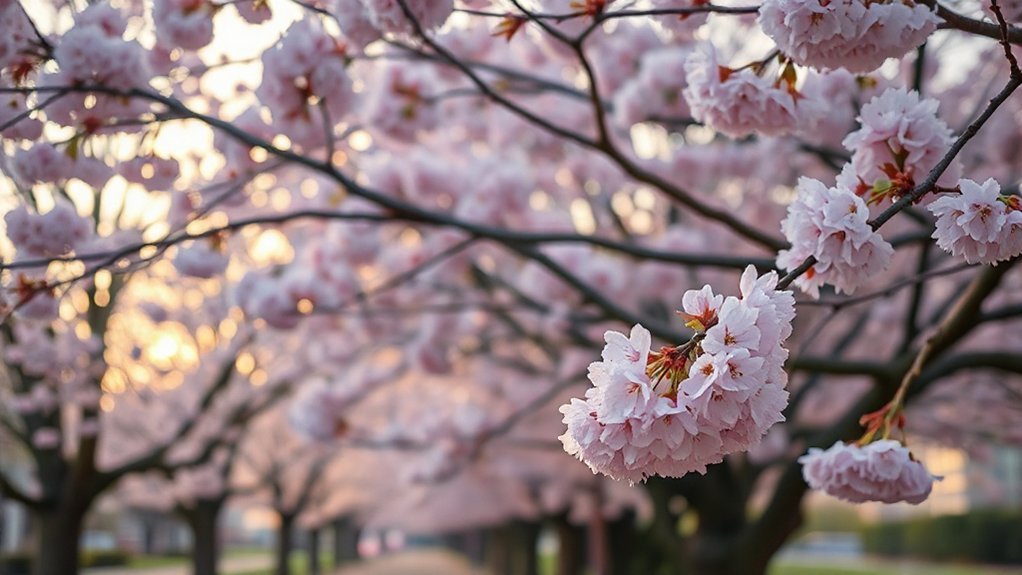
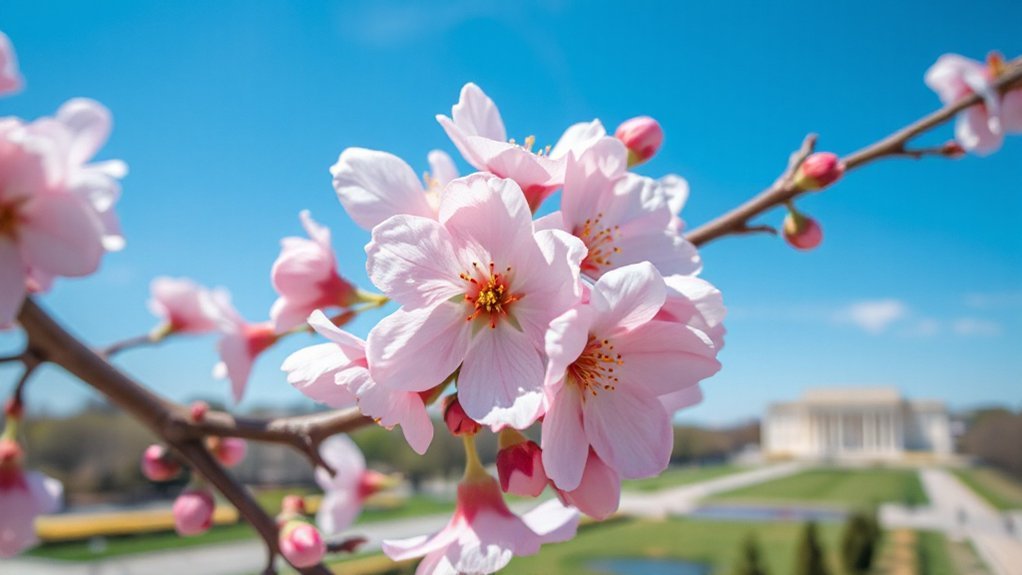
Chase sakura smart in March–April 2026: the peak bloom forecast points to late March in Tokyo, early April in Kyoto and Osaka, earlier waves in Kyushu, and later bursts up in Tohoku and Hokkaido. Remember, blossoms move north like a slow parade—are you aiming for a quick Tokyo weekend or a south-to-north rail sprint, because both work and I’ve done the messy, joyful version. Map your must-sees now: Ueno Park and Meguro River in Tokyo, the Philosopher’s Path and Maruyama Park in Kyoto, Osaka Castle Park, plus Hirosaki Castle if you push north—arrive a few days before the forecast, then linger.
Peak Bloom Forecast 2026
Because cherry blossoms follow a steady pattern most years, you can target late March through early April for peak sakura across much of Japan in 2026. Here’s the Forecast methodology in plain talk: analysts blend Phenology datasets, daily temperature anomalies, and accumulated heat units, then adjust for urban warmth and late cold snaps. You don’t need the lab coat—you need freedom. Book flexible stays, hold rail passes, watch 10‑day forecasts. Look for bud swell, then first bloom; full bloom usually lands 5–7 days later, and lasts 4–7 if wind behaves. I’ll be honest, I plan with courage and cancel buttons. Check live cams, follow alert apps, set reminders. Decide fast, move light, savor slow. Miss a day? Catch the next. You’ve got this, traveler.
Regional Bloom Variations
Even as Japan shares a sakura season, each region dances to its own beat, so you’ll time your moves, not just your flights. Chase the wave, not the crowd. In 2026, southern islands and lowlands pop first in late March, central plains follow as March turns to April, and northern hills linger into mid to late April. You get options, breathing room—I love that.
- Southern swing: warmer currents spark early buds in late March; species diversity adds staggered bursts, so you’re rarely stuck waiting.
- Heartland cadence: urban heat nudges late March to early April; phenological research helps you pick your week.
- Northern finale: cooler nights keep petals tight, then release a rich April crescendo, perfect for slow trains, coffee, slow smiles.
Top Viewing Spots
Where should you stand when the first petals fall? Head high, then low. Start on Rooftop Observatories in Tokyo—Shibuya Sky at sunset, Mori Tower after dusk—so you float above pink rivers and neon. Then drop to the Meguro River; walk the lanterns, linger on bridges. In Ueno Park, arrive at dawn; breathe, be greedy for light. I’ll nudge you to Kyoto next: the Philosopher’s Path whispers, Maruyama Park roars, both worth your stride.
Chase contrast. Seek Hidden Gardens: Kyoto’s Shosei-en, Kanazawa’s Seisonkaku corners, hush and soft gravel. Aim for icons with spine: Himeji Castle framed in bloom, Chureito Pagoda facing Fuji, Takato Joshi Park’s “clouds” of sakura. Move early, move lightly. Don’t wait for perfect—show up, open, and let March–April carry you this year.
Summer Festivals and Beach Time (July–August 2026)

Chase hanabi fireworks under humid night skies, honor ancestors during Obon, and let the taiko rhythms thump your ribs—I still tear up at the first spark, no shame. By day, claim soft-sand hours on Okinawa’s clear-water coves or ride easy waves along Shonan, then refuel with kakigori and salty yakisoba. But pack smart and stay storm-aware: check typhoon forecasts, plan rain-day backups, and book flexible stays—because summer in Japan rewards the prepared, and you’ll be ready, right?
Fireworks Nights and Obon
Sparks spill across warm night skies, and you feel it—July and August 2026 in Japan are loud, bright, sweaty, and unforgettable. You chase hanabi shows by rivers, then slip into Obon nights where drums pull your feet into the circle. You honor Ancestor Traditions with lanterns, you laugh with strangers, you bow to the moment. I’ll nudge you: move lightly, breathe deeply, let the heat humble you.
- Follow Firework Etiquette: arrive early, keep space, pack out trash, skip drones, clap big.
- Join Bon Odori: mirror the locals, wear a yukata, rotate slow, smile often, thank the elders.
- Travel smart: hydrate, carry a fan, use prepaid IC cards, expect crowds, leave one stop early.
Say yes, then say thank you, twice nightly.
Okinawa and Shonan Beaches
Even as summer turns fierce, Okinawa’s turquoise coves and Shonan’s sandy arcs pull you to the water, to drums, to salt on your lips.
You chase daylight, then moonlight, because festivals don’t ask permission.
In Naha, eisa drums pound your chest; in Enoshima, beach bars hum as surfers grin.
Swim early, nap hard, dance late.
You snorkel bright reefs, join coral restoration, then toast iced shikwasa.
Meet fishermen culture at dawn markets, taste sea grapes, hear weathered jokes you almost understand.
I’ll nudge you: say yes to beach volleyball, to slow bikes along the Shonan coast, to spur-of-the-moment swims.
Pack light, drink cool water, reapply sunscreen like a mantra.
Isn’t that the point—to feel more alive than yesterday, and ready for whatever comes next?
Typhoon Season Readiness

While summer sings loud in 2026, you also read the weather like a local. You chase festivals and beaches, but you watch the sky, the radar, the tide. Typhoons swing wide, then tighten fast. So you plan, then play. I do, too—nerves first, joy next, freedom always.
When alerts pop, you pivot. Book refundable stays, keep cash on hand, screenshot your rail options. Wear sandals you can sprint in, pack light, keep your passport dry. You won’t fear the season; you’ll ride it with respect. Carry travel insurance.
- Track forecasts daily, check municipal notices, and save Evacuation Routes for your ward.
- Build a slim Emergency Kit: water, charger, meds, snacks, flashlight, rain shell.
- Anchor fun: choose inland festivals, backup beach days, and flexible trains.
Autumn Foliage Highlights (October–November 2026)

By mid-October, Japan flips the switch on koyo season, and you’re chasing color like it’s your new favorite hobby. You hop north to south, free and curious, scouting ridgelines, riversides, temple paths. Pack layers, start early, linger late. Practice koyo photography; breathe, then click. Map your days by elevation—Hokkaido peaks first, Kyoto gardens glow later. I’ll nudge you: read the light, trust your legs, embrace detours. Maple symbolism trails you—change without fear, beauty without apology.
| Scene | Feeling |
|---|---|
| Dawn at Lake Kawaguchi | Glass water, ember hills |
| Nikko cedar avenue | Gold rain, soft footfall |
| Kyoto’s Tofuku-ji bridges | Rust-red arcs, hush and awe |
| Takayama old streets | Lantern warmth, crisp air |
Book flexible stays, watch local foliage forecasts, ride local trains when roads clog. Seek small shrines, back alleys, quiet bridges. You’ll miss things, sure, but you’ll gain momentum, and that freedom tastes bright as scarlet leaves. Take the brave, empty path.
Powder Snow and Onsen Escapes (January–February 2026)

Leaves settle, and you trade scarlet paths for white silence—January–February 2026 hands you powder and steam, the sweetest winter mix. You chase storms in Hokkaido, float through trees in Niseko, then thaw in a cedar bath while snow falls like confetti. Hakuba gives you steeps, Nozawa Onsen gives you lantern-lit lanes; Zao’s snow monsters glow at dusk. You move light, you breathe deeper, you earn every soak.
I’ll nudge you like a coach: choose joy, choose safety, choose warmth. Respect Onsen Etiquette—rinse well, tie hair, enter nude, keep voices low; if you’ve got tattoos, use a cover or pick tattoo-friendly baths. For wild turns, honor Backcountry Safety; take an avalanche course, hire a guide, pack beacons and brains. Freedom expands when you’re prepared.
1) Dawn laps, then soaks—book mountain ryokan with rotenburo.
2) Powder boards, merino layers, hand warmers—pack smart, ditch weight.
3) Seek quiet: Tohoku, Myoko, hills.
Avoiding Peak Holidays: New Year and Golden Week
Because crowds can rewrite your best‑laid plans, you’ll sidestep Japan’s holiday stampedes—New Year and Golden Week—and keep your trip breathing.
New Year brings shuttered storefronts, shrine lines, and sold‑out trains; Golden Week repeats the chorus, only louder.
You want room to roam, not a battle for bento.
So pivot: arrive just before or after, book seats early, and treat locals kindly.
Mind business closures, practice holiday etiquette, and you’ll glide.
I’ve zigged when others zag, and yes, it felt like cheating—in the best way.
| Peak | Impact | Move |
|---|---|---|
| New Year (Dec 29–Jan 3) | Business closures, packed shrines | Quiet districts, reserve rail, follow etiquette |
| Golden Week (Apr 29–May 5) | Sold‑out trains, long queues | Go week before/after, smaller cities |
| Bridge days | Extra surges, commuter spillover | Early sights, midday travel, longer stays |
| Weekends flanking holidays | Inflated demand, noisy hotspots | Target weekdays, timed entries, night strolls |
Freedom loves foresight.
Typhoons, Rainy Season, and Humidity: What to Expect
Even if sunshine is your love language, Japan’s rainy season and typhoon bursts will test your plan—and your patience. From early June to mid-July, rain lingers; from August to October, typhoons spin up, mostly along the Pacific side. You’ll feel the humidity first, like a warm blanket you didn’t ask for. Don’t fight the sky—flow with it. I’ve sprinted between shrines under a 7-Eleven umbrella and still smiled.
1) Lightweight Clothing Choices: quick-dry shirts, loose trousers, sandals with grip; add a packable rain jacket and a hat.
2) Gear up: compact umbrella, phone waterproof sleeve, electrolyte tabs, and Dehumidifier Tips for hotels or rentals—ask for a unit, run it overnight.
3) Plan by vibe, not clock: chase mornings after storms for clear views, duck into sento during downpours, ride coastal trains only when advisories lift.
Breathe, sip cold tea, take it slow. Weather passes; your momentum returns, brighter.
Booking Windows, Budgets, and Crowd-Dodging Strategies
Storms teach you to flex; now aim that same mindset at your calendar and wallet. Book smart, roam freer. Use Advance booking for spring (4–6 months) and autumn (3–5), then set price alerts and pounce. Fly Tuesday–Thursday, consider Osaka or Nagoya over Tokyo, and carry-on to dodge fees. I watch fares at breakfast, then walk away—patience saves more than panic. Seek Hidden discounts: regional rail passes, city transport cards, combo tickets for temples, small inns with weekday rates. Bundles aren’t boring when they buy you time.
Want space? Target shoulder weeks: late May, early July, early December, and the week after New Year. Visit hotspots at dawn, book timed entries, and flip the script—big sights midweek, neighborhoods on weekends. Eat late, ride early, wander sideways. Build a loose plan, lock only the anchors—beds, key trains, must-see tours—so you can pivot with weather, whim, and unexpected yes more often.