When your kitchen’s seen better days, we get the frustration that bubbles up every time you’re trying to whip up dinner. Maybe you’re dodging that wobbly cabinet door again or playing tetris with pots that don’t quite fit anywhere. We’ve all been there—standing in a space that’s supposed to nourish our families but instead tests our patience daily. Here’s how to spot when your kitchen’s crying out for help.
Key Takeaways
- Countertops show permanent stains, chips, or etching that harsh chemicals can’t remove after 15+ years of use.
- Work triangle between prep, sink, and stove exceeds 26 feet or has obstructed pathways causing inefficient workflow.
- Appliances require frequent repairs costing over 50% of replacement value or pose safety hazards like gas leaks.
- Electrical systems show warning signs like flickering lights, tripping breakers, or missing GFCI outlets near water sources.
- Inadequate lighting provides less than 300 lux on countertops, making food preparation difficult and potentially dangerous.
Worn Countertops And Shabby Surfaces Everywhere
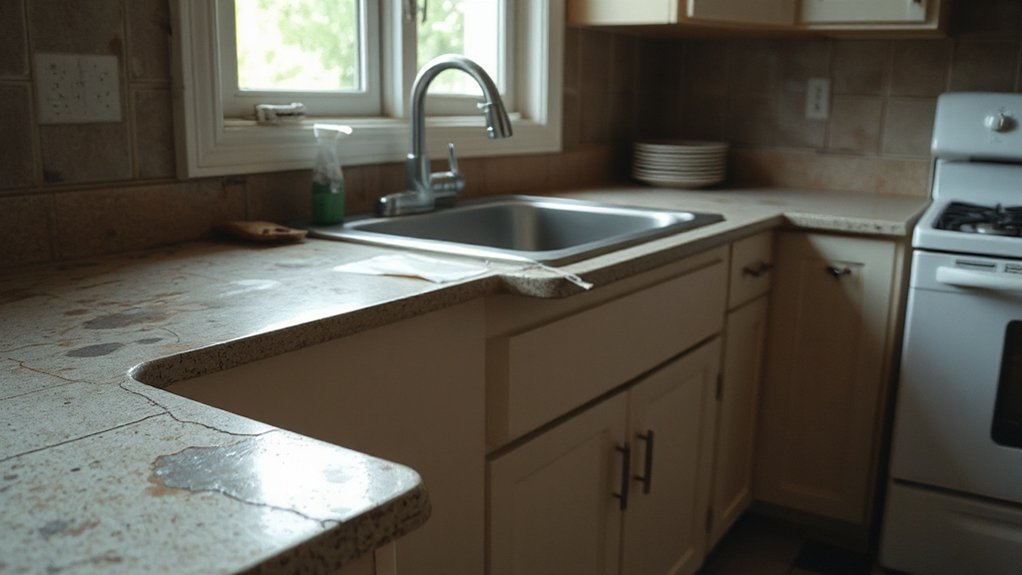
While we’d love to believe that countertop ring from last Tuesday’s coffee mug adds character, let’s face it—our kitchen surfaces are telling a different story. Those chips in your laminate aren’t quirky conversation starters—they’re crying for help after 15 years of faithful service. When marble shows more etching than a vintage postcard, and granite stains won’t budge despite your best scrubbing efforts, it’s time to listen.
We’ve all tried convincing ourselves that warped edges “add personality,” but deep down we understand better. When cleaning requires hazmat-level chemicals and still leaves us disappointed, our countertops have officially waved the white flag. Sometimes freedom means liberating ourselves from surfaces that’ve simply given their all.
Cramped Layout Blocks Your Daily Cooking Flow
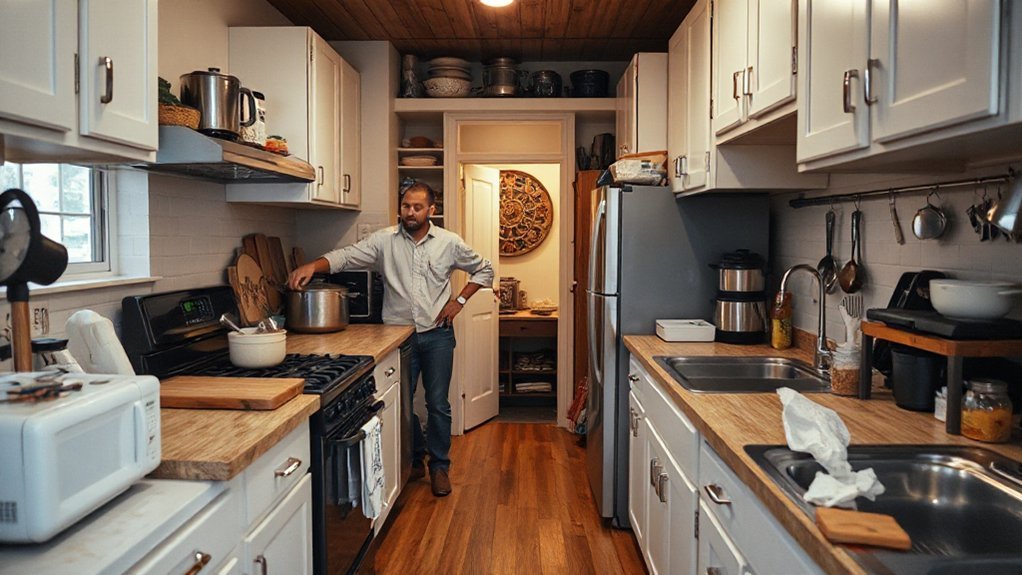
We’ve all done that awkward kitchen dance—shuffling around an open dishwasher door while carrying a hot pan, or playing bumper cars with our partner during dinner prep. When your work triangle feels more like a marathon and your walkways resemble narrow hallways, cooking becomes a frustrating obstacle course instead of the joyful experience it should be. Let’s talk about how poor work triangles and traffic flow issues turn even simple meals into unnecessarily complicated choreography.
Poor Work Triangle
Imagine this: you’re hustling to get dinner on the table, arms loaded with ingredients, when you realize you’ve got to trek clear across the kitchen just to grab a pot from the stove area, then hike back to the sink to fill it, then march all the way to the fridge for that forgotten onion. That’s a busted work triangle stealing your precious time and energy.
The classic triangle connects your three busiest zones, and when it’s working right, you’ll feel the difference:
- Each leg measures 4–9 feet with total distance around 12–26 feet—no marathon cooking sessions
- Clear sightlines between stations without dodging islands or furniture
- Logical zones that keep prep near the sink and landing space by the fridge
Freedom means cooking without obstacles blocking your flow.
Traffic Flow Issues
When your kitchen feels more like a bumper car arena than a cooking sanctuary, you’re dealing with serious traffic flow problems that turn meal prep into an obstacle course. We’ve all been there—dodging open cabinet doors, squeezing past each other in narrow walkways, and doing the dishwasher shuffle when someone’s loading plates. Your kitchen needs at least 42-48 inches between counters for breathing room, or 48-60 inches if multiple cooks share the space. When your dishwasher door blocks the main pathway or your peninsula creates a traffic jam, it’s time for change. Don’t let poor circulation cage your culinary creativity—you deserve kitchen freedom.
Broken Appliances Keep Getting Worse
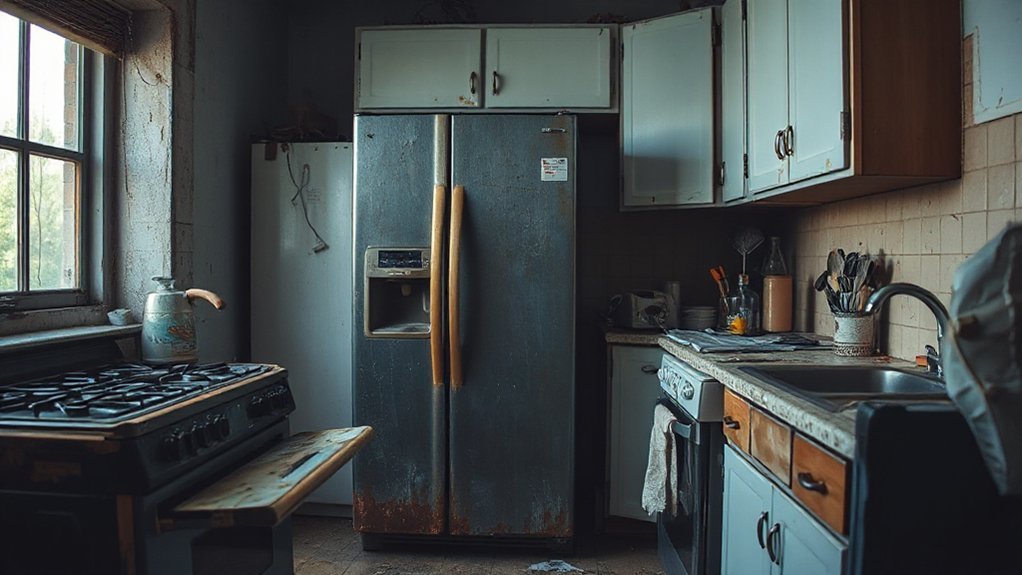
We’ve all been there—propping open that dishwasher with a bungee cord while crossing our fingers it’ll make it through one more load. But here’s the thing: when your appliances start acting like rebellious teenagers, those repair bills pile up faster than dirty dishes in the sink. What’s worse, that “quick fix” mentality can turn into real safety hazards when wiring gets sketchy or gas connections start acting up.
Frequent Repair Costs
Nothing’s quite as maddening as that dishwasher that’s become a monthly money pit, or the refrigerator that decides to throw another tantrum just weeks after its last “fix.” If your appliances are hitting that 10-15 year mark and turning into repeat offenders, you’re likely dealing with systemic wear—where fixing one broken part just sets up the next domino to fall.
Here’s when it’s time to wave the white flag:
- Single repairs cost $150-$500, but you’re calling the repair guy quarterly
- Cumulative fixes over 2-3 years approach half the price of replacement
- Individual repair estimates exceed 50% of a new unit’s cost
Plus, these energy-hungry dinosaurs are secretly inflating your utility bills by 10-30%. Sometimes freedom means liberating yourself from appliance tyranny.
Safety Hazards Increase
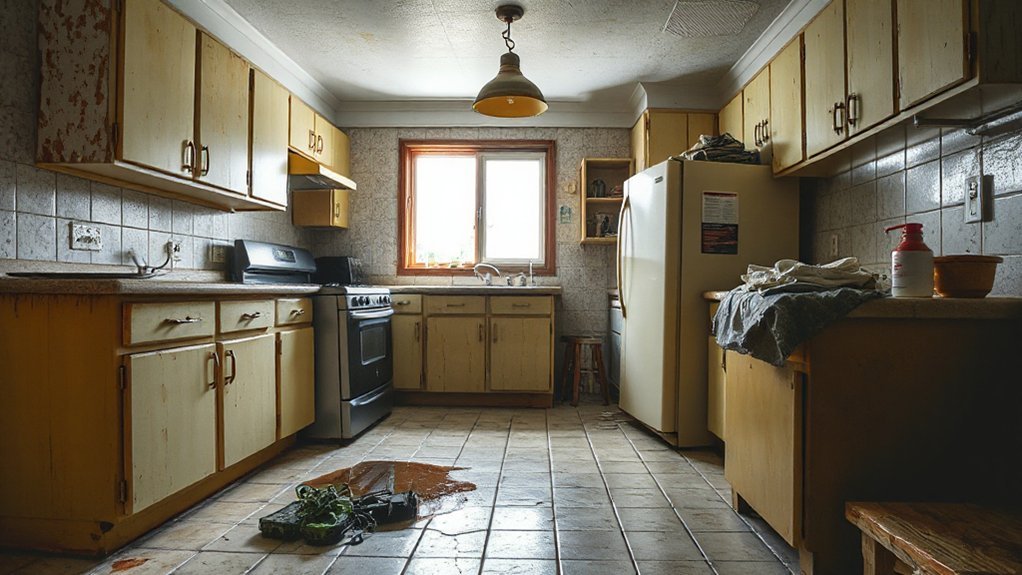
While we’re tallying up repair bills, there’s something far more serious lurking behind those busted appliances—they’re quietly becoming fire hazards and safety nightmares. That 12-year-old dishwasher you’re holding shut with bungee cords? It’s not charming anymore; it’s compromising safety systems. When appliances start tripping breakers, buzzing ominously, or sporting frayed cords, they’re screaming for help before they torch your freedom fortress.
We’ve all MacGyvered solutions—tape on oven seals, multi-plug adapters daisy-chained like Christmas lights. But aging motors, wonky thermostats, and overloaded wiring don’t respect our independence. Gas appliances get especially cranky, potentially leaking or producing carbon monoxide. If you’re constantly resetting circuits or catching whiffs of gas, your kitchen’s staging a dangerous rebellion that demands immediate attention.
Dark Lighting Makes Food Prep Nearly Impossible
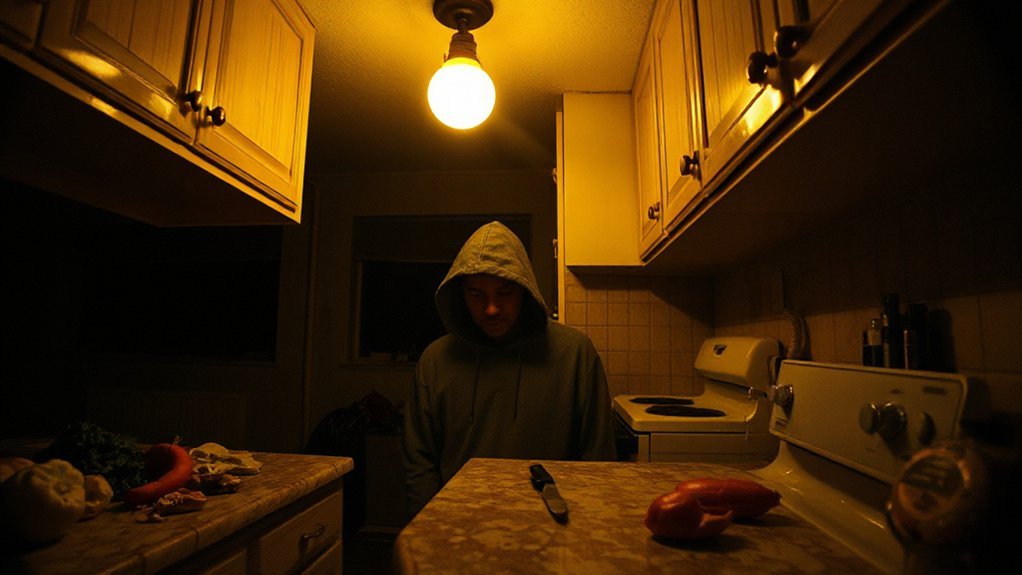
Ever tried dicing onions in your kitchen’s twilight zone? We’ve all been there—squinting at cutting boards while shadows from overhead cabinets turn food prep into a guessing game. When you can’t see ingredient colors clearly or judge doneness properly, you’re not just inconvenienced—you’re inviting accidents and ruined meals.
Here’s what proper kitchen lighting demands:
- 300-500 lux on countertops through under-cabinet LEDs (200-500 lumens per foot)
- 3000-4000K color temperature with 90+ CRI for accurate food color rendering
- Layered lighting system with dimmable ambient, task, and accent fixtures
Don’t let poor lighting turn cooking into a hazardous obstacle course. When measuring ingredients becomes guesswork and knife work feels dangerous, it’s time to illuminate your way to kitchen freedom.
Zero Storage Space For Growing Kitchen Needs
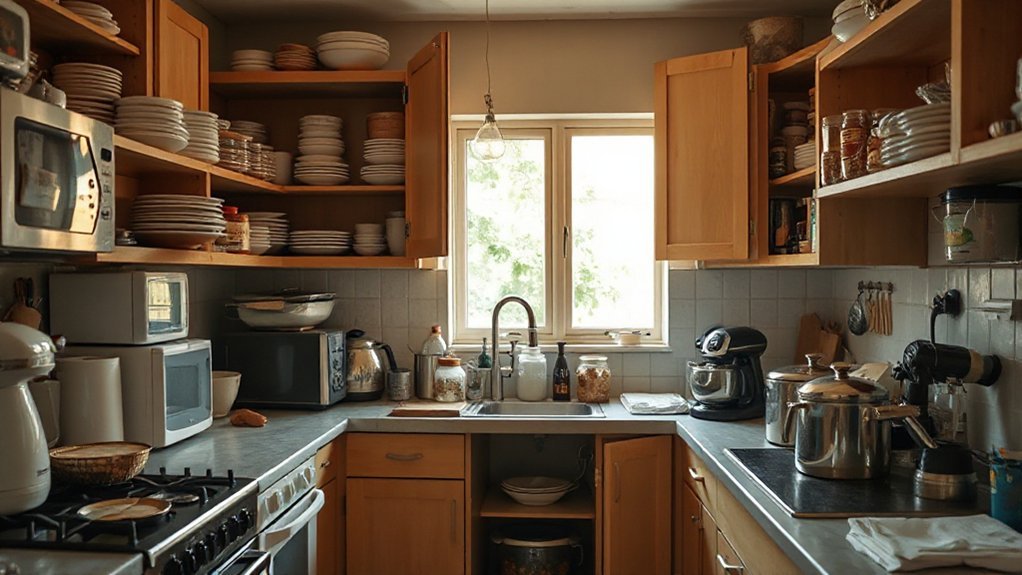
Your kitchen’s turned into a game of appliance Tetris, hasn’t it? We’ve all been there—that mixer living permanently on the counter because there’s simply nowhere else for it to go. Your cabinets overflow like a pantry avalanche waiting to happen, with cereal boxes playing hide-and-seek behind soup cans.
Here’s the thing: when you’re stacking appliances like building blocks and playing archaeological digs just to find the vanilla extract, it’s time for a storage intervention. Those blind corners? They’re basically Bermuda Triangles for your kitchen gear. And that empty space above your cabinets? It’s prime real estate going to waste.
Freedom means accessing your blender without moving three other appliances first.
Your Growing Family Outgrows The Small Space
Remember when your kitchen felt spacious enough for two people to waltz around each other? Now it’s more like bumper cars with backpacks and baby carriers. When your crew multiplies, that cozy kitchen becomes a battlefield where homework battles spaghetti sauce and snack prep fights for counter real estate.
Here’s how it’s clear you’ve outgrown your space:
- Meal prep requires Tetris-level skills to find 36 inches of uninterrupted counter space
- Everyone’s bumping elbows because there’s no room for integrated seating or expanded dining flow
- Stuff overflows everywhere since you’ve maxed out storage and haven’t conquered those vertical spaces
When your kitchen can’t keep pace with your growing tribe’s needs, it’s liberation time.
Dangerous Wiring And Water Damage Issues
While we’re dreaming about extra counter space and clever storage solutions, some kitchen problems demand our attention right now—before they turn from expensive headaches into genuine safety nightmares.
| Warning Sign | What It Means | Your Action |
|---|---|---|
| Flickering lights, buzzing fixtures | Damaged wiring, fire risk | Call electrician immediately |
| Circuit breakers trip constantly | Overloaded/undersized circuits | Upgrade to dedicated 20A circuits |
| No GFCI outlets near water | Code violation, shock hazard | Install GFCI protection |
| Water stains, musty odors | Chronic leaks, potential mold | Emergency plumbing repairs |
Don’t ignore these red flags—they’re your kitchen’s way of crying for help. Corroded cords and rusted electrical boxes spell disaster when water meets wiring. We can’t live freely when we’re dodging electrical fires and mold exposure.
Frequently Asked Questions
What Is the 30% Rule in Remodeling?
The 30% rule keeps us from going overboard when we’re dreaming big about kitchen makeovers. We shouldn’t spend more than 30% of our home’s current value on renovations if we want to avoid financial heartbreak. It’s like putting guardrails on our enthusiasm – sure, we’d love those fancy countertops, but let’s not mortgage our future for them, right?
What’s the Average Lifespan of a Kitchen?
Like a faithful old pickup truck that’s served us through countless family meals, we’re looking at 15-20 years before our kitchens need a complete overhaul. Sure, we’ll swap out appliances every 10-15 years and maybe refresh those cabinet doors, but the whole shebang? That’s nearly two decades of memories before it’s time to break free from outdated layouts and embrace something fresh.
So
Your kitchen’s like that faithful old pickup truck we’ve all known—sputtering along until one day the transmission drops out on the highway. Don’t wait for your countertop to crack during Thanksgiving dinner or the lights to flicker while you’re hosting book club. We’ve learned that 73% of homeowners who delay kitchen renovations end up spending 40% more when problems compound. Trust us, your family deserves better than cooking by candlelight and storing pots in the garage.