Funny how we’re always thinking about pruning right when we shouldn’t be doing it – usually after we’ve noticed how overgrown everything’s gotten in late summer. We’ve all been there, shears in hand, wondering if we’ll harm our beloved trees by cutting at the wrong time. The truth is, timing can make the difference between a thriving tree and one that struggles for years. Let’s walk through the three timing secrets that’ll transform your pruning game forever.
Key Takeaways
- Late winter through early spring is the optimal pruning window before buds swell and leaves emerge.
- Dormant-season pruning reduces pest pressure, promotes faster healing, and encourages vigorous spring growth for most trees.
- Spring-blooming trees should be pruned immediately after flowering, while summer bloomers benefit from late-winter cuts.
- Evergreens require gentle shaping before new growth starts, avoiding heavy pruning that removes excessive foliage.
- Emergency pruning for safety is acceptable year-round, but seek professional help for major cuts exceeding 25% canopy.
When Most Trees Should Be Pruned: The Late Winter Sweet Spot
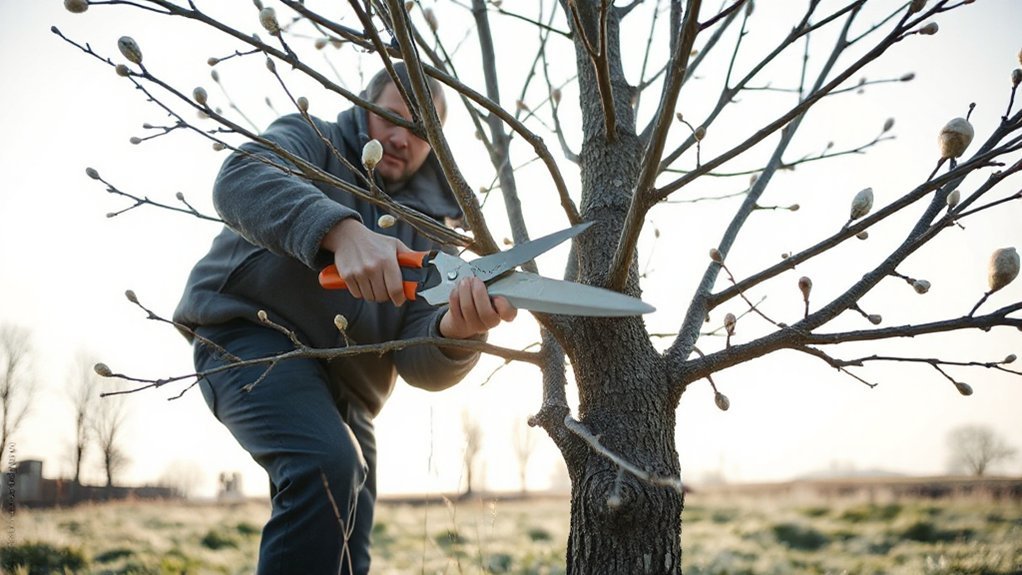
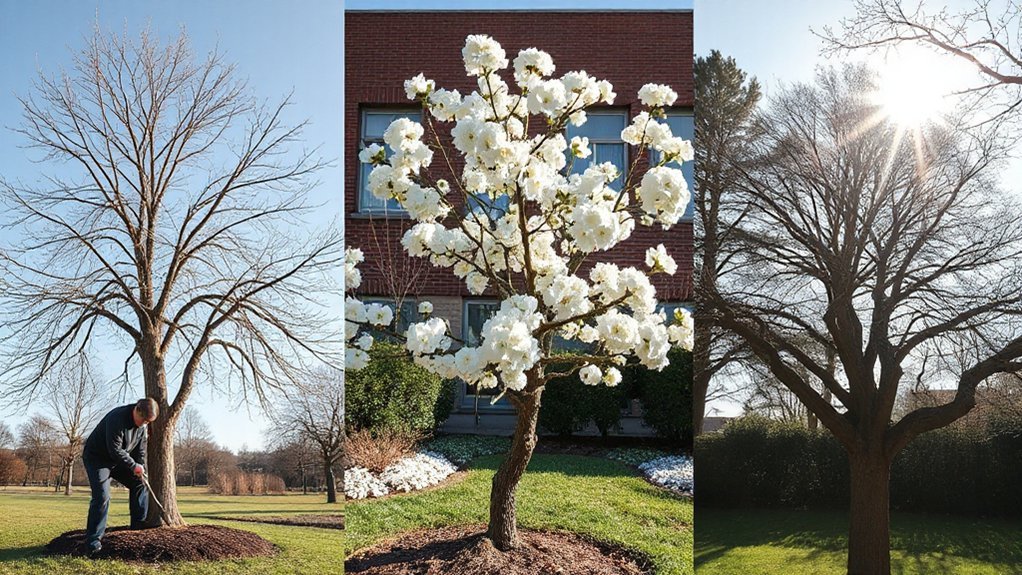
When the world’s wrapped in winter’s quiet embrace and our trees stand bare against the gray sky, that’s when we’ve got our best chance to give them the care they deserve. Late winter through early spring—before those buds start swelling—gives us the perfect pruning window. We’re working with trees at their lowest energy, making clean cuts that’ll heal fast once growing season kicks in.
Without leaves cluttering our view, we can see exactly what needs doing. Those problem branches stick out like sore thumbs. Best part? We’re dodging all those pesky insects and fungal troubles that come alive in warmer months. It’s nature’s way of telling us when to roll up our sleeves and get to work.
Timing Pruning by Tree Type: Fruit Trees, Flowering Trees, and Evergreens
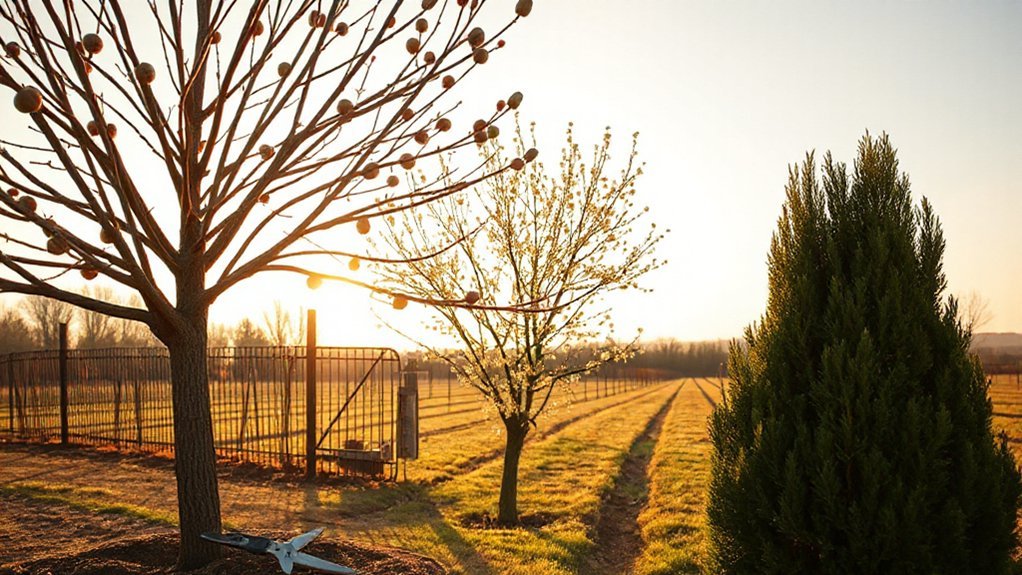
While that late winter pruning rule serves us well for most trees, we’d be foolish to think Mother Nature paints every tree with the same brush. Your fruit trees—apples, pears, and citrus—love that dormant season snip to open their canopies and spark vigorous spring growth. But spring bloomers like dogwood and lilac? We’re cutting their flowering potential if we prune before they bloom. Hit ’em right after their show ends instead. Summer bloomers such as crape myrtle reward late winter pruning with spectacular displays. Evergreens need gentle shaping before new growth starts, though pines prefer pruning during their candle stage. And those “bleeders” like maples? Wait until late spring to spare them unnecessary stress.
Emergency Pruning and When to Break the Seasonal Rules
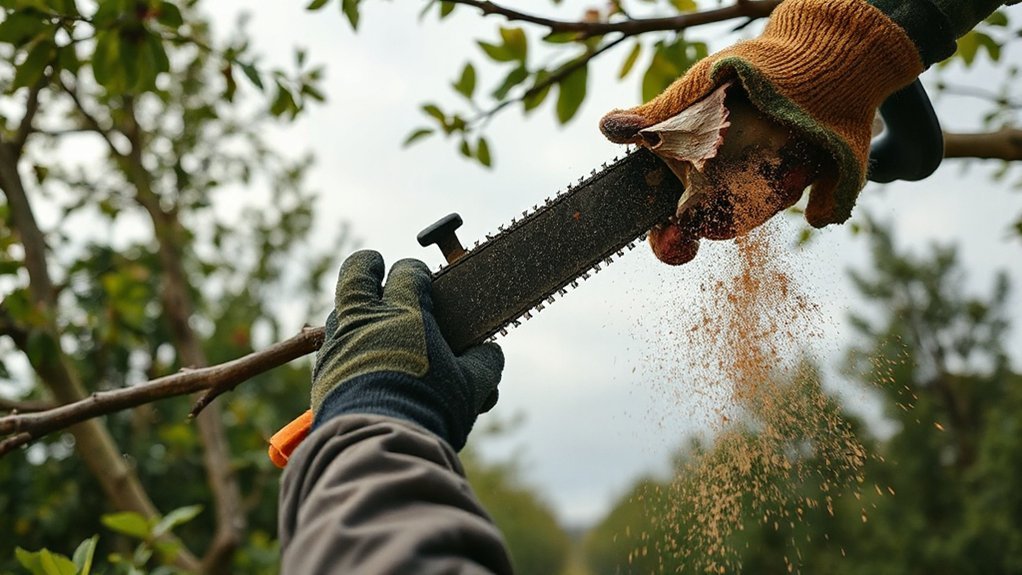
However, we’re still smart about it. For oak trees prone to oak wilt, we’ll call a certified arborist even in emergencies. We use proper three-cut technique to prevent bark tearing. And here’s the kicker – if emergency work means removing more than 5-30% of the canopy, we stop and get professional help to avoid shocking our trees.
Frequently Asked Questions
What Are Common Pruning Mistakes?
We’ve seen folks make some heartbreaking mistakes that’ll set their trees back years. Lion-tailing strips away too much interior growth, leaving branches weak as wishbones. Cutting at the wrong season invites disease like an open door. Using dirty, dull tools spreads trouble from tree to tree. Making flush cuts or leaving stubs prevents proper healing. Remember, we’re nurturing living giants—they deserve our respect and patience.
So
While Mother Nature sleeps through winter’s chill, that’s when we’re busiest with our pruning shears. We’ve learned timing isn’t just about convenience—it’s about respecting each tree’s rhythm. Spring bloomers get their haircuts after the show, while summer performers prep during dormancy. Sure, storms don’t follow our calendar, and sometimes we’ll break these rules for safety. But mostly, we let winter’s quiet teach us patience, knowing healthy trees reward our restraint.