Most folks don’t realize that the Northern Lights actually follow a predictable rhythm tied to solar cycles and seasonal darkness patterns. We’ve pinpointed seven specific windows this year when your chances of witnessing this celestial dance jump dramatically—and timing isn’t just about luck. From the post-equinox surge in late September to the solar maximum approaching in 2025, there’s genuine science behind when nature puts on her most spectacular light show.
Key Takeaways
- December through February offers peak winter viewing with longest nights and most frequent aurora activity under the auroral oval.
- Late September through November provides reliable darkness after equinox with increased geomagnetic activity and milder temperatures than midwinter.
- March through early April features spring equinox activity boosts with clearer weather while maintaining extended dark hours before daylight returns.
- Target 10 PM to 2 AM viewing windows during new moon phases when skies are darkest for optimal aurora visibility.
- Monitor for geomagnetic index levels of 5+ and plan viewing 1-4 days after major solar eruptions when storms typically reach Earth.
Late September Through November: Northern Lights Season Begins
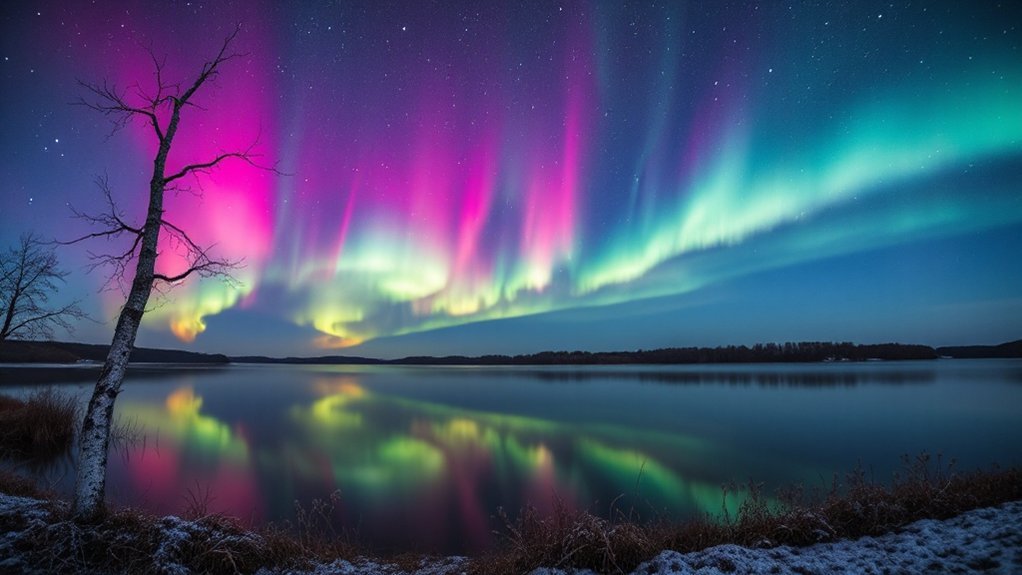
As autumn’s chill creeps across the Arctic and daylight starts its retreat, we’re welcomed back into aurora season with nature’s most spectacular light show. Late September through November marks our return to reliable darkness, especially after the autumnal equinox around September 22nd. Here’s the beautiful thing about early season—the September equinox often stirs up geomagnetic activity, giving us more frequent and powerful displays than we’d typically see in early autumn.
We’ll want to bundle up and head outside between 10 PM and 2 AM, when darkness truly settles in. Sure, it’s milder than midwinter, but clouds can be stubborn. Plan for moonless October and November nights—that’s when we’ll catch those faint, dancing colors best.
December Through February: Peak Winter Northern Lights Viewing
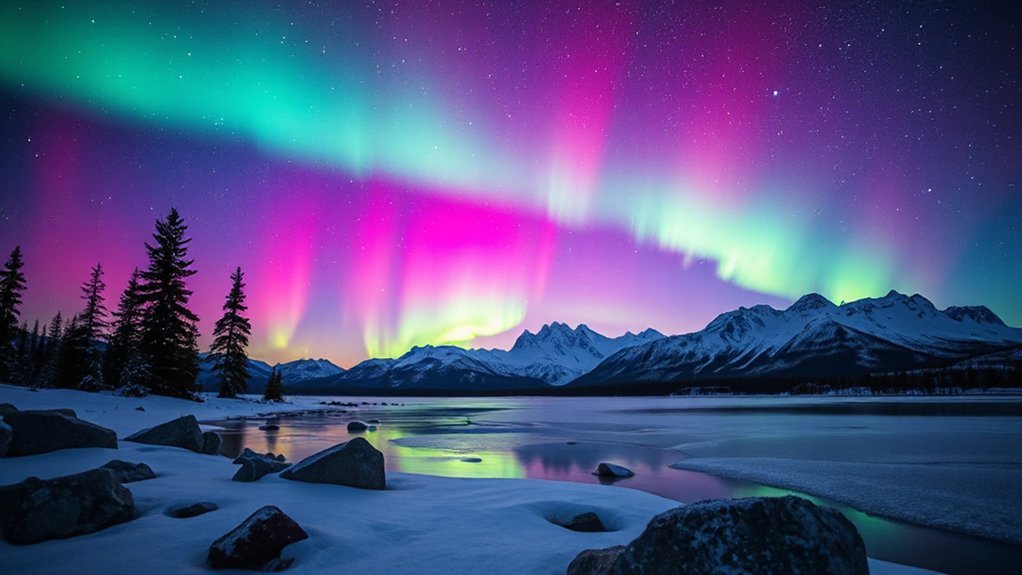
Now we’re talking about the aurora hunter’s holy grail—those deep winter months when the Arctic Circle becomes nature’s greatest light show venue. December through February delivers the longest, darkest nights you’ll find all year, giving those dancing green curtains maximum stage time to put on their most spectacular performances. It’s during these frigid months that we see aurora activity hit its absolute peak, with geomagnetic storms lighting up the polar skies night after glorious night.
Longest Arctic Nights
When December rolls around and winter tightens its grip on the Arctic, we’re treated to nature’s most generous gift for aurora hunters—nights that stretch on like endless velvet curtains. Places like Tromsø slip into Polar Night from late November through mid-January, while Svalbard goes even deeper into darkness. This isn’t just convenient—it’s pure freedom from the sun’s interference.
We’ve got nearly continuous darkness above the Arctic Circle, meaning we’re not racing against dawn like we would in autumn or spring. Those long winter nights give us breathing room to wait, watch, and really soak in the experience. When the aurora decides to dance, we’ve got hours upon hours to witness the show without checking our watches.
Peak Aurora Activity
December through February mark the absolute sweet spot for chasing the Northern Lights—these three months deliver everything we aurora hunters dream of rolled into one spectacular package. We’re talking about nature’s own primetime show, running strongest between 10 PM and 2 AM when the magnetic field gets most active. Those bitter-cold Arctic nights aren’t just brutal on our toes—they’re clearing away clouds and giving us crystal-clear viewing conditions that’d make any photographer weep with joy. When we position ourselves beneath that magical auroral oval around 66°N, we’re sitting in the front row seats. Time those trips around new moon windows, and we’ll catch colors dancing overhead that most folks only see in dreams.
March Through Early April: Extended Northern Lights Hours Before Summer
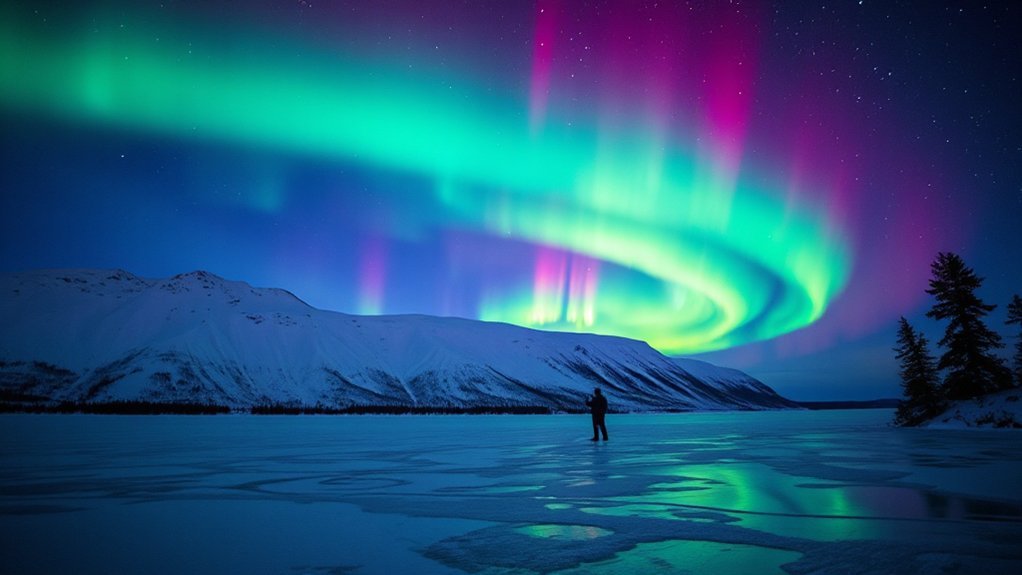
As winter loosens its grip and March arrives with longer nights, we’re blessed with what many consider the sweet spot for aurora hunting. From roughly 8 PM to 4 AM, we’ve got prime darkness stretching across Arctic skies, with the most spectacular shows typically dancing between 10 PM and 2 AM.
Here’s the kicker—the March equinox around the 20th kicks geomagnetic activity into high gear, delivering some of the year’s most powerful displays. Those early spring nights often bring clearer, milder weather than winter’s harsh bite, giving us better viewing conditions without sacrificing the magical darkness we need.
But don’t dawdle—April’s lengthening daylight quickly steals our aurora windows, so we’d better seize these golden opportunities while they last.
10 PM to 2 AM: When Northern Lights Appear Most Frequently
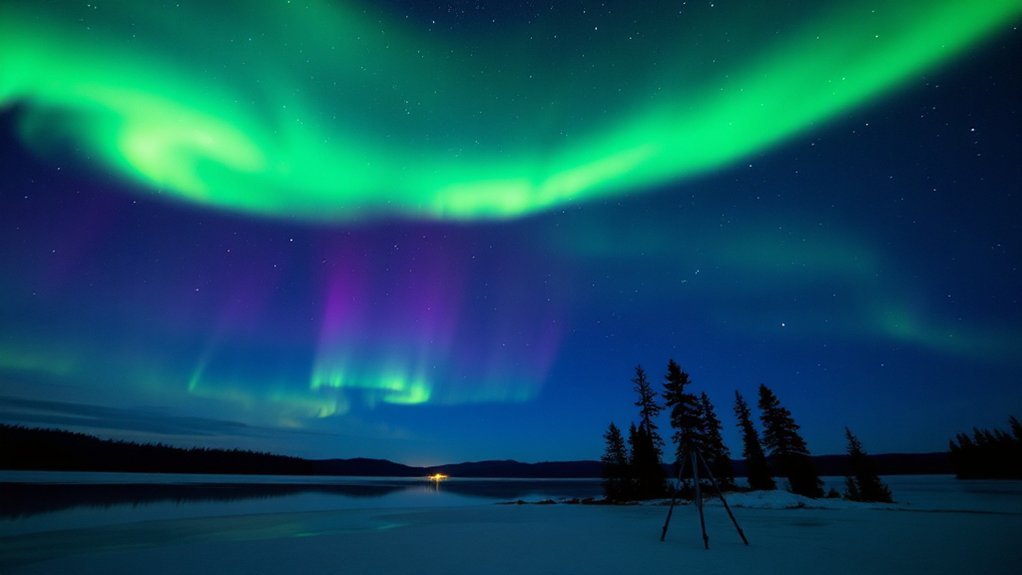
We’ve all heard those midnight aurora stories, and there’s solid truth behind them—the northern lights truly come alive between 10 PM and 2 AM local time. That’s when the auroral oval swings overhead like clockwork, giving us our best shot at witnessing nature’s grand light show. The darkness matters just as much as the timing, since longer nights create wider windows for those shimmering curtains to dance across the sky.
Peak Activity Hours
Most folks find themselves gazing skyward between 10 PM and 2 AM for good reason—that’s when the Northern Lights put on their best show. We’ve learned from countless nights of watching that activity clusters around midnight, with the sweet spot hitting between 11 PM and 1 AM.
If you’re planning an aurora hunt, we’d suggest getting yourself positioned outdoors well before 10 PM and staying put past midnight. During powerful geomagnetic storms, those dancing lights might surprise us earlier in the evening or stretch well beyond 2 AM, but they’ll still peak during those prime late-night hours. Even in the far north where auroras can flicker throughout winter’s long darkness, the statistical magic happens in that post-midnight window.
Optimal Viewing Windows
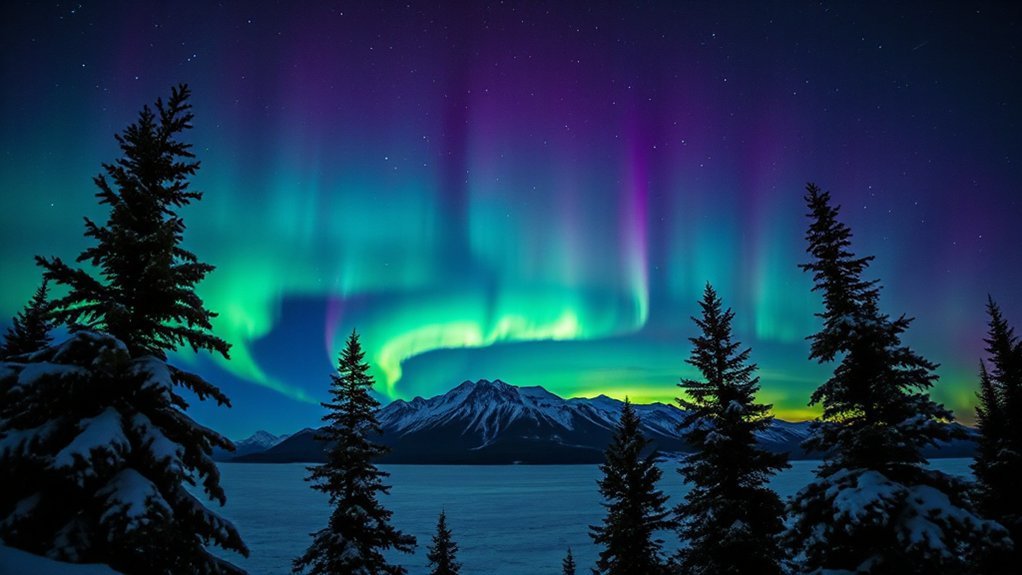
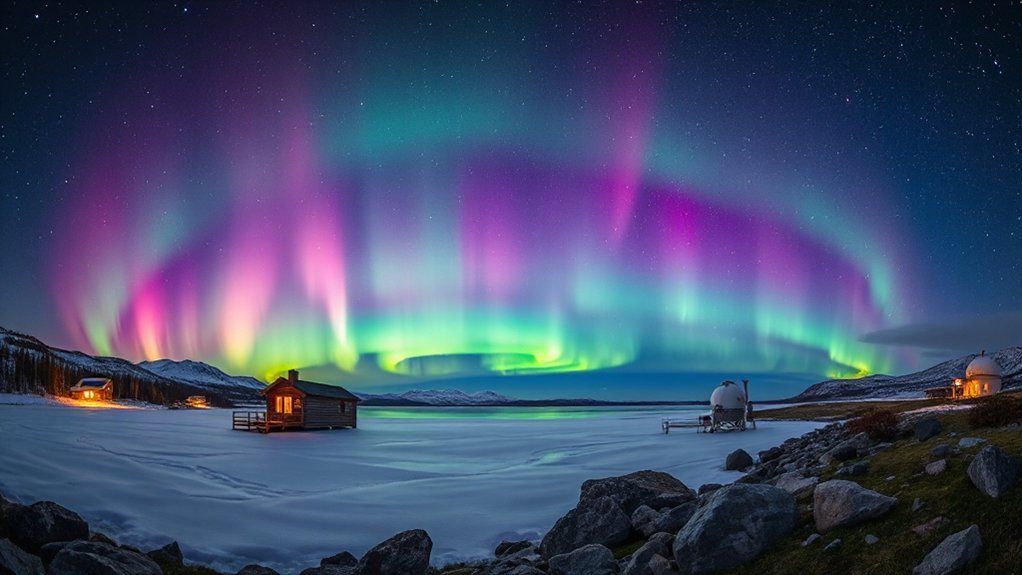
While you might catch glimpses of the aurora throughout the long winter nights, there’s something almost magical about that stretch from 10 PM to 2 AM—it’s when Mother Nature really opens up her light show. We’ve learned that midnight holds special power, thanks to how our planet’s magnetic field funnels those charged particles earthward during those witching hours.
Don’t fence yourself into just those peak hours, though. The aurora’s got its own wild spirit, and during stronger storms, she’ll dance across the sky well before 10 PM and keep going past sunrise. We’ve seen displays fire up right after full darkness settles in around 6 PM, especially when the geomagnetic activity’s running hot with high KP numbers.
Darkness Duration Matters
Though the aurora can surprise us at any hour during those long winter nights, there’s solid science behind why that 10 PM to 2 AM window consistently delivers the goods.
| Time Period | Aurora Activity | Darkness Quality |
|---|---|---|
| 6-10 PM | Low-Moderate | Twilight fading |
| 10 PM-Midnight | High | Deep darkness |
| Midnight-2 AM | Peak | ideal conditions |
| 2-6 AM | Moderate | Still dark |
| 6+ AM | Declining | Dawn approaching |
We’ve learned that darkness duration makes all the difference. From late September through late March, those extended nights give us proper viewing hours. During polar night, auroras can dance anytime, but that magical 22:00–02:00 window remains our most dependable bet for catching nature’s greatest light show.
New Moon Nights: Darkest Skies for Maximum Northern Lights Visibility
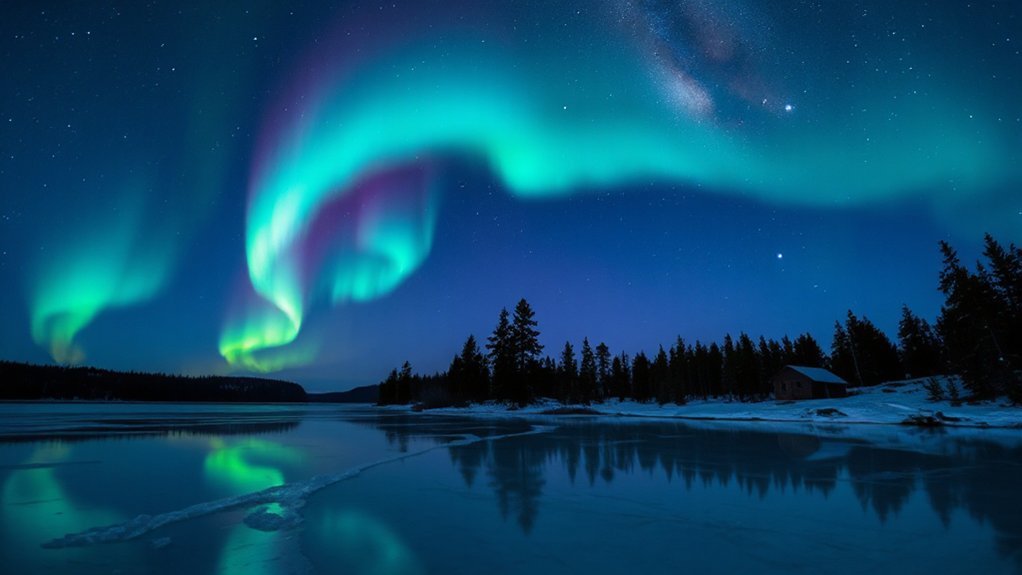
When folks ask us about timing their aurora chase, we always circle back to one golden rule: darkness is your best friend. New-moon nights deliver the deepest, darkest skies you’ll find all month—when that moon’s tucked between Earth and the sun, there’s nothing washing out those delicate green curtains dancing overhead.
We’ve learned to plan our adventures around these monthly dark windows, targeting the new-moon date plus one or two nights on either side. Those faint auroras with activity levels below KP 3? They’ll disappear completely under a bright full moon, but they’ll glow like magic on moonless nights.
Mark those new-moon dates from late September through March, and you’ll have your prime hunting schedule mapped out perfectly.
Geomagnetic Storm Alerts: When Northern Lights Zones Expand Southward
During major geomagnetic storms, Mother Nature throws us aurora watchers a curveball that can turn dreamers into believers overnight. Those solar tantrums called CMEs can shove the northern lights hundreds of miles south of their usual stomping grounds. When the KP index hits 5 or higher, we’re talking about auroras dancing over places that rarely see ’em – think central United States and Europe.
The real magic happens 1-4 days after the sun throws its fit. That’s when we check NOAA’s storm watches and probability maps to see if our backyard’s finally made it into the expanded zone. Remember May 2024? Folks in Florida and northern India saw what most thought impossible. Keep tabs on those real-time alerts – they’re your ticket to chasing freedom under dancing skies.
2025-2026 Solar Maximum: Why This Period Offers Exceptional Displays
While we’re busy watching for those storm alerts, there’s something even bigger brewing that’s got aurora chasers grinning from ear to ear. The solar maximum peaked around 2025, and we’re still riding that cosmic wave through 2026. Think of it as nature’s own fireworks finale that just keeps giving.
Here’s why this period’s pure gold for Northern Lights hunters:
- More frequent CMEs blast Earth with charged particles, creating brighter, more dynamic displays
- Higher particle flux delivers those jaw-dropping multi-color shows with fast-moving structures
- Stronger geomagnetic storms push visible auroras way south of their usual stomping grounds
Even though the sun’s starting its decline, 2026 remains turbulent enough to serve up spectacular shows. We’re living through prime aurora-hunting years, folks.
Frequently Asked Questions
What Is the Best Month to See the Northern Lights?
March stands out as our top pick for chasing those dancing lights across the sky. We’ve found that equinoctial magic around the spring equinox cranks up geomagnetic activity, giving us more frequent auroral displays while blessed darkness still stretches long enough for proper viewing. December through February offer solid backup options when winter’s grip keeps skies crystal clear and nights endless.
What Time Will the Northern Lights Be Visible on November 12TH?
We can’t predict the exact timing for November 12th without checking real-time forecasts that day. Generally, we’ll want to start watching around 10 PM and stay alert until 3 AM, with midnight being our sweet spot. The key is monitoring those KP index forecasts and space weather apps—Mother Nature doesn’t follow our schedules, so we’ve got to stay flexible and ready to chase clear skies.
Why Is 2026 the Best Year to See the Northern Lights?
We’re looking at 2026 as our golden ticket because the sun’s just past its peak party phase from 2025, still throwing off those wild coronal mass ejections that light up our skies. Think of it like catching the last dance at a barn raising—all that solar energy’s still churning, pushing those brilliant green curtains way down south where we can actually see ’em without heading to Alaska.
What Time Tonight Is the Best Time to See the Northern Lights?
Like waiting for shooting stars on a summer night, we’ll find our best chances between 10 PM and 2 AM tonight, with midnight being our sweet spot. If we’re chasing freedom under those endless polar skies, we can start watching right after dark—especially when the storms are brewing strong. Real-time forecasts will guide us to nature’s most liberating light show.
So
We’ve wandered through winter’s wonders and mapped the magical moments when nature’s most magnificent light show dances overhead. From September’s stellar start to solar maximum’s spectacular surge, timing’s truly everything for chasing these celestial curtains. Pack your patience, pick your perfect spot, and prepare for pure amazement. The northern nights are calling, and we’ve given you the golden guide to catch Aurora’s breathtaking ballet when she’s bound to shine brightest.