Like seeds planted in fertile ground, Tesla’s ambitious 2026-2027 lineup promises to bloom into something we’ve never witnessed before. We’re standing at the crossroads where affordable meets revolutionary, where the $40K Model Y Standard sits alongside the 620-mile next-gen Roadster. From the stainless steel Cybertruck finally hitting volume production to the mysterious two-seater Robotaxi, these ten models will reshape how we think about transportation. But there’s something Elon isn’t telling us yet.
Key Takeaways
- Robotaxi two-seater driverless vehicle targeted for commercial launch in 2026, with no-steering-wheel concept in development roadmap.
- Next-Generation Roadster debut targeted for late-2026 with 620-mile range, sub-2-second 0-60 acceleration, and $200,000+ pricing.
- Tesla Semi full-scale manufacturing begins at Giga Nevada in 2026 with 50,000 annual production target.
- 2027 Model Y Juniper launches around $39,990 with updated exterior design and global production rollout.
- Model 3 and Model Y Standard variants feature 69.5 kWh batteries with 321-mile range starting at $38,630-$41,630.
Tesla Model 3 and Model Y Standard: New Budget Variants Start Under $40K
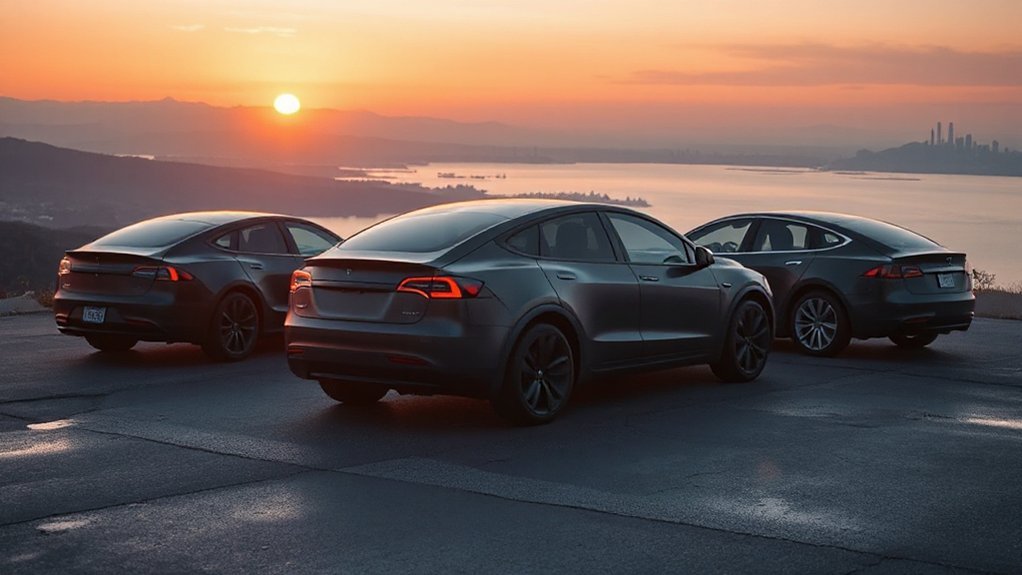
While Tesla’s been climbing upmarket with fancier trims and features, they haven’t forgotten folks who just want a solid electric car without breaking the bank. The new Model 3 Standard starts at $38,630, while the Model Y Standard clocks in at $41,630—finally bringing Tesla back under that magical $40K mark for the sedan.
These budget-friendly variants pack 69.5 kWh batteries delivering around 321 miles of range, which is plenty for most of us. Sure, you’ll give up heated rear seats and that fancy rear touchscreen, but you’re still getting 286 horsepower in the Model 3 and 300 in the Model Y. Sometimes the best choice isn’t the fanciest—it’s the one that gets you where you’re going without emptying your wallet.
Tesla Model 3 and Model Y Premium: Renamed Long Range Trims for 2026
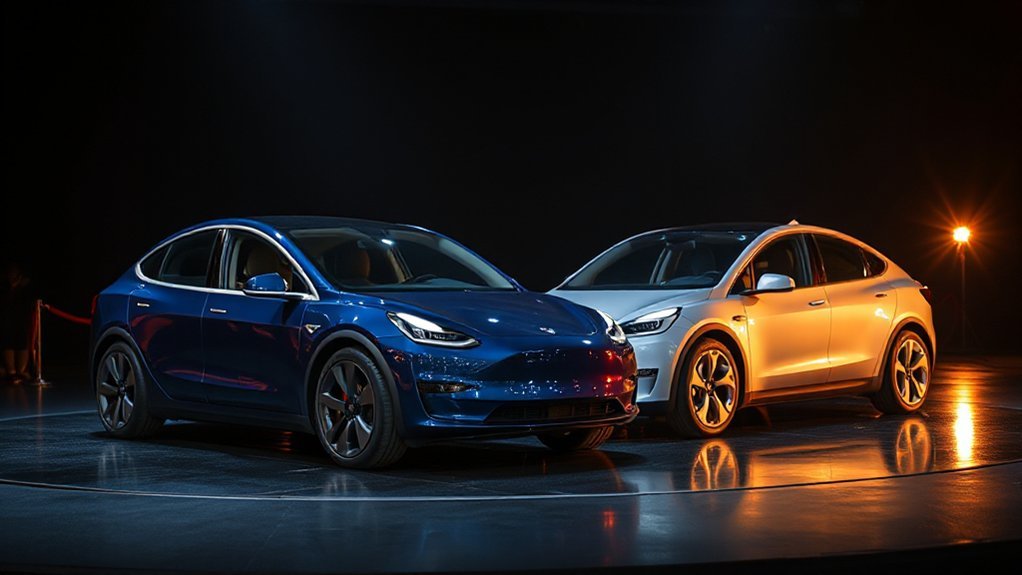
As Tesla shuffled its 2026 lineup cards, the Long Range trim got itself a shiny new name: Premium. We’re looking at the same reliable workhorses we’ve come to trust, just wearing fancier badges. The Premium trim now sits pretty above those new Standard variants, maintaining that sweet spot between basic transportation and all-out performance madness.
What hasn’t changed? The Performance trim still reigns supreme as Tesla’s speed demon. This renaming game affects both Model 3 and Model Y families, giving folks clearer choices when they’re ready to make the leap to electric freedom. Sometimes a fresh coat of paint on the nameplate helps everyone understand what they’re getting. Smart move, Tesla.
2027 Model Y Juniper: Refreshed Design Carries Tesla’s Momentum Forward
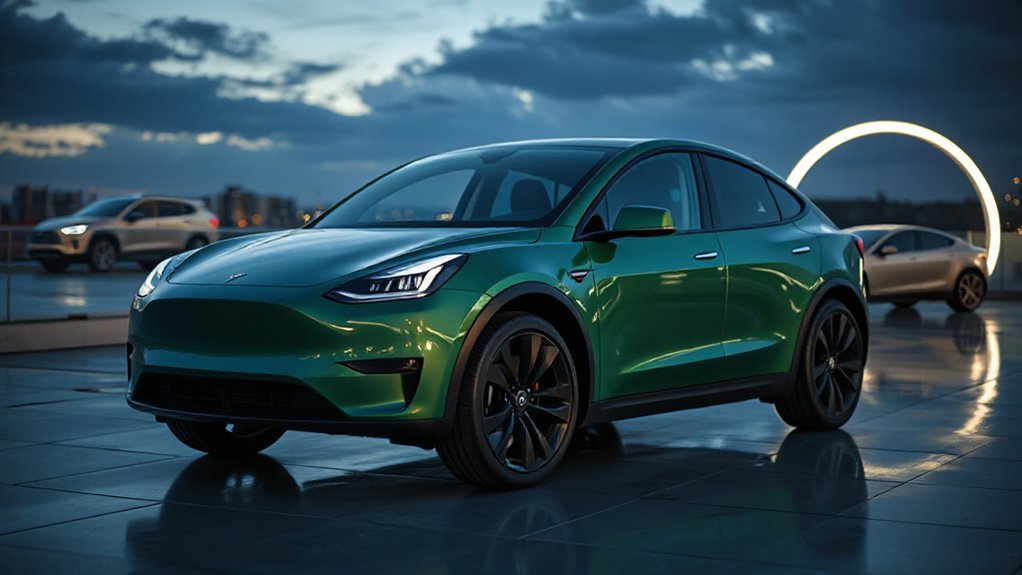
When Tesla decided to give the Model Y a makeover, they didn’t mess around with half-measures. The Juniper refresh brings real substance to the table – slim rectangular headlights flow into a horizontal light bar, while that chiseled front fascia cuts through air like it means business.
We’re seeing a vehicle that’s earned its stripes through smart design choices. The sloping roofline and prominent character lines give it that coupe-like swagger, while the built-in spoiler keeps things practical.
- Sleek headlight design with connected horizontal bar creates aggressive aerodynamic styling
- Coupe-inspired silhouette with sloping roofline and prominent door character lines
- Interior maintains Tesla’s clean 15.4-inch touchscreen layout with updated materials
- Global production across Fremont, Texas, Shanghai, and Berlin guarantees wide market availability
Starting around $39,990, it’s delivering freedom without breaking the bank.
Tesla Cybertruck Production Ramp: Stainless Steel Beast Reaches Volume
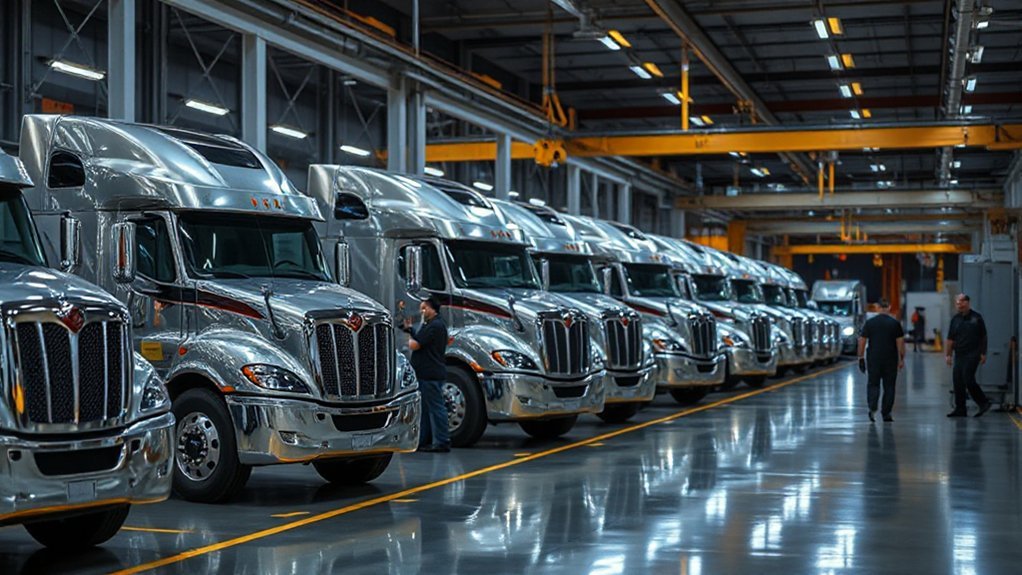
Tesla’s shifting gears from sleek crossovers to something that looks like it rolled straight out of a sci-fi movie. The Cybertruck‘s finally hitting its stride at Giga Texas, where we’re seeing real volume production ramp up through 2026. This isn’t your typical pickup—it’s built with a stainless-steel exoskeleton that ditches paint altogether, giving you raw durability and strength that’ll stand the test of time.
We’re talking serious capability here: 340 miles of range in top configurations, 11,000 pounds of towing power, and all-wheel drive that’ll take you anywhere you need to go. For folks who value independence and getting things done without compromise, this steel beast represents freedom from the gas pump and dependence on traditional automakers.
Tesla Robotaxi Launch: Autonomous Two-Seater Targets 2026 Debut
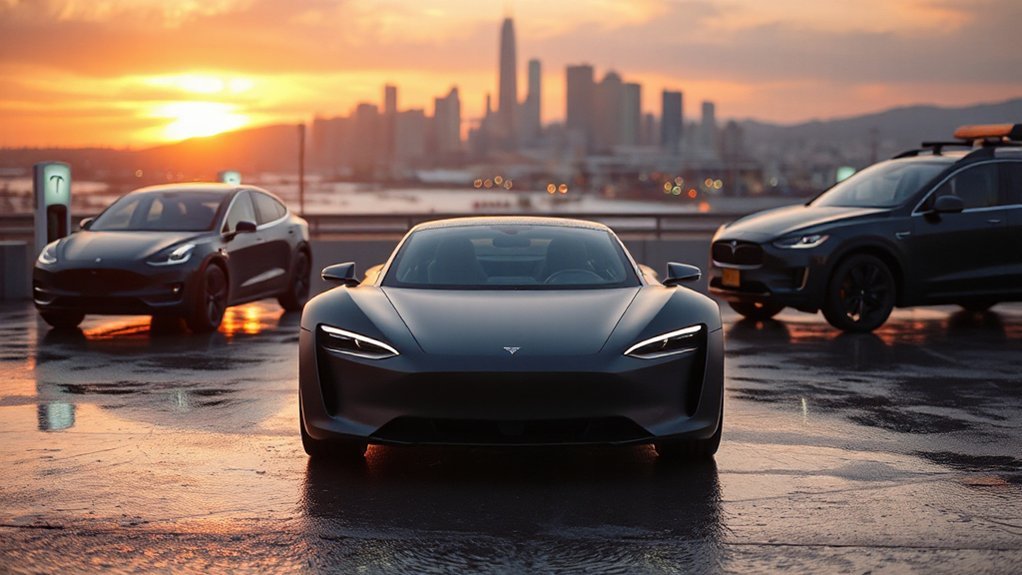
While most folks are still getting used to the idea of electric trucks, Tesla’s already cooking up something that’ll make your head spin—a completely driverless two-seater that doesn’t even have a steering wheel. This Robotaxi represents Tesla’s bold leap into pure autonomy, ditching traditional controls for a ride-hailing-focused design that’ll launch in 2026.
We’re talking about genuine freedom from driving altogether. Tesla’s engineering this beauty specifically for autonomous ride services, not private ownership. They’re running unsupervised Full Self-Driving tests starting mid-2025 to prove the technology works flawlessly before deploying it commercially.
Key details about Tesla’s Robotaxi:
- Priced around $30,000 for affordability
- Built at Giga Texas facility
- No steering wheel—fully autonomous design
- Targeted 2026 commercial launch
Tesla Semi Production Scale: Full Manufacturing Begins at Giga Nevada
Now we’re turning our attention to Tesla‘s big rig dreams, where the Semi‘s about to shift into high gear at Giga Nevada come 2026. They’re planning to crank out around 50,000 of these electric haulers each year, all powered by those homegrown 4680 battery cells we’ve been hearing so much about. It’s Tesla’s bold leap from making cars for your driveway to building the trucks that’ll haul America’s freight down every highway.
Nevada Facility Expansion
Scaling up production ain’t just about making more stuff—it’s about doing it right, and that’s exactly what’s happening at Giga Nevada come 2026 when Tesla fires up full-scale Semi manufacturing.
We’re talking about a real transformation here, folks. Tesla’s taking this facility from good to great with some serious upgrades that’ll power their 50,000-unit annual target. The beauty lies in how they’re connecting the dots—battery innovation meeting heavy-duty assembly under one roof.
- 4680 battery cell integration powering Semi powertrains and energy systems
- New battery production lines including LFP technology for diverse applications
- Dual-purpose manufacturing supporting both Semi trucks and Megapack 3 stationary storage
- Cost-efficiency focus through dry cathode work and streamlined large-format vehicle assembly
This expansion represents Tesla’s commitment to breaking free from traditional manufacturing limitations.
Annual Capacity Targets
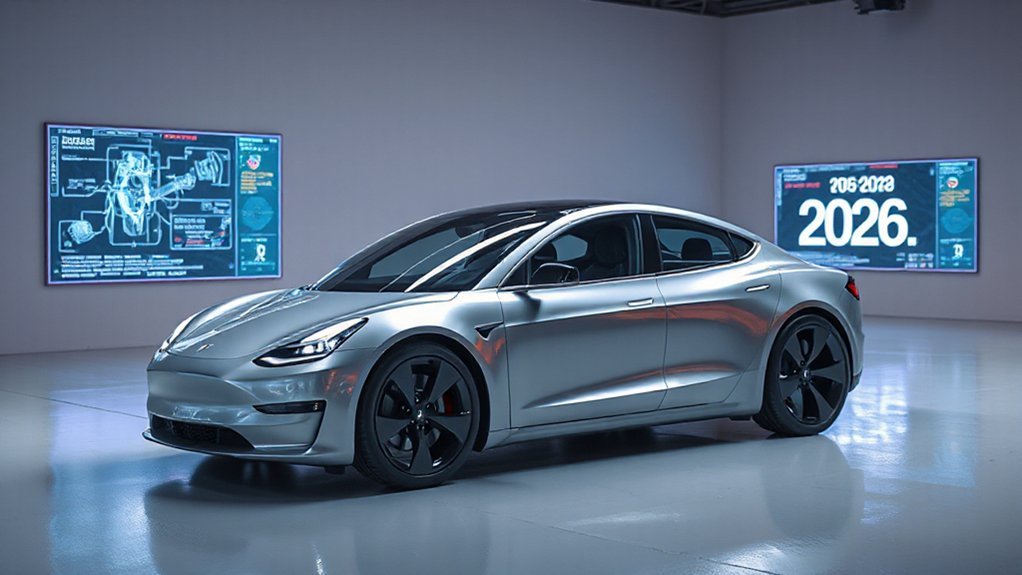
Those 50,000 Tesla Semis rolling off Giga Nevada’s production line each year aren’t just impressive numbers on a spreadsheet—they’re Tesla’s bold declaration that electric freight hauling is moving from experimental to essential.
We’re witnessing something powerful here—a company betting big on freeing our highways from diesel dependency. That 50,000-unit target puts the Semi squarely in high-volume territory, transforming it from niche curiosity to mainstream workhorse.
| Production Element | Target Specification |
|---|---|
| Annual Capacity | 50,000 units |
| Battery Technology | 4680-format cells |
| Manufacturing Start | 2026 |
| Facility Location | Giga Nevada |
| Market Position | High-volume commercial |
This isn’t just about trucks—it’s about liberating entire supply chains from fossil fuel chains.
4680 Battery Integration
Behind every one of those 50,000 Semis sits Tesla’s most ambitious battery integration project yet—a manufacturing symphony where 4680 cells, pack assembly, and truck production all dance together under one Nevada roof.
We’re witnessing something beautiful here: Tesla’s breaking free from supply chain shackles by bringing everything in-house. Those NC05 4680 cells aren’t just powering trucks—they’re powering independence. The dry-cathode processing cuts costs while Nevada’s shared capacity serves both Semis and Megapacks, creating manufacturing flexibility that’d make any freedom-loving entrepreneur proud.
- 4680 cells with NC05 variant deliver higher energy density for heavy-duty cycles
- Dry-cathode processing reduces cell costs and accelerates production economics
- Shared battery lines serve Semi trucks and Megapack storage units
- Vertical integration brings cell manufacturing, pack assembly, and vehicle production together
Next-Gen Tesla Roadster: 620-Mile Supercar Returns Late 2026
After years of waiting and wondering, Tesla’s promised Roadster is finally gaining real momentum toward its late-2026 debut. We’re looking at something truly special here – a supercar that’ll stretch 620 miles on a single charge while rocketing from 0-60 mph in under two seconds. That’s the kind of performance that’ll make your heart skip a beat.
Tesla’s targeting a price north of $200,000, which puts this beauty in proper supercar territory. Sure, it’s not pocket change, but we’re talking about freedom redefined – the freedom to drive cross-country without range anxiety, the freedom from gas stations forever, and the freedom to experience mind-bending acceleration that’ll pin you to your seat. This isn’t just transportation; it’s liberation on wheels.
Tesla 4680 Battery Technology: New Cells Cut Costs Across 2026 Models
We’re witnessing Tesla’s boldest battery breakthrough yet as they gear up to roll out their NC05 4680 cell variant in 2026, promising to slash manufacturing costs like never before. These aren’t just incremental improvements—we’re talking about a complete game-changer that’ll make Tesla’s next-generation vehicles more affordable for folks like us. What’s got us really excited is how they’re pairing these advanced cells with LFP production lines at Nevada, creating a one-two punch that’ll bring down costs across their entire 2026 lineup.
NC05 4680 Variants
Tesla’s rolling out something pretty special with their NC05 4680 battery cells, and folks who’ve been watching the company’s battery journey know this isn’t just another incremental tweak. We’re talking about a fundamental shift that’ll liberate drivers from sky-high battery costs while delivering the performance freedom we’ve all been craving.
The NC05 variant represents Tesla’s boldest move yet toward true energy independence:
- Chemistry improvements slash cost per kWh without compromising power output
- Dry-cathode manufacturing simplifies production and cuts operational complexity
- High-power applications like the Semi get priority deployment in 2026
- Next-generation platforms will integrate these cells for affordable, high-performance vehicles
This ain’t just about cheaper batteries—it’s about breaking the chains that’ve kept electric vehicles expensive and giving everyone access to clean, powerful transportation.
LFP Nevada Production
Down in Nevada, Tesla’s stirring up a battery revolution that’ll change how we think about affordable electric driving. We’re watching them build brand-new LFP production lines at Giga Nevada that’ll power both the mighty Megapack 3 and those wallet-friendly vehicle variants we’ve all been waiting for.
This isn’t just about making batteries – it’s about breaking free from the high costs that’ve kept electric vehicles out of reach for too many hardworking folks. Tesla’s targeting Q1 2026 for these LFP lines to come online, and when they do, we’ll see pack costs drop like a stone.
The beauty of lithium iron phosphate isn’t just affordability – it’s durability and safety rolled into one package that’ll democratize electric freedom for everyone.
Tesla Megapack 3: Grid-Scale Energy Storage Enters Mass Production
Picture a giant battery the size of a shipping container sitting quietly in a field, storing enough clean energy to power thousands of homes when the sun isn’t shining or the wind isn’t blowing. That’s Tesla’s Megapack 3, and we’re looking at mass production by Q1 2026. This isn’t just another battery—it’s energy independence on steroids.
We’re talking about 3.9 MWh of capacity per unit, manufactured at Giga Nevada using those new LFP battery lines we discussed. Tesla’s already deployed 12.5 GWh in Q3 2025 alone—that’s an 81% jump from last year.
- Up to 3.9 MWh energy capacity per container-sized unit
- Mass production targeted for Q1 2026 at Giga Nevada
- Built with advanced LFP and dry-cathode battery innovations
- Addresses growing 81% year-over-year energy storage demand
Tesla 2026 Timeline: Complete Roadmap for New Models and Features
While Tesla’s making waves with grid-scale storage, there’s a whole parade of consumer vehicles rolling our way that’ll reshape how we think about getting from point A to point B.
We’re looking at 2026 as Tesla’s breakthrough year, when freedom of movement gets redefined. The Robotaxi promises to liberate us from steering wheels entirely, while the Semi tackles long-haul independence for truckers.
| Model | Key Freedom Feature |
|---|---|
| Robotaxi | No steering wheel needed |
| Roadster | 620-mile range liberation |
| Semi | 50,000 annual production units |
Behind the scenes, Tesla’s rolling out NC05 4680 battery tech and dry-cathode manufacturing by Q1 2026. These upgrades’ll power everything from the sub-2-second Roadster to affordable daily drivers, making electric independence accessible to more folks than ever before.
Frequently Asked Questions
What Car Does Elon Musk Drive?
Elon drives his own Tesla fleet, friend. We’ve seen him behind the wheel of that original 2008 Roadster, various Model S Plaid variants that’ll knock your socks off, and he’s been testing that rugged Cybertruck prototype. He rotates through Model X, Model 3, and Model Y too. Smart man practices what he preaches – driving the electric future he’s building for all of us freedom-loving folks.
Does Tesla Use Mercedes Parts?
Not anymore, friend. Like two neighbors who once shared tools but went their separate ways, Tesla and Mercedes parted company years ago. Back around 2010, Tesla supplied batteries for Mercedes electric cars, but that partnership ended by 2014. Today’s Teslas are built with their own parts and various suppliers – no Mercedes components in sight. They’ve charted their own independent course.
So
Y’all, here’s what we’ve learned digging into Tesla’s grand plan: they’re betting the farm on 2026-2027 being their breakout years. But can they really deliver ten different models while keeping prices under $40K? That’s the million-dollar question. We’ve seen Elon’s timelines before, and they don’t always stick. Still, if even half these vehicles hit the road on schedule, we’re looking at a complete game-changer for everyday folks wanting electric.