There’s something magical about that moment when we’re sure it’s finally safe to tuck our precious tomato seedlings into the garden soil. We’ve all felt that gardener’s itch come spring – watching other folks set out their plants while we’re still counting days and checking weather forecasts. But here’s the thing: timing isn’t just about avoiding frost. The secret lies in understanding your garden’s unique rhythm and working with nature’s schedule.
Key Takeaways
- Start tomato seeds indoors 6-8 weeks before your last average spring frost date for optimal transplant timing.
- Transplant outdoors when soil temperatures reach 55-60°F and nighttime temperatures consistently stay above 50°F.
- Harden off seedlings gradually over 7-14 days, increasing outdoor exposure from 1-2 hours to full days.
- Use your ZIP code frost calculator and local extension office data to determine precise planting dates.
- Choose early varieties (under 70 days) for short seasons or late varieties for longer growing periods.
When To Plant Tomatoes In Different Climate Zones
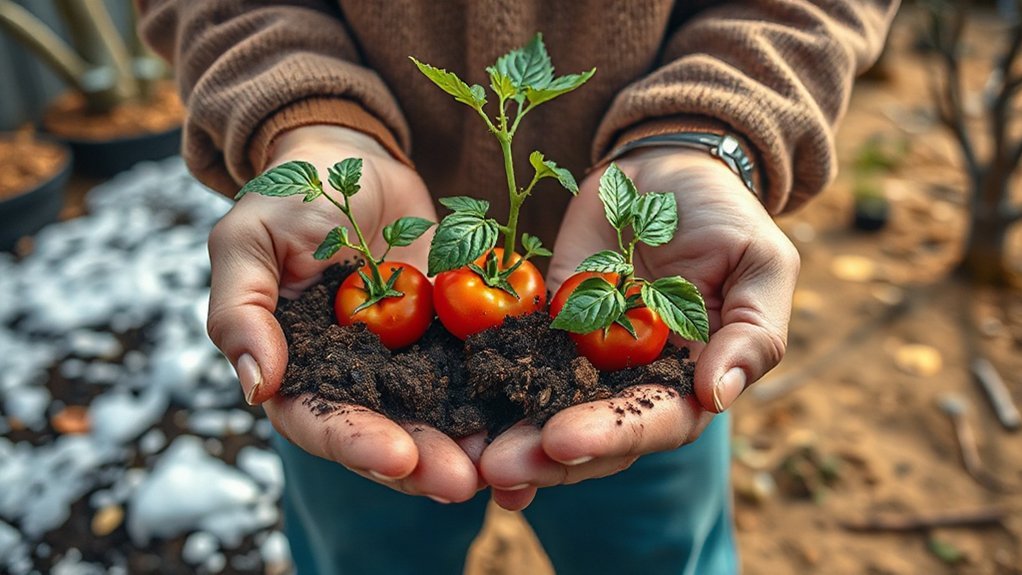
Where you live makes all the difference when it comes to getting those tomato transplants in the ground at just the right time. In cooler zones 3-6, we’re racing against short seasons, so we’ll start seeds indoors 6-8 weeks before frost, then transplant once soil warms in late May or early June. Those of us in moderate zones 7-9 get more breathing room—we can transplant from mid-April through May and even succession plant for extended harvests. Lucky folks in zone 10 and beyond flip the script entirely, planting in late summer for fall and winter crops to dodge that brutal summer heat. Remember, cold nights below 50°F will stunt growth and invite disease, so patience pays off.
Find Your Last Spring Frost Date
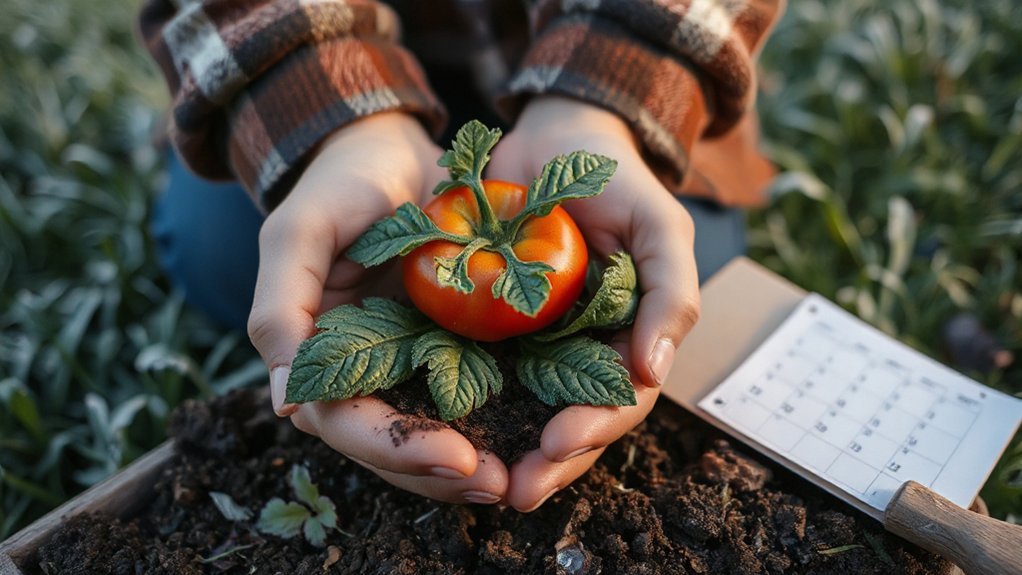
Now that we’ve covered the climate zones, let’s get down to brass tacks and find your exact last spring frost date—it’s the golden key that reveals perfect tomato timing. We can’t just guess or go by what worked for your neighbor down the road; frost dates matter because they’re the difference between thriving seedlings and heartbreaking black mush on a cold morning. The good news is we’ve got some reliable tools at our fingertips to pinpoint your zone information and use handy online frost calculators that’ll give us the real scoop for your backyard.
Why Frost Dates Matter
When it comes to growing tomatoes successfully, your last average spring frost date becomes the cornerstone that everything else revolves around—it’s like the North Star for your entire planting calendar. We can’t stress enough how this single date liberates you from guesswork and sets you free to plan with confidence.
Think of frost dates as nature’s roadmap. They tell us exactly when to start seeds indoors, when it’s safe to transplant outdoors, and how to avoid costly mistakes that’ll crush your harvest dreams. Without this vital timing, we’re just gambling with our gardens.
Here’s the beautiful truth: once you know your frost date, you’ve uncovered the secret to tomato success. Everything else falls into place naturally.
Finding Your Zone Information
How do we pinpoint that magical date that’ll guide our entire tomato-growing journey? We’ve got several trusty tools at our fingertips. The Old Farmer’s Almanac has been helping gardeners for generations—just punch in your ZIP code and you’ll get your local last frost date. Your state’s Cooperative Extension office is another goldmine of regional wisdom, offering data that’s fine-tuned to your neck of the woods.
The USDA hardiness zone maps give us the big picture, but here’s the thing—we need that specific local date, not just the broad zone. Zone 6 might average May 15, but your backyard could be different. Remember, these published dates are averages, so we’ll still need to keep one eye on current weather forecasts and local conditions.
Using Online Frost Tools
Why wrestle with guesswork when we’ve got powerful online tools that’ll nail down our last spring frost date with pinpoint accuracy? These digital resources take the mystery out of timing and put real data in our hands.
Here are our go-to frost-fighting tools:
- Old Farmer’s Almanac frost calculator – Just punch in your ZIP code for instant local predictions
- NOAA climate data – Government weather records spanning decades of reliable information
- University extension websites – Research-backed guidance tailored to your specific region
Once we’ve got that last-frost anchor date, we’ll count back 6–8 weeks for indoor seed starting, then add two weeks after for safe transplanting. Smart gardeners cross-check multiple sources and chat with local growers—microclimates can shift dates by weeks.
Soil Temperature Signs It’s Time To Plant Tomatoes
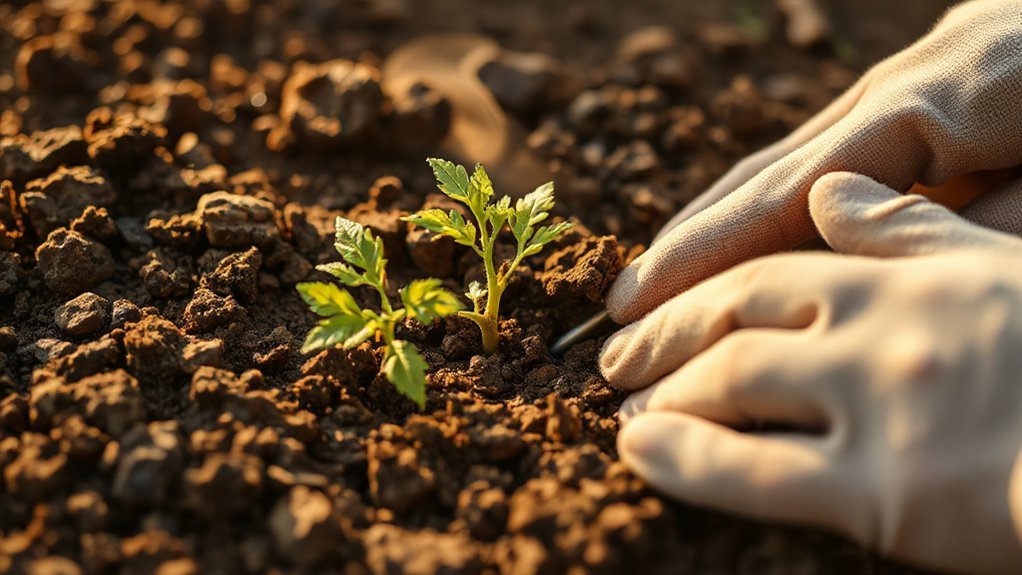
A trusty soil thermometer becomes your best gardening companion when deciding if it’s time to move those tender tomato transplants outdoors. We’re looking for consistent soil temperatures of 55°F or higher at 2–4 inches deep, though 60–70°F gives us the sweet spot for vigorous root growth. Check temperatures in the morning across several garden spots—don’t trust one sunny patch to tell the whole story. If your soil’s still running cold but the air’s warming up nicely, we’ve got options. Lay down black plastic or set up cloches for a week or two to coax those soil temps upward. When nighttime air stays above 50–55°F consistently, your tomatoes won’t face that harsh cold shock.
Count Backward: Creating Your Tomato Planting Timeline
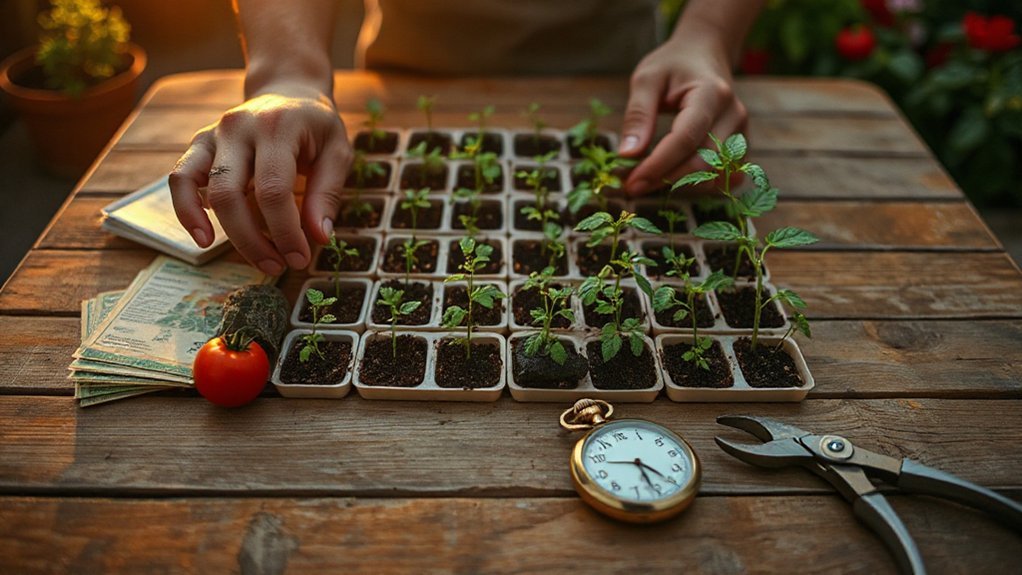
Now that we’ve got our soil temperature figured out, let’s work backwards from Mother Nature’s calendar to create our tomato timeline. We’ll start by hunting down our area’s average last spring frost date, then count back those essential 6-8 weeks to know exactly when to start our seeds indoors. Once we’ve mapped out this backward journey, we can plan our hardening-off period and nail down the perfect transplant window when our tomato babies are ready for their permanent home.
Find Your Frost Date
How do we nail down the perfect timing for our tomato journey? We start by finding our last average spring frost date – that magical anchor point that’ll guide every decision we make. This isn’t guesswork, friends. We’ve got reliable tools to help us pin down this essential date.
Here’s how we track down our frost date:
- Check the Old Farmer’s Almanac – Enter your ZIP code for personalized frost predictions
- Contact your county extension office – They’ve got decades of local weather data at their fingertips
- Ask seasoned local gardeners – Nothing beats neighborhood wisdom from folks who’ve been growing here for years
Once we’ve got that date locked down, we can count backward and forward to create our complete tomato timeline. No more guessing games!
Calculate Seed Starting Window
Why guess when we can count backward from our frost date and create a foolproof planting schedule? Once you’ve pinpointed your last frost date, we’ll work backward to find your perfect seed-starting window. Count back 8 weeks for your earliest indoor sowing and 6 weeks for your latest. If your last frost hits May 15th, you’ll want to start seeds between March 20th and April 3rd.
Here’s the beauty of this system—it gives you wiggle room while keeping you on track. Remember, we’re aiming for transplant-ready seedlings that’ll go outside about 1-2 weeks after your frost date, when soil temperatures consistently reach 55°F and nights stay above 50°F. This backward counting method takes the guesswork out of timing and puts you in control of your garden’s success.
Plan Transplant Schedule
Since we’ve got our seed-starting window locked down, let’s map out the rest of our transplant timeline to keep everything running smooth as butter.
Here’s how we’ll orchestrate our tomato liberation from indoor captivity:
- Hardening off period: Start this tough-love process 7-14 days before transplant day, gradually introducing seedlings to the great outdoors
- Transplant timing: Wait about 2 weeks past last frost when nighttime temps consistently hit 50-55°F and soil warms to 55°F
- Store-bought backup plan: If you’re grabbing transplants from the nursery, time your purchase so they hit the dirt within a week to avoid root-bound disasters
We’re fundamentally working backward from Mother Nature’s schedule, giving our tomatoes the freedom they crave while respecting her rules.
Starting Seeds Indoors Vs Buying Nursery Plants
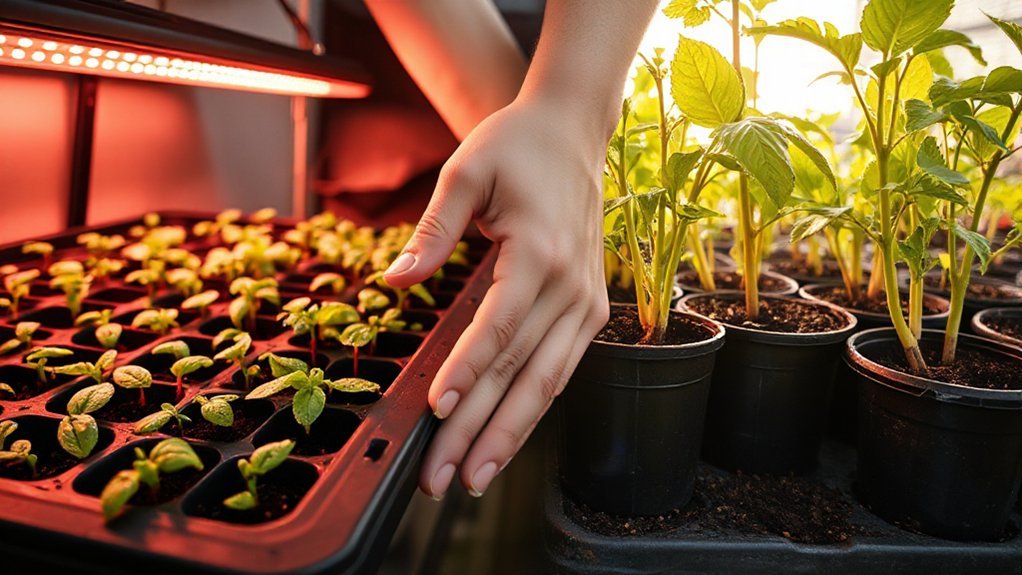
Beyond the timing question lies another important choice we’ll face: should we start our tomato seeds indoors or pick up nursery plants from the garden center?
Starting seeds gives us incredible freedom—hundreds of varieties at our fingertips for pennies per plant. We’ll need to sow them 6-8 weeks before our last frost and invest in grow lights and seed-starting gear. Plus, we’ll need that essential 7-14 day hardening-off period.
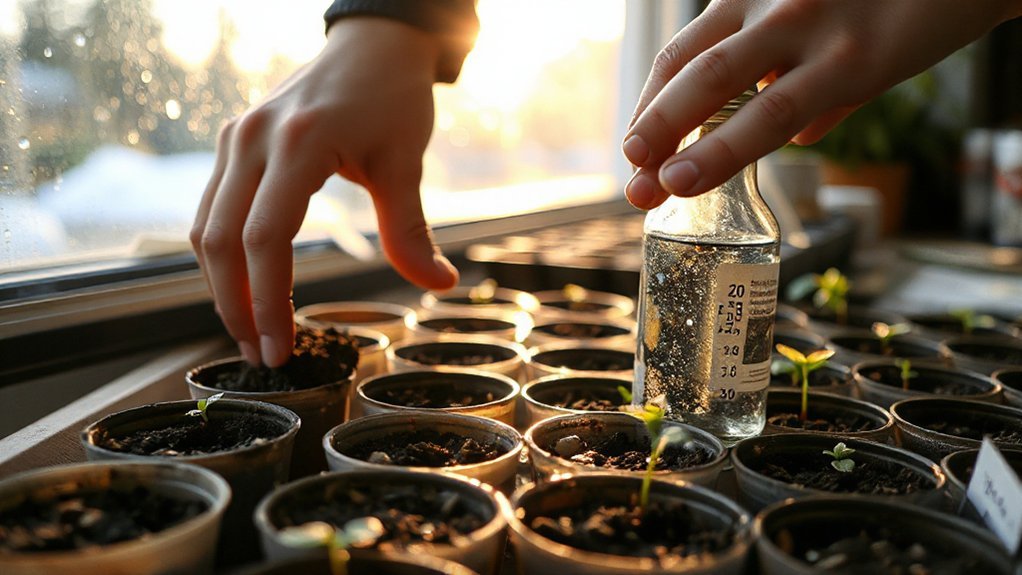
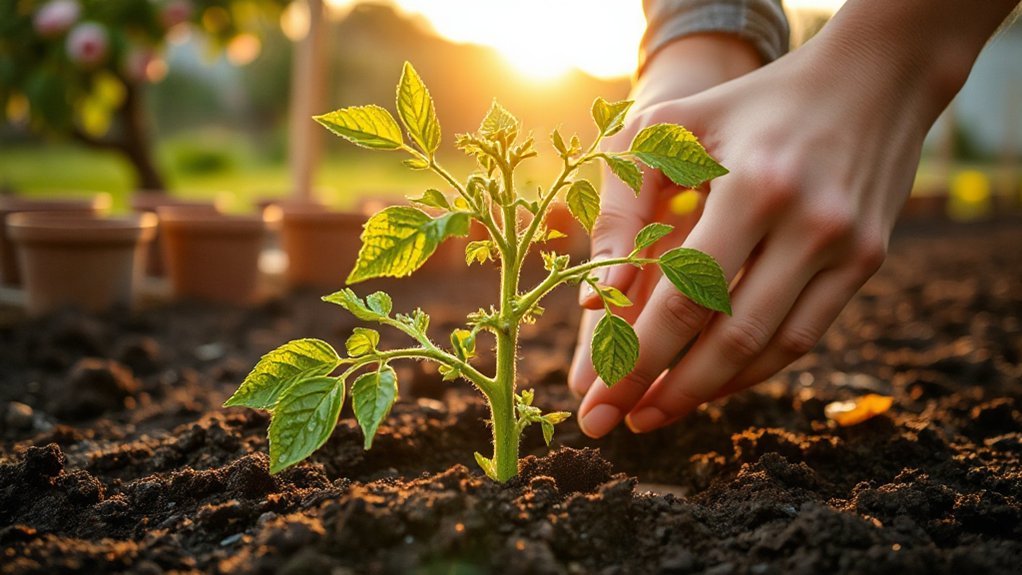
Nursery plants offer convenience and eliminate germination worries, though they’ll cost more and limit our variety choices. Look for stocky, healthy seedlings—avoid anything already flowering or root-bound.
Choose seeds for specialty varieties and budget freedom, or nursery plants for simplicity and immediate gratification.
How To Harden Off Tomato Seedlings
When we’ve got our tomato seedlings ready to face the world, we can’t just toss ’em outside and hope for the best—they need a gentle introduction to their new home. We’ll start by giving them some shade protection and slowly work up to more sun exposure, just like easing into a hot bath instead of jumping right in. The key is keeping a close eye on the weather each day, because Mother Nature doesn’t always play by our rules.
Start With Shade Protection
After weeks of nurturing those tender seedlings indoors, we can’t just plop them outside and expect them to thrive—they need a gentle introduction to the big, wide world.
Think of hardening off like teaching a kid to ride a bike—we start slow and build confidence. Those first couple days are vital for setting our tomatoes up for success in their permanent outdoor home.
Here’s how we ease them into their new reality:
- Find the sweetest spot: Choose a sheltered, fully shaded area protected from harsh elements
- Start small: Limit exposure to just 1-2 hours during those first two days
- Stay nearby: Keep a watchful eye for any signs of stress or wilting
This gentle approach lets our seedlings adjust without the shock that kills dreams and dinner plans.
Gradually Increase Sun Exposure
Once our tomatoes have gotten their feet wet in that shaded sanctuary, it’s time to slowly introduce them to the sun’s power—think of it like adjusting to a new pair of glasses. We’ll gradually bump up their outdoor time from that initial 1-2 hours to 3-4 hours by days 3-4, letting them taste some gentle morning sunshine. By days 5-6, we’re looking at 5-6 hours with a couple hours of direct sun. We’re building their independence here, folks—strengthening those stems with gentle breezes while keeping them safe from afternoon scorchers and harsh winds. If we spot any pale, wilted leaves, we’ll dial it back. No shame in protecting our future harvest.
Monitor Weather Conditions Daily
Weather watching becomes our daily ritual during this hardening journey—we’re basically becoming amateur meteorologists with a serious investment in the forecast. We’ll check those temperatures religiously, keeping our seedlings safe from nature’s curveballs.
Here’s what we’re tracking:
- Night temperatures – If it’s dropping below 50°F, we’re hitting pause and bringing our babies back indoors
- Wind and rain warnings – Strong gusts or heavy downpours mean immediate protection with cloches or a quick retreat to shelter
- Late cold snaps – Even past the last frost date, surprise chills can wreck our progress
We’ll keep bringing them inside each night until we see consistent mid-50s temperatures. Freedom means staying flexible with Mother Nature’s moods.
Early Vs Late Varieties: How Maturity Affects Plant Timing
When you’re thumbing through seed catalogs or browsing transplants at the nursery, you’ll notice those little numbers that tell the whole story—”days to maturity.” This simple measurement, counted from the day you set your transplants in the ground to when you’re picking ripe tomatoes, helps us match our variety choices to what Mother Nature’s willing to give us.
Early varieties like ‘Early Girl’ ripen in under 70 days, perfect for short-season gardeners who won’t be pushed around by early frost. Mid-season types need 70-80 days, while late varieties like ‘Brandywine’ demand 80+ days but reward your patience with incredible flavor. If you’ve got less than 120 frost-free days, stick with early varieties or get those transplants started indoors 6-8 weeks ahead—take control of your growing season.
What Happens When You Plant Tomatoes Too Early Or Late
Timing’s everything in the tomato patch, and we’ve all been tempted to push the season at both ends—planting too early because we’re itching to get growing, or too late because life got in the way.
When we plant too early, we’re gambling against Mother Nature’s cold snaps. Those chilly nights below 50°F stunt growth and invite diseases, while frost can wipe out weeks of careful nurturing.
- Early planting risks: Cold-stunted plants, transplant shock, and potential frost damage
- Late planting problems: Fruit won’t ripen before fall frost, reduced total yields
- Extreme late timing: Blossom drop from hot weather, compressed harvest window
Plant too late and you’re racing against autumn’s first frost. Your beautiful plants might never deliver those sun-warmed tomatoes you’ve been dreaming about all winter.
Extending Your Tomato Growing Season
Stretching those precious growing months means we’re not stuck with Mother Nature’s rigid schedule—we can nudge the season along with some clever tricks and tools. We’ll start seeds indoors 6–8 weeks before our last frost, giving transplants a head start when temps hit that sweet spot of 70–85°F days and 50–55°F nights.
| Season Extension Method | Temperature Boost |
|---|---|
| Cold frames | 5–10°F warmer |
| Hoop tunnels | 10–15°F warmer |
| Black plastic mulch | Faster soil warming |
| Raised beds | 1–2 weeks earlier planting |
| Row covers (fall) | Frost protection to mid-40s°F |
When autumn threatens our harvest, we’ll cover plants with floating row cover and harvest green tomatoes to ripen indoors.
Cold Snaps And Late Frosts: Protecting Newly Planted Tomatoes
Even though we’ve waited patiently for that last frost date to pass, Mother Nature doesn’t always stick to her schedule—and those sneaky late cold snaps can turn our carefully tended tomato transplants into blackened disappointment overnight.
Here’s how we protect our green gold when Jack Frost threatens an unwelcome return visit:
- Keep soil moist and mulched—wet earth holds heat better than dry, and that 2-4 inch blanket of organic mulch becomes your plants’ best friend
- Cover individual plants with cloches, cut milk jugs, or breathable frost cloth—just remember to remove covers when temps climb above 50°F
- Move potted tomatoes to shelter or add low-wattage string lights under covers for extra warmth
Smart preparation beats regretful replacement every time.
Frequently Asked Questions
Can I Plant Tomatoes in Containers at a Different Time Than Ground Planting?
Yes, we can absolutely plant tomatoes in containers at different times! Container growing gives us the freedom to start earlier since we can move pots indoors during unexpected cold snaps. We’re not tied to the whims of Mother Nature like ground planting. Plus, containers warm up faster in spring, so we can get a head start on the growing season.
Should I Fertilize Tomato Plants Immediately After Transplanting Them Outside?
We wouldn’t worry about fertilizing freshly transplanted tomatoes right away, friend. Those tender transplants need time to settle their roots and recover from the shock of moving. Wait about two weeks before feeding them – let ’em get comfortable in their new home first. Once they’re established and showing new growth, then we’ll start nurturing them with gentle, balanced nutrition for strong, productive plants.
How Deep Should I Plant Tomato Seedlings in the Garden?
We’ll plant those tomato seedlings deeper than you’d expect – bury about two-thirds of the stem, leaving just the top leaves above ground. This encourages strong root development along the buried stem, creating a robust foundation that’ll support heavy fruit loads later. Don’t worry about burying some lower leaves; they’ll decompose and feed the plant naturally.
What’s the Best Time of Day to Transplant Tomato Seedlings?
We’ve found early evening works best for transplanting tomato seedlings, right when the sun’s losing its punch. This gives your little plants all night to settle in without the stress of blazing heat. If evening won’t work, early morning’s your next best bet. Avoid midday transplanting like the plague – that harsh sun’ll shock those tender roots something fierce, and we don’t want that.
Do Cherry Tomatoes and Beefsteak Tomatoes Have Different Planting Requirements?
Cherry and beefsteak tomatoes share the same basic planting needs – we’ll start both indoors 6-8 weeks before our last frost date and transplant when soil’s warmed to 60°F. The real difference comes in spacing and support. We give beefsteaks more room since they’re heavy producers, and we’ll need sturdier cages. Both varieties crave that same warm, free-draining soil we all love working with.
So
Getting tomatoes in the ground at just the right time is like catching fireflies in a jar—it takes patience and perfect timing, but the reward’s worth every careful moment we spend waiting. We’ve walked through frost dates, soil temps, and protection strategies together, and now you’ve got all the tools tucked in your gardening belt. Trust the process, watch for those telltale signs, and soon we’ll be savoring sun-warmed tomatoes straight from our own backyard bounty.