We’ve all been there—staring at those colorful seed packets in February, itching to get our hands dirty while snow still blankets the garden. The truth is, timing your indoor seed starting isn’t about when you’re ready, but when your plants will actually thrive. Get it wrong, and you’ll end up with leggy seedlings that struggle to survive transplanting, or worse yet, perfect plants with nowhere to go because frost still threatens outside.
Key Takeaways
- Anchor seed-starting dates to your local last-frost date by counting backward from that specific date.
- Start warm-season crops like tomatoes 6-8 weeks before last frost, peppers and eggplants 8-10 weeks before.
- Begin cool-season vegetables like broccoli and cabbage 4-8 weeks before your area’s final frost date.
- Use soil thermometers and heating mats to maintain optimal root-zone temperatures for successful germination.
- Avoid starting seeds too early to prevent leggy seedlings, root-bound plants, and transplant stress issues.
Calculate Your Seed Starting Date Using Last Frost
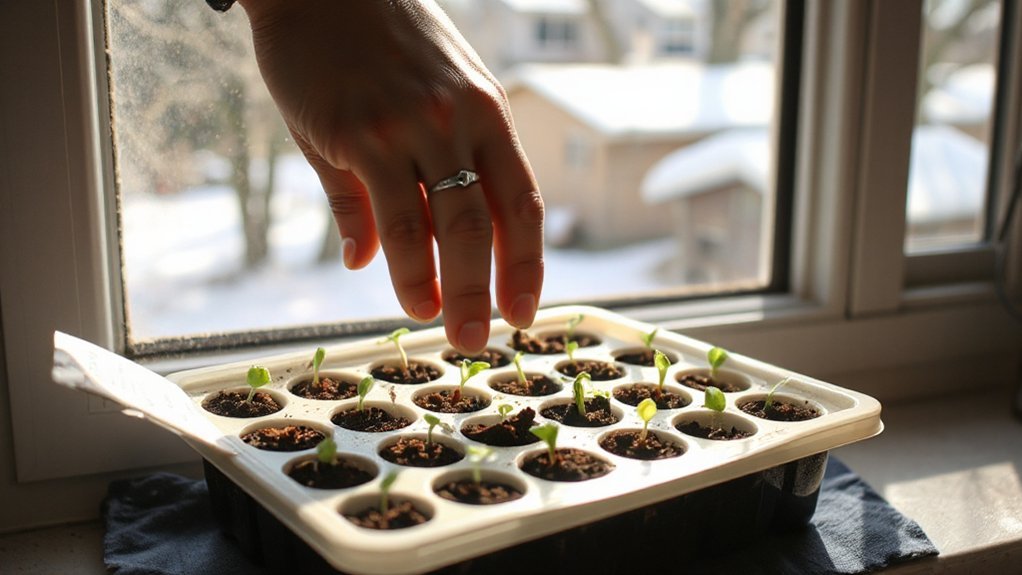
When should you start those precious seeds indoors? We’ll anchor everything to your local last-frost date—that magical spring moment when winter finally loosens its grip on your garden.
Here’s our tried-and-true method: grab those seed packets and count backward from your last frost. Most vegetables need about 6 weeks indoors, but heat-loving crops like tomatoes and peppers crave 6–10 weeks of coddling before they’re ready to face the world. Those finicky eggplants and peppers? Give ’em 8–10 weeks.
Cool-season champions like broccoli and cabbage need just 4–8 weeks. For stubborn germinators or older seeds, we add an extra week or two as insurance. Don’t know your frost date? Online almanac calculators are your best friend.
When to Start Tomatoes, Peppers, and Warm-Season Crops
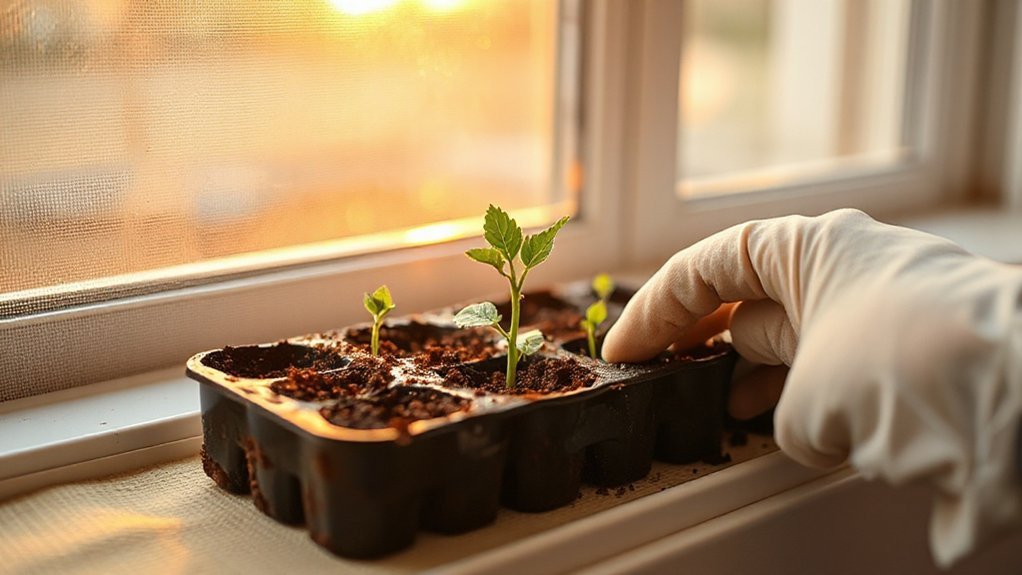
Now that we’ve figured out our last frost date, let’s talk about when to get those warm-season favorites started indoors. We can’t just toss tomato, pepper, and eggplant seeds into any old potting mix and hope for the best—these heat-loving crops need their soil nice and toasty to wake up and grow. Getting the timing and temperature right from the start will save us from those disappointing germination failures that leave us scrambling to buy seedlings at the garden center.
Optimal Soil Temperature Requirements
Why do some gardeners struggle with spotty germination while others seem to sprout perfect seedlings every time? The secret’s in the soil temperature, not the air around it. We’ve learned that checking our potting mix temperature makes all the difference.
Tomatoes thrive when their soil stays between 61–86°F, while peppers prefer things warmer at 64–95°F. Eggplants? They’re the heat lovers, wanting 75–90°F to wake up properly. Here’s what we do: grab a soil thermometer and actually measure our seed beds. Room temperature won’t cut it—potting mix runs about 5°F cooler than the air.
A heating mat underneath our seed trays keeps things consistent. It’s simple technology that transforms our germination success from hit-or-miss to dependable abundance.
Frost Date Calculations
How many gardeners have watched their neighbor’s tomatoes tower over their fence while theirs still struggle in starter pots? We’ve all been there, friends. The secret isn’t luck—it’s counting backward from your last frost date like a master planner.
Here’s the freedom formula: grab your seed packets first. Most tomatoes want 6-8 weeks indoors before that final frost, while peppers demand 8-10 weeks for sturdy transplants. Don’t guess your frost date—use an online calculator or call your extension office for your exact location’s median date.
But here’s the real wisdom: forget calendar anxiety. When soil hits 61°F for tomatoes and 64°F for peppers, you’re golden. Start early? Use bottom heat and practice patience during hardening off.
When to Start Broccoli, Cabbage, and Cool-Season Vegetables
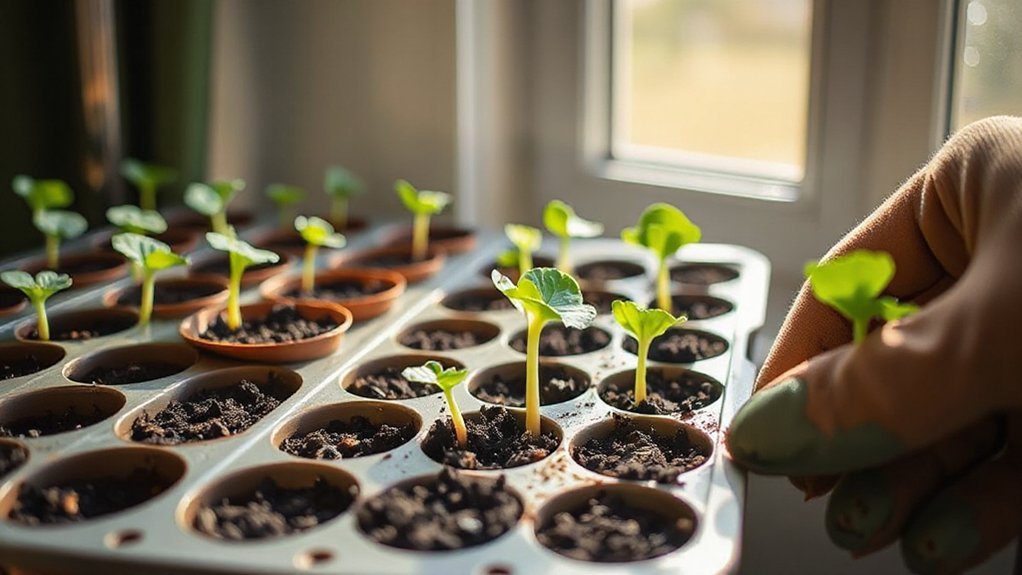
When should we start those hardy cool-season champions like broccoli and cabbage? We’ll sow these tough customers indoors about 6–8 weeks before our last spring frost—that’s usually late winter through March for most folks. Count backward from your frost date to nail the timing just right.
Here’s the beauty of cool-season crops: they don’t need the pampering that warm-season vegetables demand. We’re simply giving them a head start, not babying them through a long indoor stretch that creates weak, leggy plants.
Want a fall harvest too? Make a second sowing in June or July. Once our seedlings develop two pairs of true leaves and we’ve hardened them off for two weeks, they’re ready to brave the garden—even 2–4 weeks before that final frost threatens.
How Soil Temperature Affects Seed Starting Success
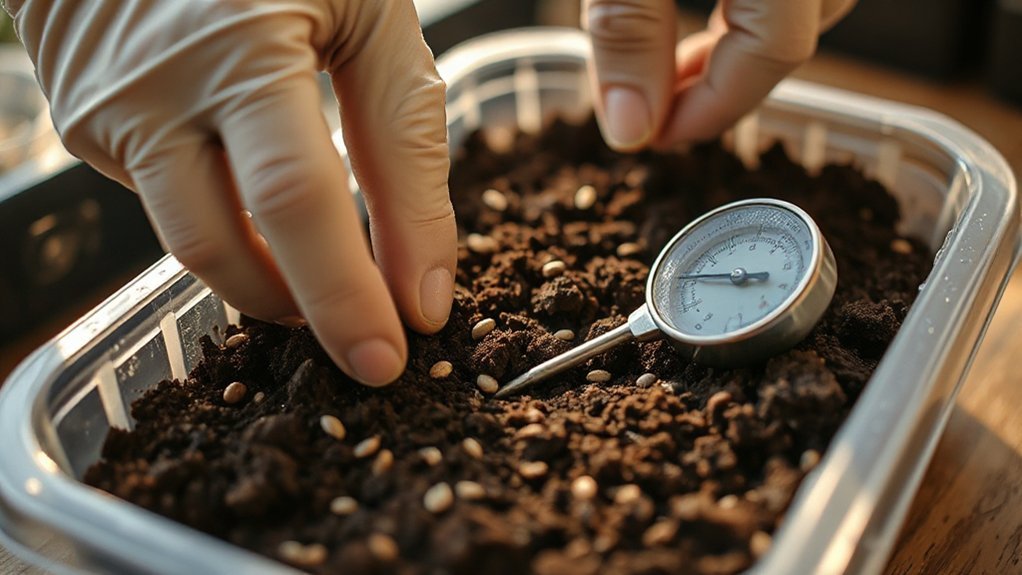
While we’re fussing over air temperature and frost dates, the real magic happens down in the soil where our seeds are trying to wake up. That cold potting mix we’ve been storing in the garage? It’s sabotaging our best efforts, even if our greenhouse feels toasty.
We need to match soil temperature to what each crop craves. Parsnips wake up around 50°F, while our heat-loving eggplants won’t budge until they hit 75°F. A simple soil thermometer tells us more than any calendar ever could.
Here’s the secret: heating mats warm that root zone where it counts. Once our seedlings emerge, we’ll dial back the heat to build stronger roots and avoid those spindly, weak stems nobody wants.
Seeds That Should Never Be Started Indoors
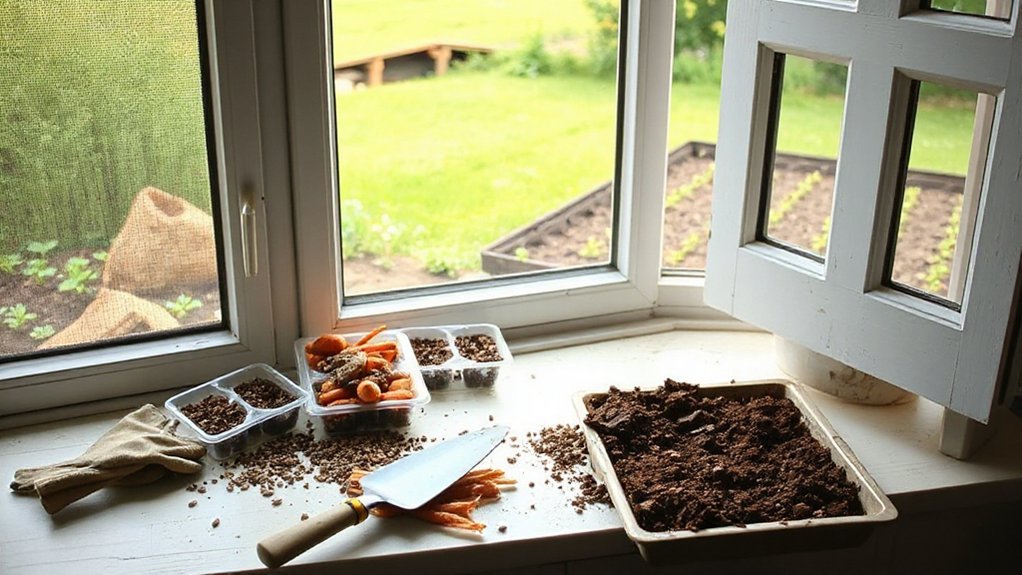
Though we’d love to start every seed in our cozy indoor setup, some crops just won’t play along. Cucurbits like cucumbers, melons, pumpkins, and squash develop fragile roots that absolutely hate being disturbed. When we transplant them, they’ll sulk and struggle to establish themselves properly.
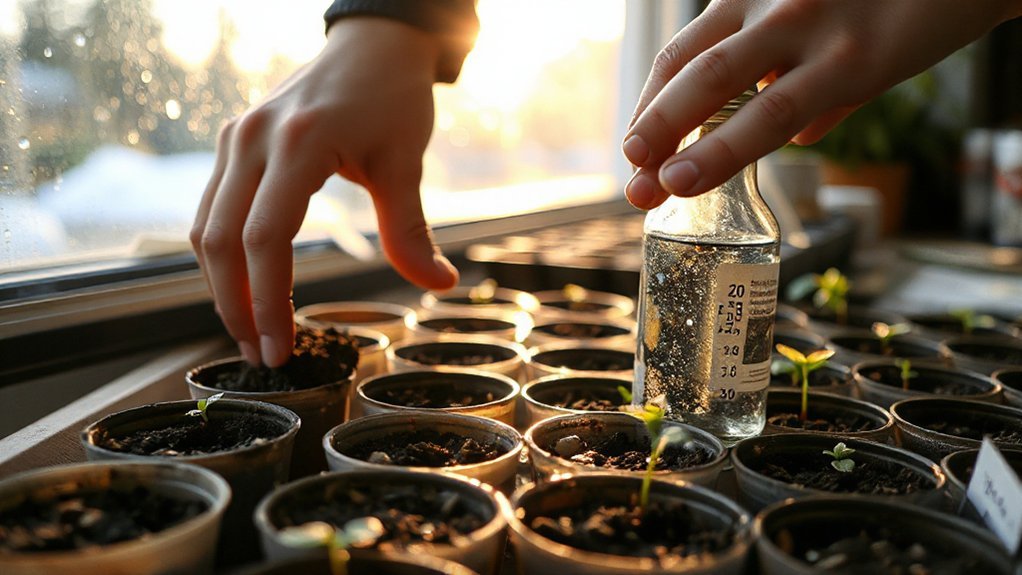
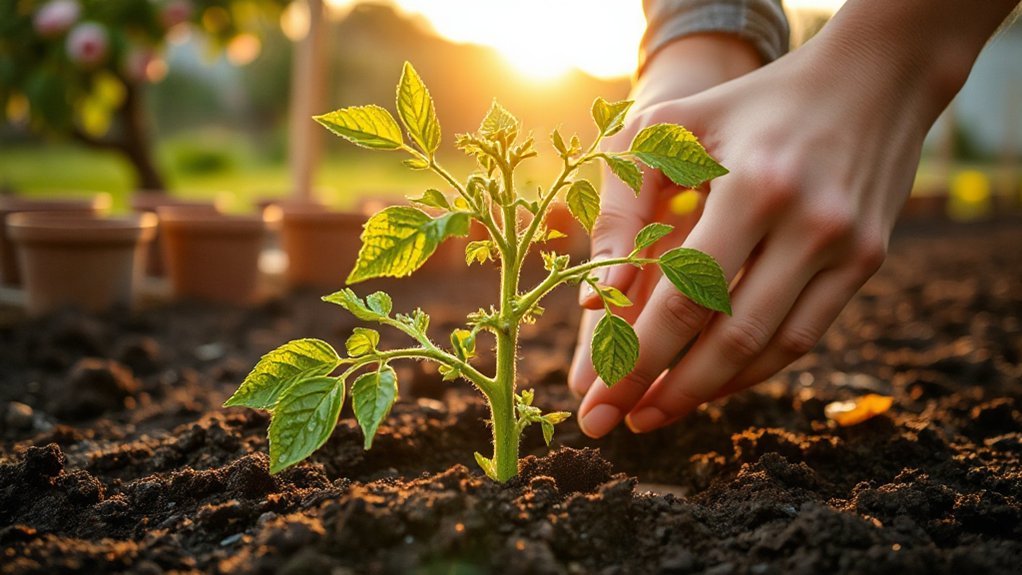
Root crops are equally stubborn about indoor starts. Carrots, parsnips, and beets need their long taproots left alone – transplanting messes up their shape and kills our yield. Same goes for herbs like parsley and dill, which get fussy when their roots are bothered.
Fast-growing vining crops present another headache. They’ll outgrow their pots before it’s safe to transplant, becoming root-bound and leggy. Trust us, direct sowing these freedom-loving plants outdoors saves everyone the heartache.
Why Start Seeds Indoors Instead of Direct Sowing
Now that we’ve covered the rebels who refuse indoor pampering, let’s talk about why we bother with seed starting at all when we could just toss everything directly in the ground.
Starting seeds indoors is pure freedom—we’re not slaves to Mother Nature’s timing anymore. We get that essential 6–8 week head start, giving our tomatoes and peppers fighting chance in short-season country. Inside, we control the thermostat (those warm-season babies need their 61–90°F comfort zone) and keep the soil just right.
Plus, we’re talking real independence here. No more settling for whatever sad six-packs the nursery’s pushing. We choose our varieties, grow organically if we want, and protect tender seedlings from early-season beatings that outdoor life dishes out.
Regional Timing Differences Across Growing Zones
Since Mother Nature didn’t bother asking our opinion when she drew up the climate map, we’ve got to play by her rules—and those rules change dramatically depending on where we call home.
Your USDA zone determines everything about seed timing. Cold-climate gardeners in zones 3-5 need patience—they’ll start tomatoes and peppers 8-10 weeks before last frost, while lucky folks in mild zones 8-10 can wait until just 6-8 weeks out.
- Northern zones: Start heat-lovers like peppers 10-12 weeks early, some varieties in January
- Warm coastal areas: Six weeks is plenty for most crops before transplanting
- Soil temperature matters most: Wait until your potting mix hits 64°F for peppers, 61°F for tomatoes
- Use local resources: Check your extension office’s frost-date calculator for precision timing
Signs You Started Your Seeds Too Early
While enthusiasm for gardening season can get the best of us, starting seeds too early creates more headaches than harvests. We’ve all been there—eager to get our hands dirty while snow’s still falling. But our seedlings will tell us when we’ve jumped the gun.
| Problem | What It Means |
|---|---|
| Leggy, spindly seedlings | They’re stretching desperately for light |
| Root-bound plants | You sowed beyond the 6-8 week sweet spot |
| Chronic overcrowding | Peppers hiding behind towering tomatoes |
| Repeated repotting needs | Plants outliving their welcome indoors |
When we’re constantly battling damping-off, mold, or fragile seedlings from poor air circulation, it’s nature’s way of saying we got ahead of ourselves. Trust the timing—our gardens will thank us.
Seed Starting Schedule for Multiple Crop Plantings
When we’re planning our seed starting schedule, we can’t just think about one planting—we need to map out multiple sowings that’ll keep our harvest baskets full all season long. The secret lies in staggering our plantings every few weeks, treating our gardens like a well-orchestrated symphony where each crop comes to fruition right when we need it. Let’s walk through how to time these succession plantings so we’re not drowning in lettuce one week and starving for greens the next.
Succession Planting Timeline
As gardeners who’ve learned the hard way that one planting rarely feeds a family all season long, we’ve discovered that succession planting transforms our indoor seed-starting routine from a frantic spring scramble into a well-orchestrated dance of continuous harvests.
We count backward from our last frost date, giving warm-season crops like tomatoes their 6-8 week head start while cool-season brassicas need only 4-6 weeks. Here’s our proven succession rhythm:
- Stagger fast-maturing crops (lettuce, spinach) every 2-3 weeks indoors
- Space longer-season plantings (beans, carrots) every 3-4 weeks
- Direct-sow transplant-sensitive crops (cucumbers, squash) at 7-14 day intervals outdoors
- Build in 2-3 week buffers for re-sowing duds
This systematic approach keeps our tables loaded all season.
Staggered Sowing Methods
Since timing equals everything in gardening, we’ve developed a foolproof system for staggered sowings that keeps our seed trays humming with activity from late winter through summer’s peak. We label every tray with sow dates and varieties—no guessing games here. For quick crops like lettuce and radishes, we start fresh batches every 10–14 days, while bush beans and summer squash get sown every 2–3 weeks. Heat-loving slowpokes like peppers and eggplant? We space their starts 3–4 weeks apart, giving ourselves wiggle room for do-overs if something goes sideways. This rhythm creates a beautiful harvest flow that keeps our tables full and our neighbors envious all season long.
Harvest Window Planning
How many times have we watched fellow gardeners scramble in spring, frantically starting seeds too late or too early, only to face gaps in their harvest or cramped seedlings that never quite recover? We can break free from this chaos by planning our harvest windows with intention.
The secret lies in working backward from frost dates and forward from harvest goals. We calculate indoor sowing by counting back from our last frost date—6 weeks for most crops, 8-10 weeks for heat-lovers like peppers.
- Check days-to-harvest against your first-frost date to make sure crops mature before season’s end
- Choose earlier-maturing varieties when growing windows feel tight
- Measure soil temperatures before transplanting—cold soil stunts even perfect seedlings
- Reserve 10+ week starts only for genuinely slow crops like hot peppers
Frequently Asked Questions
What Type of Grow Lights Work Best for Starting Seeds Indoors?
We’ve found that full-spectrum LED grow lights work best for starting our seeds indoors. They’re energy-efficient, run cool, and give seedlings everything they need without burning delicate leaves. We hang them 6-12 inches above our seed trays and keep ’em on 12-16 hours daily. T5 fluorescent lights work too, but LEDs give us better control and last longer.
How Do I Properly Harden off Seedlings Before Transplanting Them Outside?
We gradually introduce our seedlings to outdoor conditions over 7-10 days. Start by placing them outside for just an hour in filtered sunlight, then slowly increase their time and sun exposure daily. We bring them in at night initially, then let them stay out once they’ve toughened up. This gentle acclimation helps them develop stronger stems and leaves that won’t shock when permanently transplanted.
What’s the Ideal Temperature and Humidity for Seed Starting Success?
Most seeds germinate best between 65-75°F with 50-70% humidity. Here’s something fascinating: seeds can sprout 50% faster in that sweet spot compared to cooler temps! We’ve found success placing seed trays on top of our refrigerator or using a heating mat underneath. A humidity dome works wonders too, though we’ll crack it open once sprouts appear. Trust your instincts and adjust as needed.
How Often Should I Water Seeds and Seedlings During Indoor Growing?
We water seeds when the soil feels dry to touch, usually every 2-3 days. Once they’re sprouted, we check daily since seedlings drink more as they grow. We’ve learned that consistent moisture beats heavy soaking – think gentle spring rain, not summer downpour. Bottom watering works wonders too, letting roots reach down naturally. Trust your instincts and that soil will tell you what it needs.
What Common Mistakes Cause Seeds to Fail When Starting Them Indoors?
Funny how we make the same blunders our grandparents warned against! We’re killing our seeds with kindness – overwatering drowns ’em, while planting too deep suffocates their dreams of sprouting. We forget they need warmth but not scorching heat, and we plant too early then wonder why they struggle. Most folks skip reading seed packets, missing nature’s own instruction manual for growing free.
So
Like wise gardeners tending nature’s clock, we’ve learned to dance with the seasons rather than rush ahead of spring’s gentle waltz. Our seeds are patient partners waiting backstage until frost releases its icy grip. When we count backward from that final curtain call of winter, we’re choreographing success—giving each little performer just enough time to grow strong before stepping into the garden’s grand theater.