We’ve all dreamed of experiencing Japan’s legendary cherry blossoms or watching snow monkeys soak in hot springs, but timing can make or break your trip. After years of helping travelers navigate Japan’s distinct seasons, we’ve learned there’s more to take into account than just avoiding crowds—though that’s certainly part of it. The secret lies in understanding when each region truly shines and which trade-offs you’re willing to make for the experience you want most.
Key Takeaways
- Spring (late March-early May) offers cherry blossoms but brings massive crowds; visit hidden spots or arrive early to avoid peak tourism.
- Summer (July-August) features intense heat and festivals; escape to cool Hokkaido or enjoy matsuri despite sweltering mainland conditions.
- Fall (mid-October-November) provides stunning autumn foliage with fewer crowds than spring; northern regions peak earlier than southern areas.
- Winter (January-March) delivers excellent skiing, snow festivals, and lowest tourist demand with significant savings on accommodations and travel.
- Avoid Golden Week and Obon periods due to extreme crowding; choose January-February or early June for cheapest travel windows.
Spring in Japan: Cherry Blossoms vs. Massive Crowds
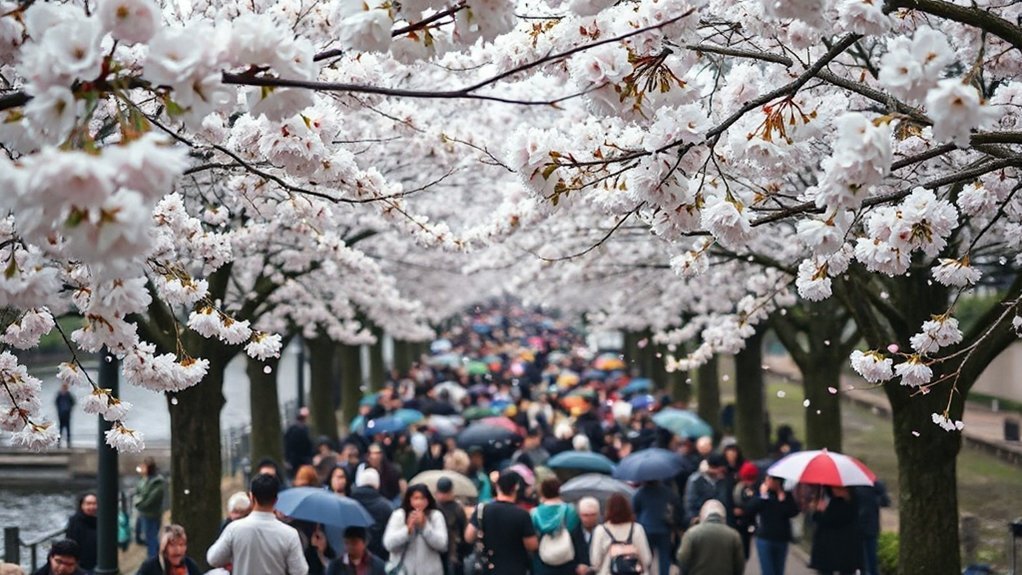
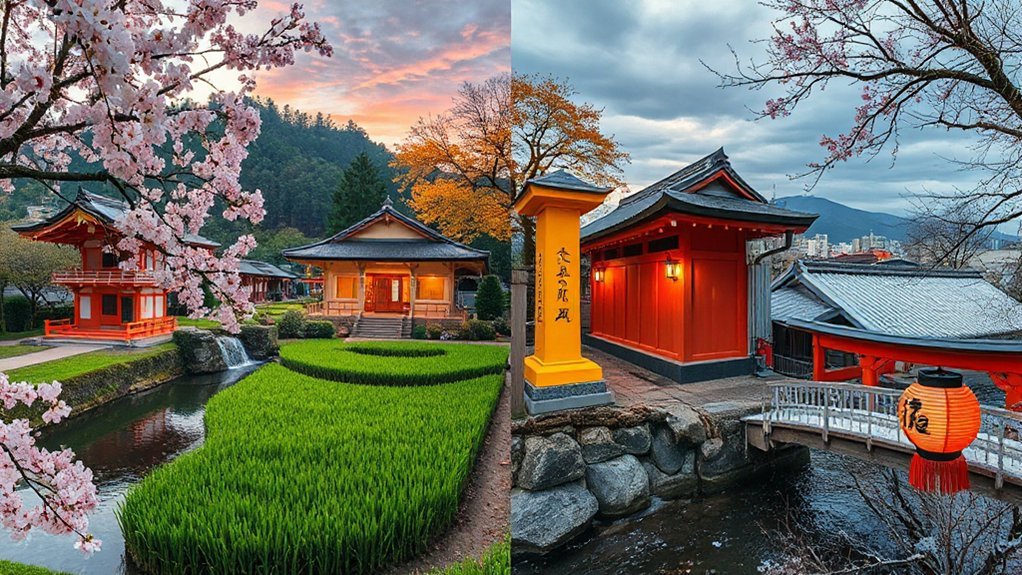
While everyone dreams of strolling beneath Japan’s iconic cherry blossoms, we’d be doing you a disservice if we didn’t mention the reality: spring brings some of the most spectacular crowds you’ll ever encounter. Picture tens of thousands of folks packed into Ueno Park, with lines snaking around famous hanami spots like you’re waiting for concert tickets. The bloom season rolls north from late March through early May, hitting Tokyo and Kyoto during peak tourist madness. Golden Week makes everything worse—think Black Friday energy but for six weeks straight. Want our honest advice? Skip the famous spots and head to hidden gems like Fukui or time your visit for late March when the masses haven’t descended yet.
Summer Heat and Festivals: June to August Trade-Offs
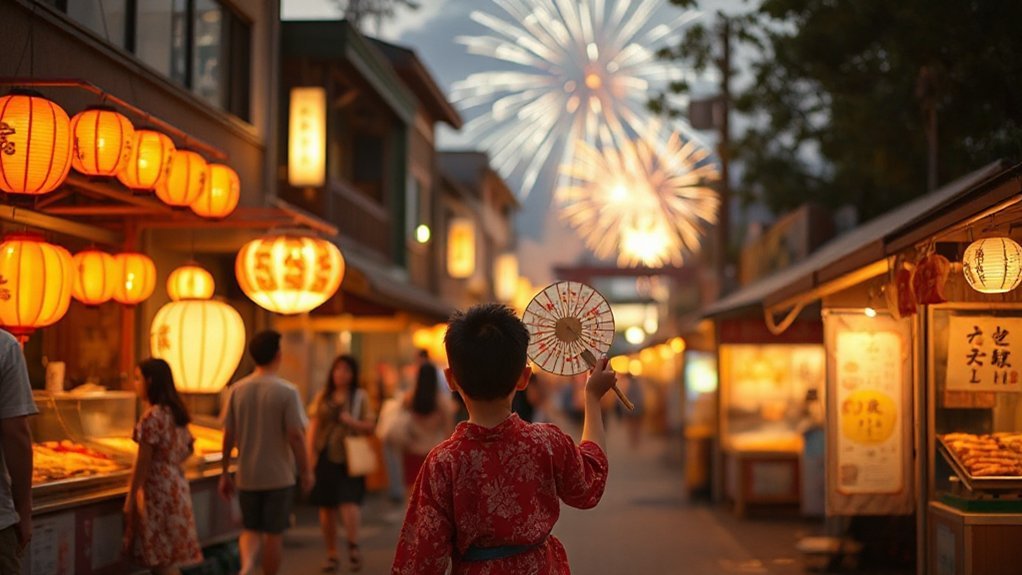
After spring’s cherry blossom chaos winds down, Japan’s summer months serve up a different kind of adventure—one that’ll test your heat tolerance while rewarding you with some of the country’s most electrifying festivals. We’re talking about tsuyu’s soggy June prelude, followed by blazing July-August heat that’ll have you melting faster than ice cream on pavement.
But here’s the payoff: summer matsuri explode across the country like nowhere else. From Osaka’s thunderous Tenjin Matsuri to Tokushima’s mesmerizing Awa Odori, these festivals pulse with raw energy that’ll make you forget the humidity. Just remember—you’ll be shoulder-to-shoulder with domestic travelers during Obon, and typhoons might crash your coastal plans. If the heat’s too much, escape to Hokkaido’s flower fields for sweet relief.
Fall Foliage Season: Japan’s Best-Kept Secret
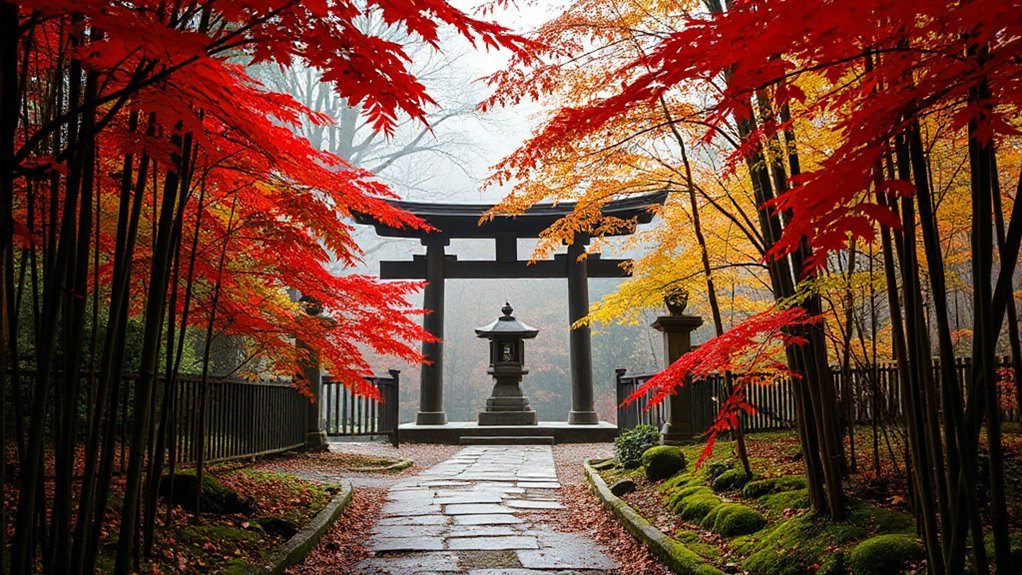
We’ll let you in on something most folks overlook—Japan’s autumn season might just be the country’s most magical time to visit. While everyone’s heard about cherry blossoms, fall’s when you’ll find those picture-perfect temple gardens draped in crimson and gold without fighting through shoulder-to-shoulder crowds. From mid-October through November, you can actually hear your footsteps on those ancient temple paths as maple leaves crunch beneath your feet.
Peak Autumn Colors
Why chase cherry blossoms with the masses when Japan’s autumn puts on an equally stunning show with half the fuss? We’re talking about peak autumn colors that’ll knock your socks off without the elbow-to-elbow crowds.
Here’s the insider scoop: timing is everything. Northern regions like Hokkaido and the Japanese Alps hit their stride first—late September through early October. But if you’re eyeing iconic spots like Kyoto and Tokyo, circle mid-November on your calendar. That’s when those maples explode into fire-engine reds and burnished golds.
Southern wanderers, you’ve got breathing room. Kyushu and Shikoku save their grand finale for late November into December. Plus, autumn delivers Japan’s sweetest weather window—crisp, clear days perfect for exploration without umbrellas cramping your style.
Crowd-Free Temple Visits
Where’s the real magic hiding during Japan’s fall foliage season? We’ve discovered it’s in those quiet temple moments when you’re not shoulder-to-shoulder with tour groups. Skip the famous spots during peak hours and chase that northward-moving kōyō forecast instead.
| Timing Strategy | Sweet Spot |
|---|---|
| Daily visits | First light or final hour |
| Peak crowd times | 10:00–15:00 (avoid!) |
| Regional choices | Kanazawa, Koyasan over Kyoto |
| Elevation timing | Higher/northern early November |
| Hokkaido window | Late November–early December |
Here’s our insider move: combine lesser-known temples with ryokan stays in places like Kaga Onsen. You’ll catch those magical evening illuminations while day-trippers head home. Choose weekdays during mid-to-late November in Kyoto and Tokyo for breathing room.
Winter in Japan: Snow Sports and Fewer Tourists
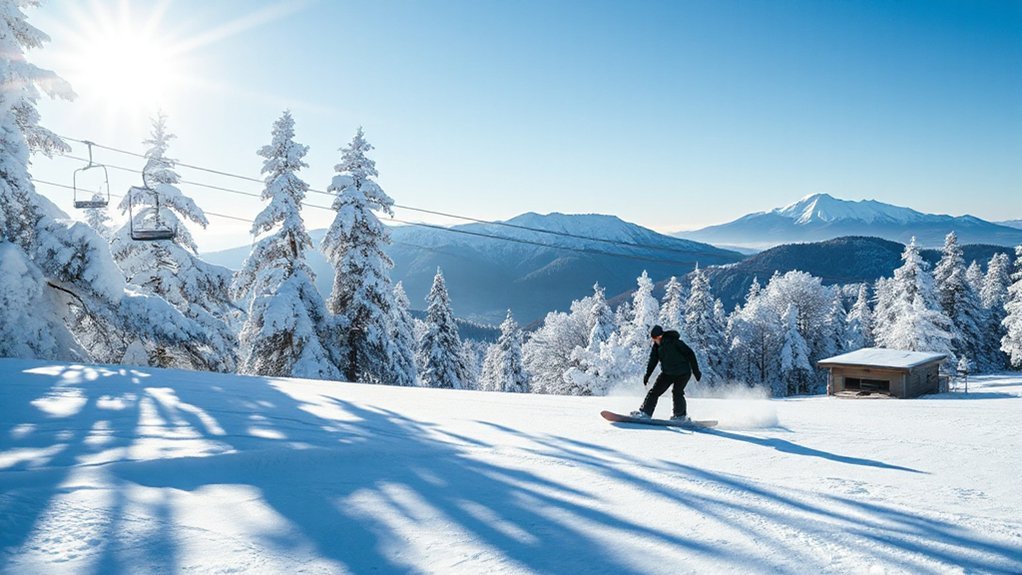
While most folks think of Japan’s cherry blossoms and summer festivals, there’s something magical about bundling up and experiencing the country when it’s blanketed in snow. We’re talking world-class powder at Niseko and Hakuba that’ll make any ski bum weep with joy. Come mid-January through March, you’ll dodge the crowds and save serious cash on hotels—plus those temple visits we mentioned earlier become downright mystical in the snow.
February’s Sapporo Snow Festival showcases ice sculptures that’ll blow your mind, while those outdoor hot springs hit different when snowflakes are dancing around you. Sure, daylight’s shorter and Hokkaido’s cold enough to freeze your breath, but there’s freedom in having Japan’s mountains practically to yourself.
Cheapest Times to Visit Japan
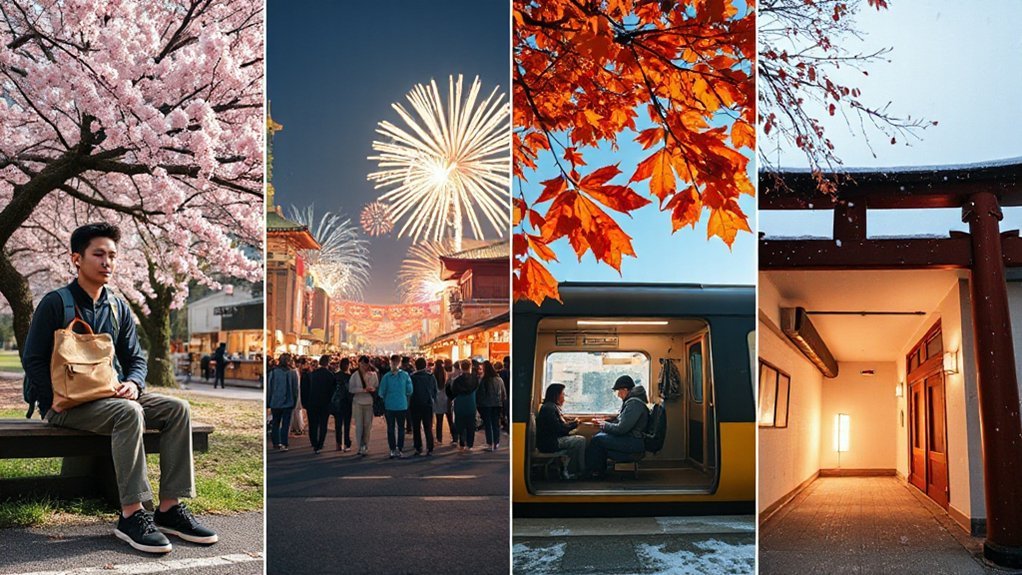
Most savvy travelers know that timing’s everything when you’re hunting for Japan deals, and January through February delivers the sweet spot after those pricey New Year festivities wrap up. We’re talking real savings here—hotels and flights drop their rates when demand plummets and everyone’s recovering from holiday spending.
Don’t overlook the rainy season either. That early June to mid-July window might bring occasional showers, but it also brings fewer crowds and better prices. Late May‘s another gem—Golden Week’s chaos ends, weather stays pleasant, and rates drop like rocks.
Early fall through October offers solid value as typhoon season winds down. Even summer’s heat can work in your favor with surprising deals, though you’ll trade comfort for cash savings.
Golden Week and Obon: When to Avoid Japan
Now, we’d be doing you a disservice if we didn’t warn you about Japan’s two peak travel seasons that’ll have you feeling like a sardine in a can. Golden Week in late April through early May brings out every Japanese family for their annual vacation, creating crowds that’d make a New York subway at rush hour look peaceful. Then comes Obon in mid-August, when millions head to their ancestral hometowns, turning the whole country into one giant family reunion with the travel chaos to match.
Golden Week Crowds
If you’ve ever tried squeezing into a packed subway car during rush hour, imagine that feeling multiplied by ten and stretched across an entire country—that’s Japan during Golden Week and Obon.
We’re talking about crowds that’ll make even the most patient traveler question their life choices. Imagine this: you’re standing in line for two hours just to glimpse a famous shrine, while your dream ryokan costs triple the usual rate.
Here’s what you’ll face during these peak periods:
- Train stations become human rivers of chaos
- Popular attractions turn into slow-moving pilgrimages
- Restaurant waits stretch longer than a Ken Burns documentary
- Hotel prices soar higher than Mount Fuji
Smart travelers dodge these weeks entirely, choosing freedom over frustration.
Obon Travel Chaos
Come mid-August, Japan transforms into a massive family reunion that’d make your hometown’s homecoming look like a quiet Sunday picnic. Obon sends millions of Japanese folks racing back to their ancestral hometowns, creating travel chaos that’ll test even the most seasoned wanderer’s patience. We’re talking sold-out shinkansen trains, packed airports, and accommodation that disappears faster than free beer at a barbecue.
Here’s the kicker: Obon dates aren’t set in stone nationwide. Some regions celebrate mid-July, others stick to the traditional mid-August schedule. That means double trouble if you’re not paying attention to local calendars.
Museums and restaurants shutter their doors just when crowds peak most. If you’re dead-set on visiting during Obon, book everything months ahead and pack extra patience.
Climate Differences From Hokkaido to Okinawa
While most folks think of Japan as having one uniform climate, the truth stretches across nearly 2,000 miles from Hokkaido’s snowy peaks down to Okinawa’s tropical beaches.
Japan’s climate diversity spans from arctic Hokkaido winters to year-round tropical warmth in Okinawa—nearly 2,000 miles of weather extremes.
We’re talking about dramatic differences that’ll shape your entire adventure. Here’s what you need to know:
- Winter contrasts – Hokkaido delivers proper skiing weather with daytime temps around 0°C, while Okinawa stays pleasantly mild at 17°C with swimmable seas
- Summer escapes – When Honshu’s sweltering in July-August humidity, Hokkaido offers cool relief at 15-25°C
- Rainy season timing – Okinawa’s tsuyu starts early May, while mainland Japan waits until June-July
- Typhoon vulnerability – Southern regions face the brunt from August-September, but Hokkaido typically dodges the worst storms
Choose your region wisely based on what Mother Nature’s serving up.
Frequently Asked Questions
What Should I Pack for Japan’s Unpredictable Spring Weather?
We’d pack layers like an onion, friend – that’s the secret to Japan’s moody spring dance. Toss in a light waterproof jacket for those surprise showers, comfortable walking shoes that’ll handle puddles, and a mix of short and long sleeves. Don’t forget a compact umbrella – it’s your best traveling companion when cherry blossoms meet unexpected rain clouds.
Are There Specific Vaccines or Health Preparations Needed for Different Seasons?
We don’t need any special seasonal vaccines for Japan, friend. The country’s got excellent healthcare and no tropical diseases lurking about. We’d recommend staying current on routine shots like flu vaccines, especially if we’re traveling during winter months when bugs spread easier. Pack some basic meds for stomach troubles and headaches, but honestly, Japan’s cleaner and safer than most places we’ll ever wander.
How Do Seasonal Changes Affect Public Transportation Schedules and Availability?
Like cherry blossoms blooming right on schedule, Japan’s trains run with remarkable consistency year-round—we’re talking about 99.9% punctuality rates even during typhoon season! We’ve found that seasonal changes barely ruffle Japan’s transportation feathers. Sure, heavy snow might delay a mountain route or golden week crowds pack the cars tighter, but you’ll rarely find yourself stranded. Their systems adapt like seasoned travelers who’ve weathered every storm.
What Traditional Seasonal Foods Should I Try During My Visit?
We’d encourage you to embrace Japan’s seasonal bounty like locals do. Spring brings delicate sakura mochi and chirashi bowls bursting with fresh ingredients. Summer‘s your chance to slurp cooling somen noodles and shaved ice treats. Fall delivers hearty nabemono hot pots and sweet persimmons that’ll warm your soul. Winter‘s comfort comes through steaming ramen and grilled mochi that locals have cherished for generations.
Do I Need Different Travel Insurance Coverage for Winter Sports Activities?
Absolutely, you’ll need specialized winter sports coverage – it’s worth its weight in gold! We’ve learned that regular travel insurance won’t cover you if you’re hitting those powdery slopes in Niseko or Hakuba. Think of it as your safety net when you’re carving through Japan’s legendary snow. Don’t let a spill turn into a financial avalanche – get that extra coverage and ski with confidence, friend.
So
Well folks, we’ve covered all the bases when it comes to timing your Japan adventure just right. Whether you’re chasing those dreamy cherry blossoms or hunting for winter powder in Hokkaido, there’s truly a perfect season for every traveler’s heart. Remember, the early bird catches the worm – plan ahead to dodge those holiday crowds and snag the best deals. Japan’s waiting for you, no matter when you choose to visit.