So, when’s the best time to get your flu shot in 2026? Well, it’s not exactly a one-size-fits-all answer. We all want immunity to kick in just right before flu season hits—usually early fall, from September to mid-October. But for some—say, seniors or kids—earlier might be better, especially if early cold snaps show up uninvited. Planning ahead means understanding your risk, checking local updates, and not rushing or waiting too long. Ready to see what might work best for you?
Understanding the Flu Season Timeline in 2026
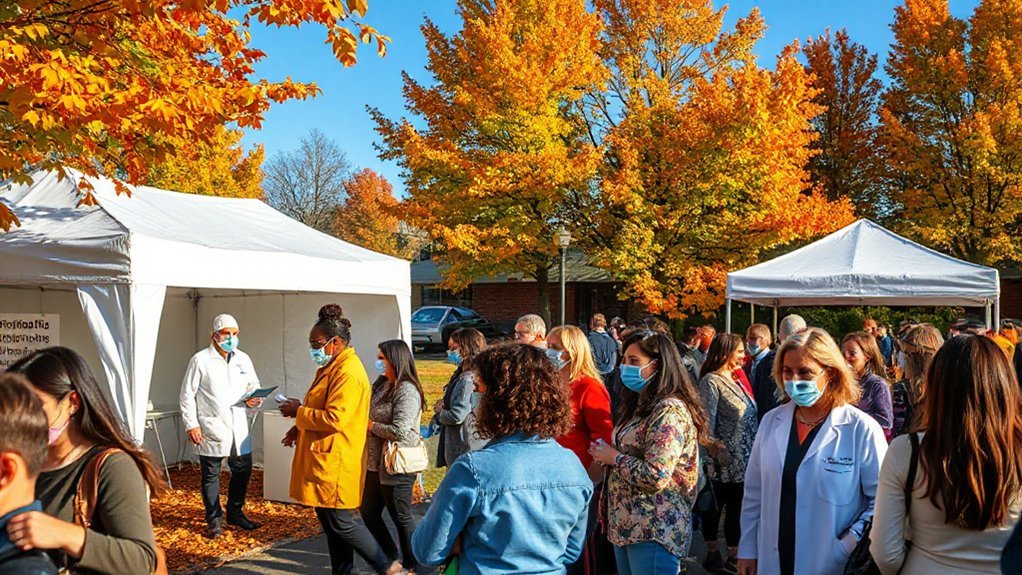
As the calendar flips to late summer, it’s a good idea to start paying attention to the flu season ahead. Outbreak forecasting helps us predict when flu activity might spike, but it’s not a perfect crystal ball.
Usually, experts notice that the flu peaks between late fall and early winter—around October to March. However, interregional differences mean some areas see earlier or later outbreaks.
For example, colder northern states often face flu peaks sooner, while warmer regions might experience a longer, more stretched-out season. Keeping track of local health reports can help us plan better.
It’s like weather forecasting but for flu—knowing the general timeline helps us get vaccinated at the right time. Don’t forget, timing varies year to year, so staying informed through health agencies is key. The goal? Stay a step ahead, protect yourself, and, yes, avoid the post-vaccine guilt of “I should have gone earlier.”
Optimal Timing for Different Age Groups

We understand that timing really matters when it comes to seniors and children getting their flu shots.
For seniors, getting vaccinated in early fall gives their immune system enough time to build protection before flu activity peaks.
For kids, especially young children, early vaccination makes sure they’re covered before the flu starts spreading in schools and daycares—so when’s the best moment?
Timing for Seniors
Getting a flu shot at the right time is especially important for seniors—no shortcuts here. Timing can directly impact how well the vaccine works and protect against flu complications.
Seniors often take medications that could lead to interactions; talking to your doctor or caregiver makes certain you’re safely vaccinated without side effects.
Planning ahead means coordinating appointments, especially if they need assistance or special arrangements. Typically, getting vaccinated in early fall—before flu viruses spread widely—is best.
But be mindful: too early, and immunity might wane; too late, you’re vulnerable. Regular flu shot updates and discussions with your healthcare team help you stay on top of this.
When to Vaccinate Children
Timing is everything when it comes to vaccinating children against the flu. Kids might’ve needle phobia, which makes the shot intimidating, but it’s worth it to avoid a nasty flu.
The best time to vaccinate is ideally in early fall—before the flu starts spreading widely, but still close enough to the season’s start. Some schools require proof of vaccination, so check ahead—many send reminder dates and clinics.
If your child is anxious about needles, talk to your doctor about options, like numbing creams or quick vaccinations. Remember, catching the flu shot early helps prevent illness and keeps kids in school, where they belong.
Don’t wait until the last minute—timing can make all the difference!
How Early Is Too Early? Risks of Premature Vaccination
But rushing to get a flu shot just as soon as it’s available mightn’t be the best idea, even if you’re keen to stay protected.
Getting vaccinated too early can backfire.
You see, your immune system can develop immune imprinting, which is like a first impression—sometimes good, sometimes not so much.
If you jump the gun, your body might lock onto that initial strain, leaving you less prepared for later virus mutations.
Plus, there’s the risk of misplaced confidence—thinking you’re fully protected when the flu season is still on the horizon.
It’s like putting on your raincoat before the clouds roll in—better to wait until the weather actually turns.
We want your shot to work at its peak. So, timing matters. Avoid the temptation to vaccinate early, and instead, plan smartly to maximize your immunity when it truly counts.
The Importance of Timing in Achieving Maximum Immunity
When it comes to getting the most protection from your flu shot, timing is everything. Why? Because immunity doesn’t last forever.
After vaccination, your body ramps up antibody production, reaching its highest point—the antibody peak—usually about two weeks later. But here’s the catch: immune waning happens pretty quickly, sometimes in just a few months.
If you get your shot too early, your immunity might decline before the peak flu season hits its worst point. If you wait too long, you risk missing that antibody peak altogether, leaving you vulnerable. The key is to hit that sweet spot—just enough time to build strong immunity before flu activity ramps up. It’s almost like timing a good joke—you want it at just the right moment for maximum impact. Knowing when to get your shot makes all the difference between feeling protected and catching the flu when you least expect it.
Recommendations From Health Authorities for 2026
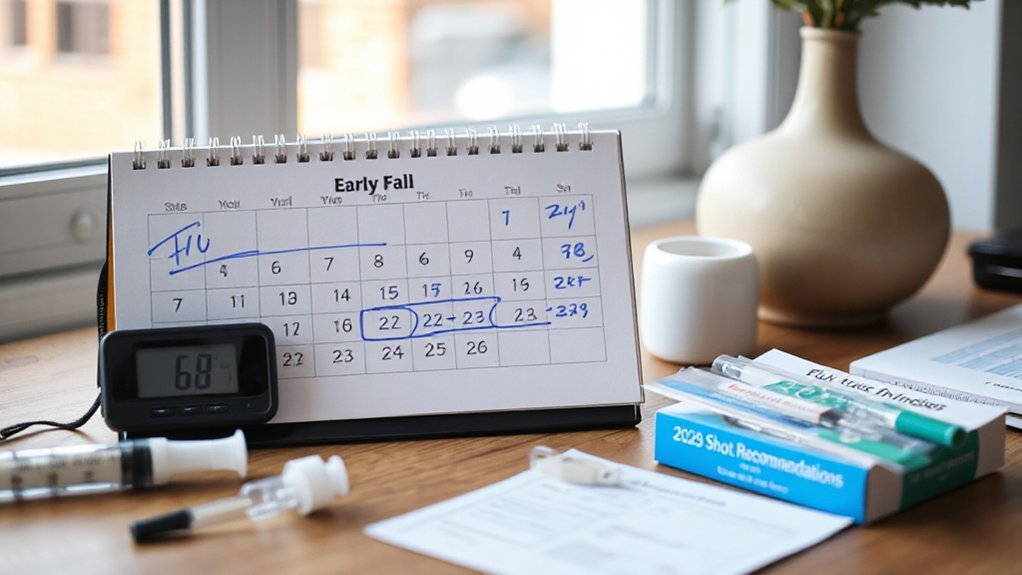
Government health agencies, like the CDC and WHO, usually set their flu shot recommendations months in advance, trying to stay ahead of the virus’s evolving patterns.
For 2026, they’ve crafted policy updates based on the latest data, watching how the flu strains are shifting.
Their goal? Clear, confident guidance you can trust.
To communicate these updates, they use straightforward communication strategies—public service announcements, community outreach, and updates on official websites.
They want everyone to stay informed, emphasizing the importance of getting vaccinated at the right time.
Usually, they recommend vaccination in early fall—September or October—before the flu hits hard.
But they’re also flexible, adjusting their advice as the flu season develops.
So, watch for their official announcements—they’re your best source for timely, trustworthy guidance.
Getting vaccinated on their recommended schedule gives you a better shot at protecting yourself and your loved ones.
Factors That Could Influence the Best Timing This Year
This year, we’ve to take into account how flu activity trends might change unexpectedly, keeping us on our toes about when to get vaccinated.
The timing of vaccine delivery plays a big role — too early, and immunity might fade before the worst hits; too late, and you’re left unprotected.
Plus, seasonal weather patterns, like an unseasonably warm or cold winter, can shift when flu peaks, making timing trickier but all the more important to get right.
Flu Activity Trends
Have you noticed how flu activity seems to shift each year, almost playing hide-and-seek? It’s true!
Geographic variation plays a big role, with some regions seeing peaks earlier or later than others. Surveillance data shows that, depending on where you live, flu might arrive in October or hold off until January.
This variation isn’t random; it’s shaped by climate, population density, and travel patterns. Health agencies keep a close eye on these trends, analyzing real-time data to predict when cases will rise.
Vaccine Delivery Timing
Timing your flu shot isn’t just about knowing when flu season hits—it also depends on how vaccine delivery unfolds this year. Supply forecasting helps us anticipate how many doses will be available and when, so we can plan accordingly.
If demand exceeds supply unexpectedly, it can delay clinics or create last-minute rushes. Then there’s the cold chain—keeping vaccines properly chilled during transport and storage.
Break that chain, and the vaccine’s effectiveness could drop. This year, manufacturers are working harder to streamline distribution, but hiccups still happen.
Seasonal Weather Patterns
Weather often seems unpredictable, and this year’s seasonal shifts could play a big role in when we should get our flu shots.
The Arctic Oscillation and Jet Stream can influence how cold or warm it gets across the U.S., affecting flu season timing.
When the Arctic Oscillation is in a negative phase, colder air dips south, possibly triggering earlier flu activity.
The Jet Stream’s position can also redirect storms and cold fronts, making flu season start sooner or later.
So, if these atmospheric patterns shift unexpectedly this year, it might change the best window for vaccination.
Staying aware of these weather clues helps us be proactive.
Better to get ready early than scramble later — timing your shot with the weather’s mood can make all the difference.
Tips for Planning Your Flu Vaccination Schedule
Planning your flu shot isn’t just about grabbing a needle when it’s convenient; it’s a strategic move to stay protected when you need it most. First, set appointment reminders—don’t rely on memory alone. Use phone alerts or calendar prompts to schedule early in the season, ideally before flu activity peaks.
Check your insurance coverage beforehand—some plans cover vaccines without extra charges, others might require copays. Call your doctor’s office or visit their website to confirm.
Be proactive—wait times increase, spots fill quickly, and delaying could leave you unprotected during peak flu season. Also, consider your personal schedule—avoiding busy periods means less stress and a smoother experience.
Conclusion
So, when’s the best time to get your flu shot in 2026? Usually early fall—think September or mid-October—strikes a good balance. But if you’re older, planning to travel, or expect a cold snap early, don’t wait too long. Check local updates, book your appointment early, and chat with your doctor if you’re high risk. Because staying healthy means knowing exactly when to act. Let’s do this—protection is key!