Funny coincidence—I once trusted the calendar, and you’re asking when to plant in 2026. Don’t chase dates; watch signals: your USDA zone, last/first frost, and soil at 4 inches—50–60°F for peas, 65–70°F for tomatoes. Walk your yard; south walls warm early, low spots hoard cold. Want a jump, even in a weird spring? I’ve got a simple timing move with tunnels and staggered starts that steals weeks—if you’re ready.
Know Your USDA Zone, Frost Dates, and Microclimates
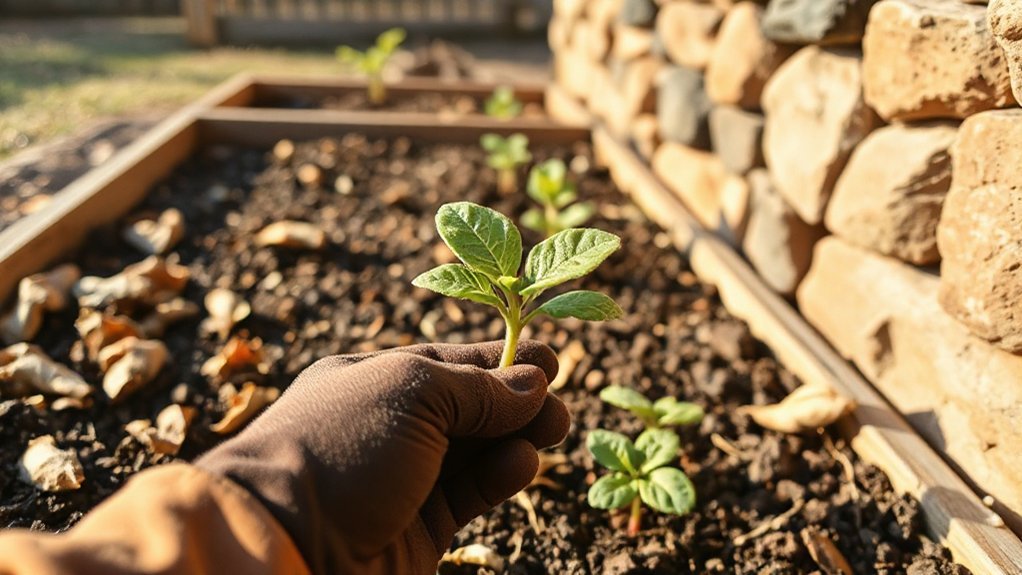
Why start anywhere else but with your map, your dates, your tiny weather quirks? Your USDA zone sets the outer fence, the line that tells you what survives winter and what sulks. Pull up hardiness maps, circle your zone, then anchor your plan to average last and first frost dates. That’s your window, your runway.
But you’re not a slave to averages—you’re a scout. Walk your space. Notice the south wall that bakes, the alley that funnels wind, the low pocket that collects cold. Check tree canopies, fences, brick, and stone. Feel how a slope drains air and water; slope effects can speed spring in one bed and stall it in another.
Map microclimates, name them, use them. Tuck tender starts in warm nooks, give hardy greens the breezy spots. I’ve rushed before; it cost me. You’ll move smarter. You’ll plant with intention, and claim your season. Fully.
Reading Soil Temperature and Weather Signals
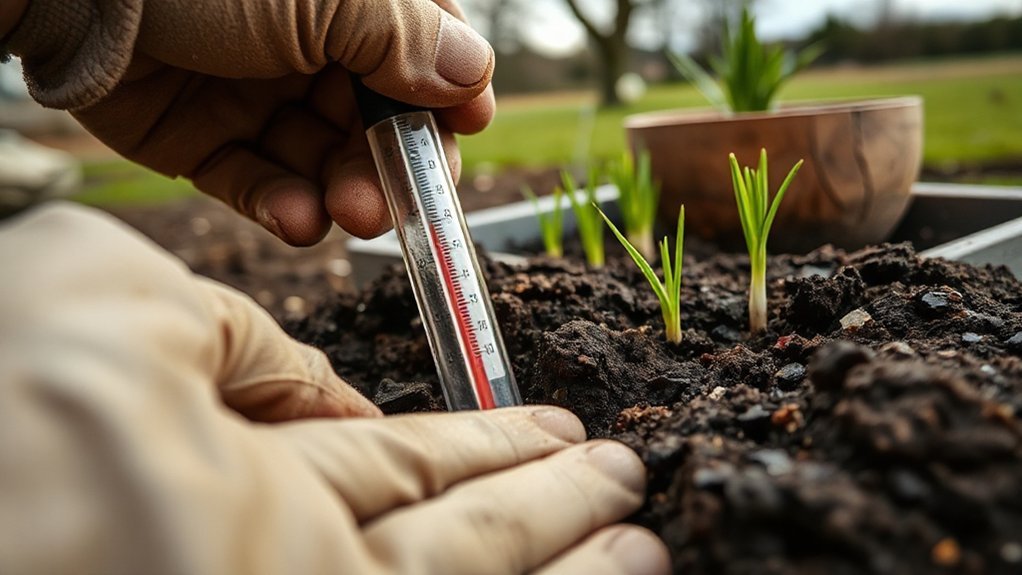
How do you know the ground’s ready? You read the soil like a pulse. Push a thermometer four inches down at sunrise; wait for steady 50–60°F for cool crops, 65–70°F for warm ones. Test three days in a row. Consistency means go. Crumble a handful—moist, not sticky, not dusty. That feel matters. Watch the forecast: rising overnight lows, gentle winds, and a stable Dew Point hint at mild, settled air. After a soaking rain, give it a day; mud steals heat. I’ve rushed and replanted—twice. You don’t need that.
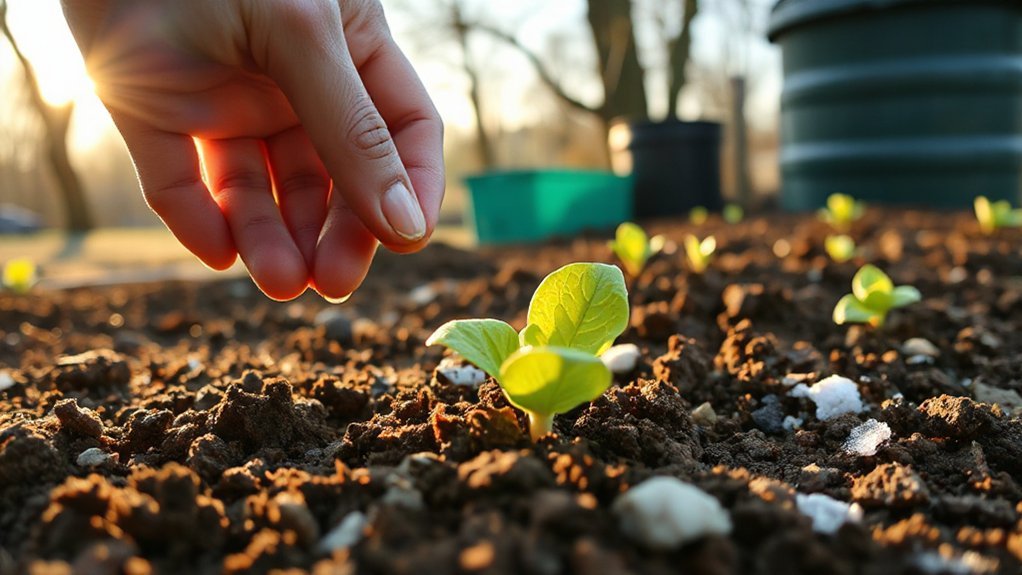
Listen for roots: when Soil Biology wakes at 50°F+, seeds sprint, not stumble. Sun on your back, you’ll feel it—the quick dry after dawn, the quieter breeze by afternoon. Look for clear mornings after cloudy nights; look for patterns, not one-offs. Measure, then trust your gut. Wait a breath longer than your impatience, then plant with bold hands today.
Regional Planting Windows for 2026
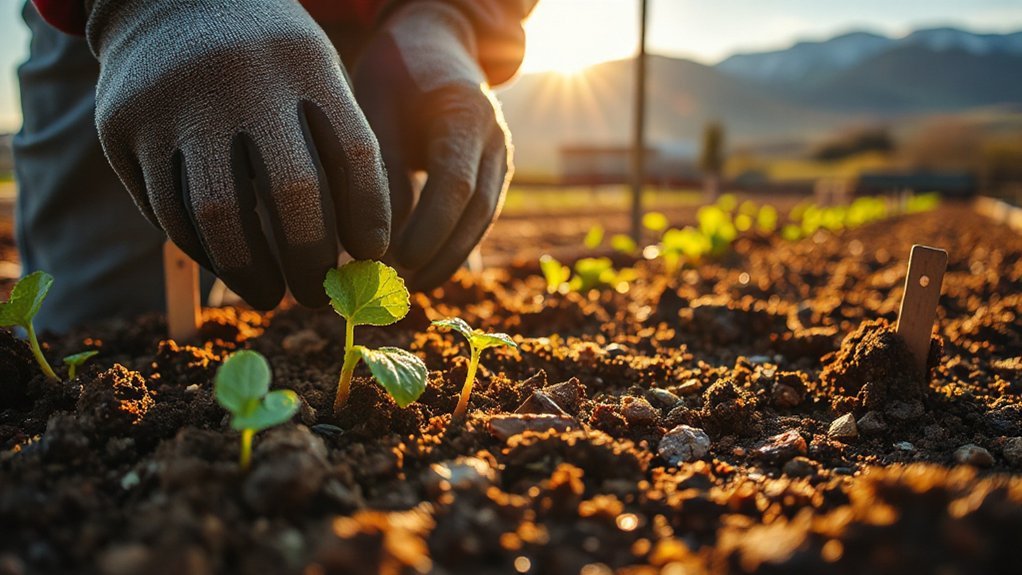
In 2026, your planting clock shifts with your zip code, and that’s your edge. You don’t wait on a national date; you chart your own. Up north, late frosts linger, so you watch night temps and jump when they steady. Down south, heat sprints early, so you start sooner, then stagger successions. Coasts drift mild; interiors swing wild. I’ve missed windows—I learned to plan, then pivot. Two cues help: local Seed Exchanges and real-time Nursery Availability. They tell you what thrives now, not someday.
| Region | Window | Feeling |
|---|---|---|
| North | Late April–May | Brave patience |
| South | Feb–March | Joyful urgency |
| Coastal/Interior | Rolling windows | Calm focus |
Listen to neighbors, cross-check municipal frost maps, walk your block at dawn. Adjust by microclimate—balcony, courtyard, windbreak. Start small, start bold. Your region isn’t a fence; it’s a runway. When in doubt, ask growers, trust your notes, and move when the window cracks open. Right now, yes.
Timing Cool-Season vs. Warm-Season Crops
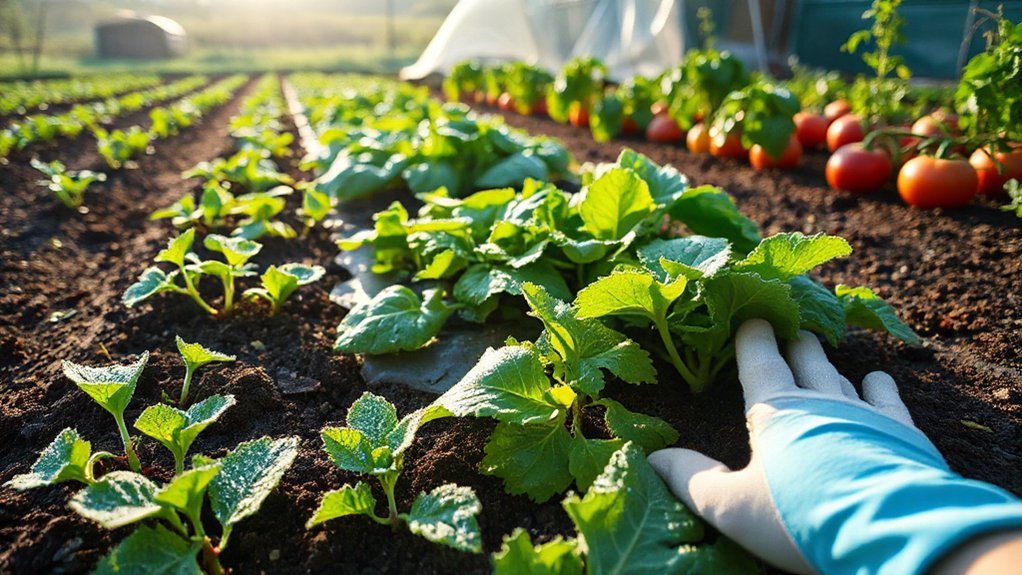
When do you plant peas and spinach, and when do you dare with tomatoes and basil? Cool-season crops crave brisk air; you sow them when soil is workable and nights still nip. Peas, spinach, lettuce, radishes—let them ride the chill, and they’ll sweeten. Warm-season stars want heat, real heat. Tomatoes, peppers, squash, basil—wait until frost risk is gone and soil feels like a warm handshake.
Think in pairs for Plant Compatibility. Peas play nice with lettuce; basil boosts tomatoes; spinach prefers quiet neighbors. I’ve rushed those pairings before—lesson learned, patience beats pride.
Use Harvest Timing as your compass. Fast greens mature in weeks; roots follow; fruits ask months and steady warmth. Stagger by type, not by fear. Touch the soil, watch the sky, trust your gut. Breathe, then begin now.
You’re growing food and freedom. Choose the right season, choose the right partners, and the garden says yes.
Strategies for Early/Late Springs and Succession Planting
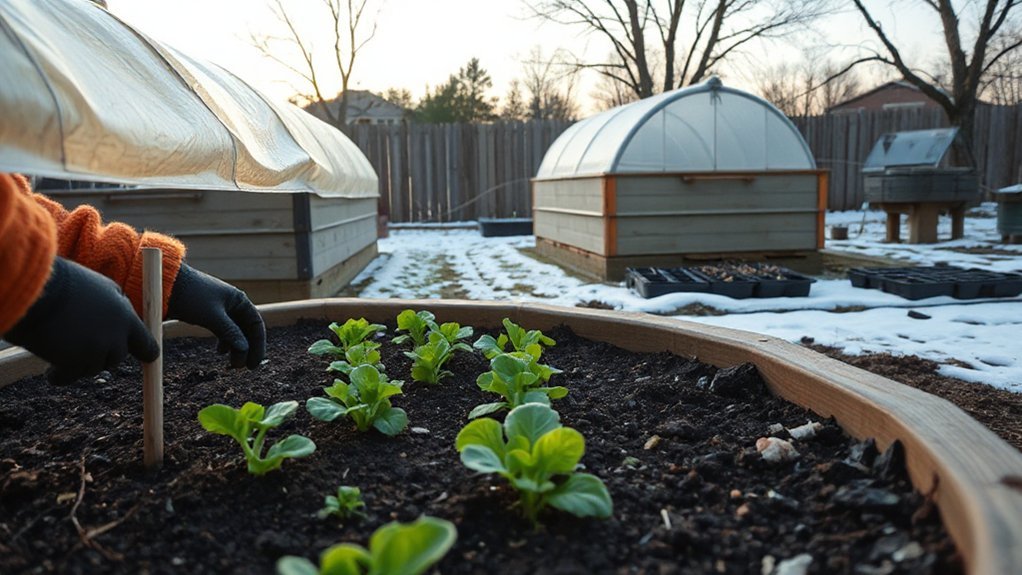
Seasons set the stage, but they don’t always stick to the script, so you need a plan that flexes. When spring runs early, you leap; when it drags, you pivot. Use soil temps, not dates. I carry a cheap thermometer and a stubborn hope. You’ll harden off starts in waves, protect tender ones, and keep backup seeds ready, because freedom loves options.
- For an early spring, sow sturdy greens, peas, and radishes fast; tuck tomatoes under low tunnels, just in case.
- For a late spring, start more trays indoors, up-pot boldly, and lean on cold frames while the soil warms.
- Practice succession: plant little, plant often; use relay planting so beds never sit idle, only shifting.
- Between runs, try cover cropping with oats or clover to feed soil, block weeds, and hold precious moisture.
Stay nimble, stay curious, and you’ll harvest longer than the calendar thinks this year.