If you’re hoping to catch the Northern Lights in 2026, timing really matters. We’re looking at the solar cycle’s growing phase, which means the best shows happen from September to March, especially around December to February, when the nights are darkest and longest. But it’s not just about the months—it’s about when the sky’s clear, away from city lights, and the geomagnetic activity peaks late at night. Want to know how to maximize your chances? Keep listening.
Understanding the Solar Cycle in 2026
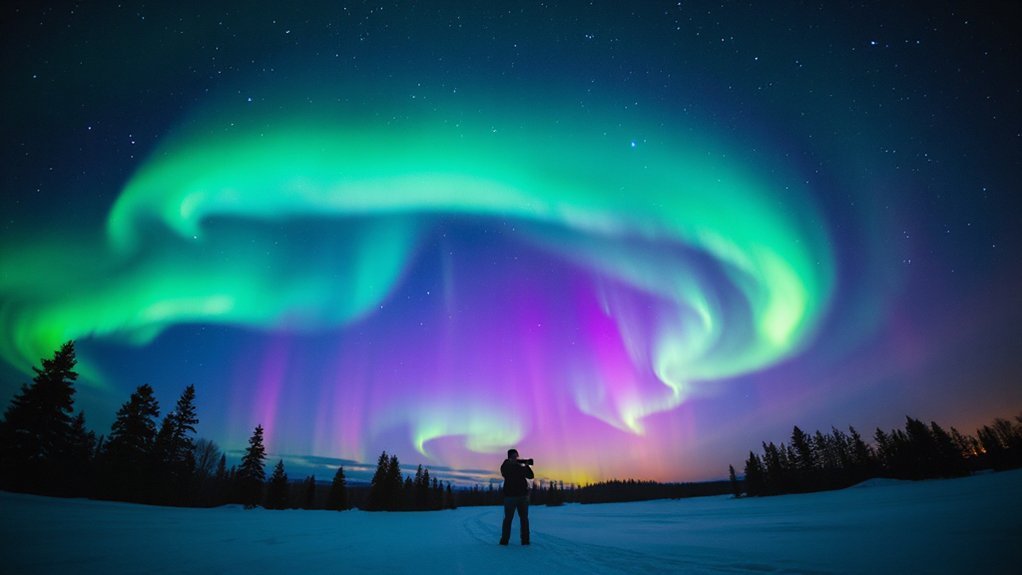
As we look ahead to 2026, understanding the solar cycle becomes essential for catching those stunning northern lights.
The solar cycle is like nature’s own clock, roughly every 11 years, shifting from solar minimum to solar maximum.
During the solar maximum, sunspots—those dark, magnetic patches—become more frequent.
Why does this matter? Because sunspots often lead to solar flares and coronal mass ejections, which swell Earth’s magnetosphere and create the breathtaking auroras we love.
Sunspot forecasting helps us predict when these active periods will peak.
If we spot more sunspots on the sun’s surface, chances are, the northern lights will dance more vividly and frequently.
So, tracking the solar cycle, especially approaching solar maximum, gives us a pretty good heads-up on prime aurora timing.
It’s like reading the sky’s mood—it might be more active, more colorful, and definitely more worth waiting for.
The Best Months for Aurora Viewing
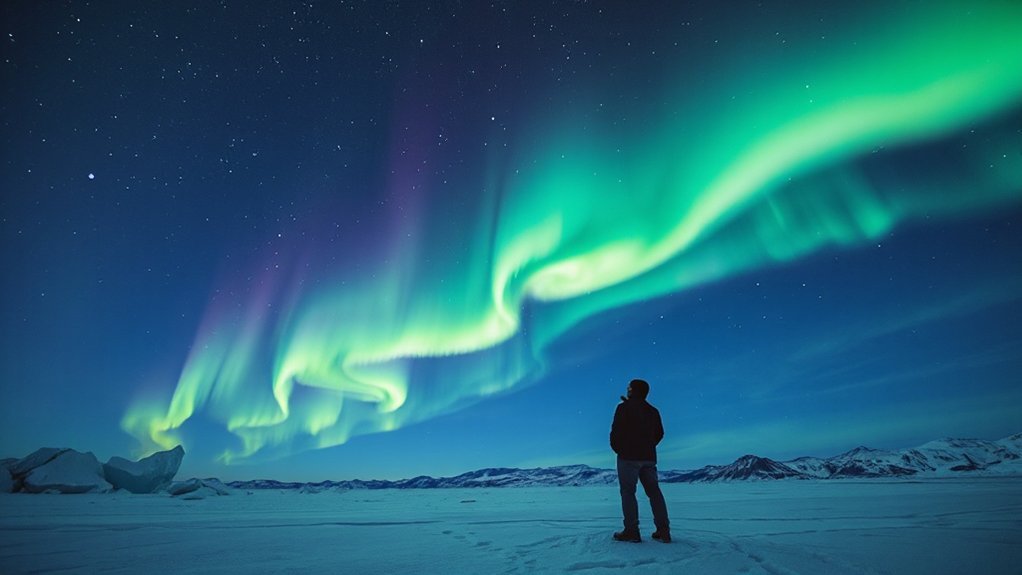
Choosing the right months to chase the northern lights isn’t just luck — it’s about knowing when the skies are most likely to light up. Peak months for aurora viewing usually fall between September and March, with December through February being the absolute best.
During those months, nights are longer, giving us more hours of darkness—crucial for seeing the lights. Compared to early fall or late winter, the peak months tend to offer clearer skies and minimal moonlight interference, making the auroras pop more vividly.
It’s like nature’s own spotlight season. If you want to maximize your chances, aim for months with historically more active solar nights, and check those month comparisons year after year.
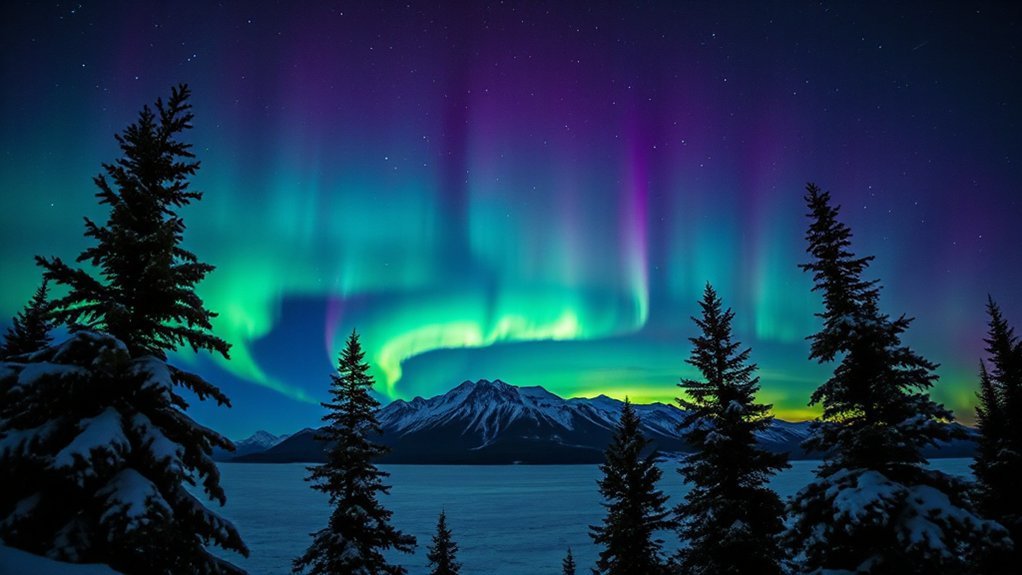
December and January often steal the show, thanks to polar night conditions. So, whether it’s holiday magic or mid-winter wonder, these months give us the best shot at catching nature’s dance.
Ideal Times of Day for Viewing
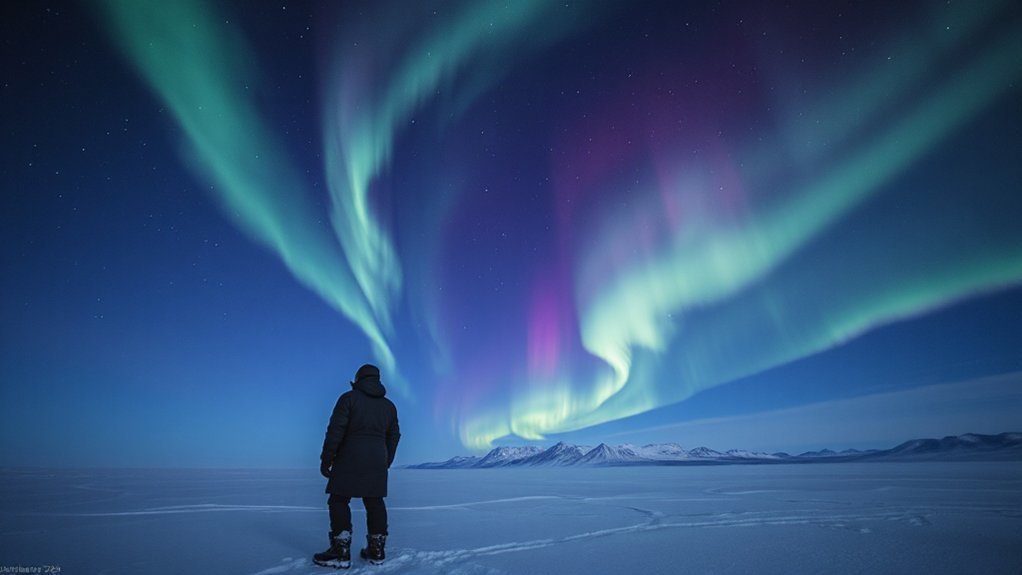
When it comes to spotting the northern lights, timing matters—especially the time of day. The midnight peak is when auroras hit their prime.
Usually, between 10 p.m. and 2 a.m., the sky is dark enough, and the magnetic activity is at its highest. But don’t overlook early morning hours, around 3 a.m., when the lights can sometimes surprise us with a more vibrant display.
Clear, cold nights are best, and staying out late means a better shot at catching the show. Keep in mind, the best aurora activity often coincides with the solar wind’s peak, which varies, but late-night is generally your best bet.
Factors That Influence Aurora Visibility
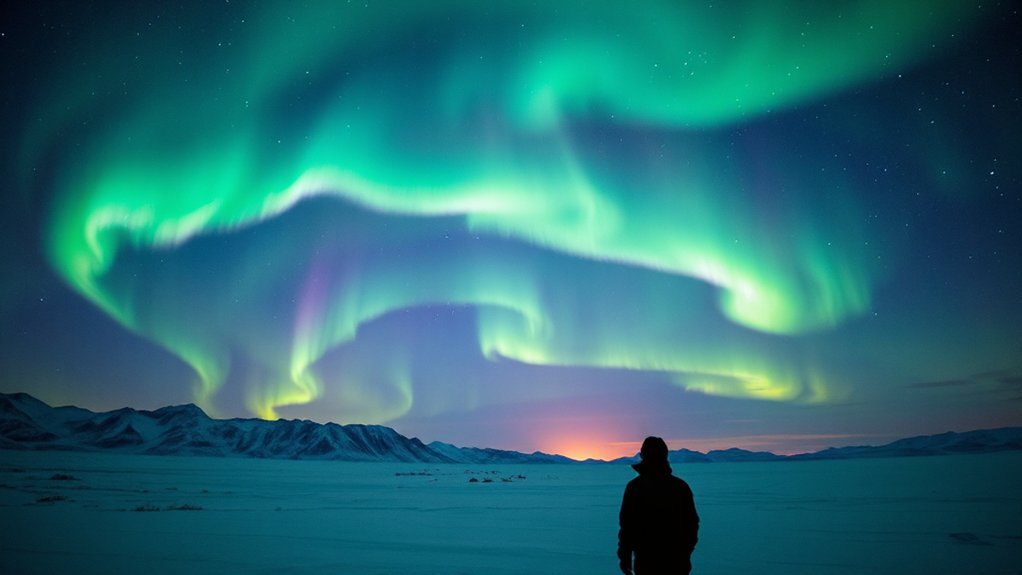
Many factors can make or break your chances of catching the northern lights—think weather, light pollution, and solar activity.
The geomagnetic latitude is key here; the closer you’re to the magnetic poles, the better your odds. Places far north, like northern Norway or Alaska, are prime spots because they sit within that ideal latitude zone.
Light pollution is another biggie. Even the clearest skies won’t reveal the auroras if city glow drowns them out. That’s why remote areas with dark skies give you a real advantage.
Plus, solar activity fluctuates, and the more active the sun, the brighter and more frequent the displays. So, if you’re planning a trip, check the aurora forecast and choose locations away from city lights, near high geomagnetic latitudes, and during times of increased solar activity. That’s how you maximize your chances—simple, actionable, and, let’s be honest, worth the effort!
Tips for Planning Your Northern Lights Experience
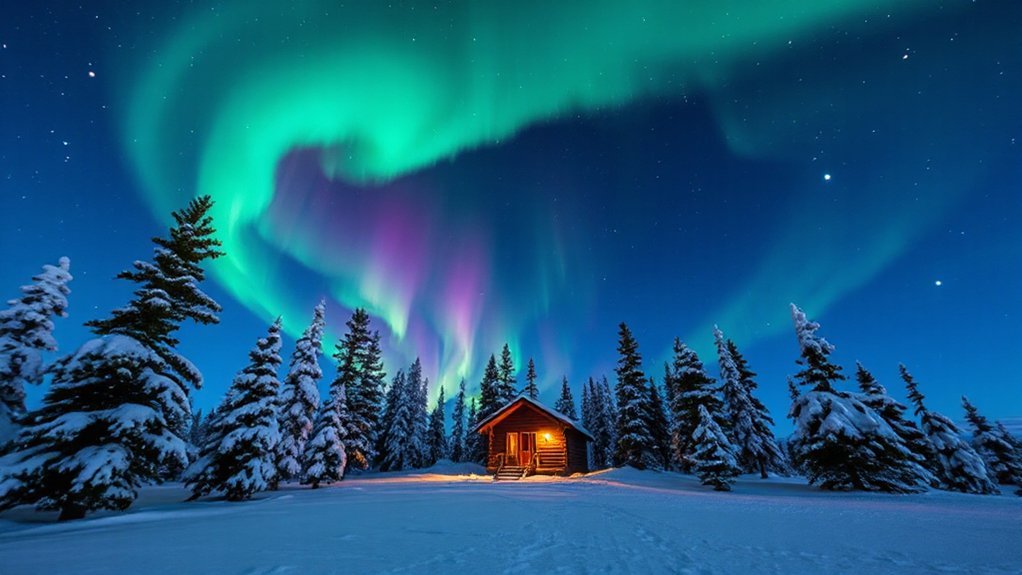
Planning your northern lights adventure isn’t just about packing warm clothes and crossing your fingers; it’s about setting yourself up for success.
First, create a thorough gear checklist—think thermal layers, insulated boots, a good camera, and extra batteries (cold drains batteries fast!).
Then, consider local logistics: where to stay, how to get there, and the best spots for viewing.
Do some research on the area’s accessibility, weather patterns, and nearby northern lights tours.
Don’t forget to check moon phases—dark skies make for better viewing.
Timing matters, so plan around clear, quiet nights, and always have a backup plan.
Keep an eye on aurora forecasts, but stay flexible—sometimes the best show happens when you least expect it.
Conclusion
So, when’s the best time to catch the Northern Lights in 2026? Between September and March, especially December to February, during the late evening hours. Stay flexible, keep an eye on forecasts, and pick dark, high-latitude spots free from light pollution. Clear skies, patience, and a bit of luck are your best friends here. Plan ahead, stay persistent, and those magical auroras just might light up your night—ready for a memorable adventure?