We’ve all stood in our yards come spring, staring at patchy grass and wondering if it’s time to break out the fertilizer spreader. Truth is, most of us are guessing when we should feed our lawns, and that guesswork often backfires. Your grass type and local climate hold the real answers to proper timing, but there’s more to take into account than just the calendar date hanging on your kitchen wall.
Key Takeaways
- Start fertilizing cool-season grasses in early spring when soil reaches 55°F, then feed heavily in early fall.
- Begin feeding warm-season grasses when soil hits 65°F and grass is fully green, continuing every 6-8 weeks through summer.
- Northern lawns need 2-4 feedings focusing on spring and fall; southern lawns require 2-5 applications from late spring through summer.
- Apply winterizer fertilizer with potassium 6-8 weeks after fall feeding to strengthen roots for cold weather tolerance.
- Avoid fertilizing dormant grass, feeding before storms, or applying fertilizer too close to frost to prevent lawn damage.
Cool-Season vs Warm-Season: Which Grass Type You Have?
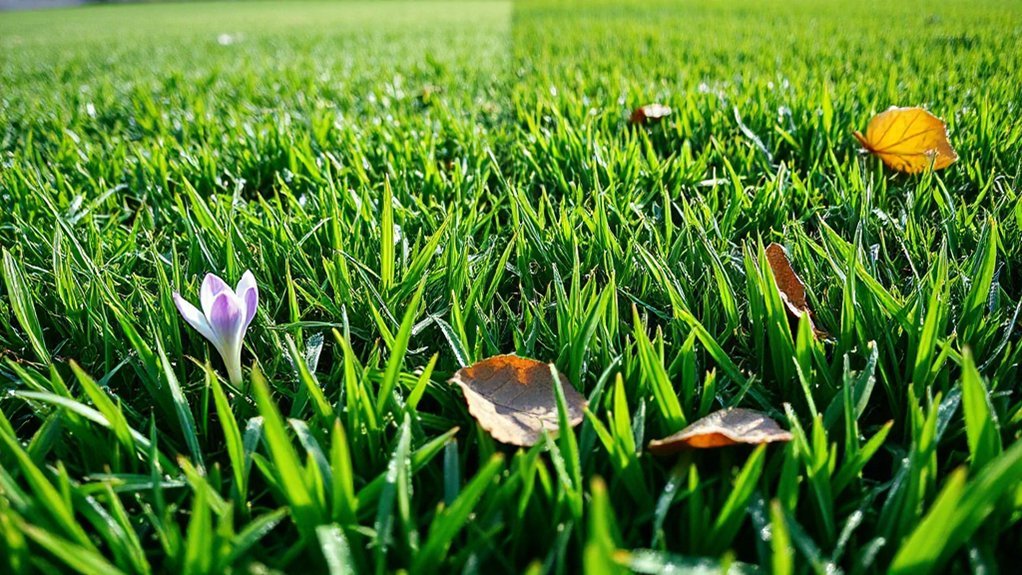
Why does knowing your grass type matter so much when it comes to feeding your lawn? Because timing is everything, friend. Cool-season grasses like Kentucky bluegrass and fescue are spring and fall performers—they wake up when temperatures hit that sweet 60-75°F range and take summer naps when heat cranks up. Meanwhile, warm-season champions like Bermuda and Zoysia sleep through winter but dance all summer long at 80-95°F.
Here’s your quick identification guide: Cool-season varieties sport fine blades and grow in clumps, while warm-season grasses spread like they own the place with wider blades and creeping roots. Know which team you’re on, and you’ll feed your lawn when it’s actually hungry—not when it’s snoozing.
When to Fertilize Cool-Season Lawns All Year
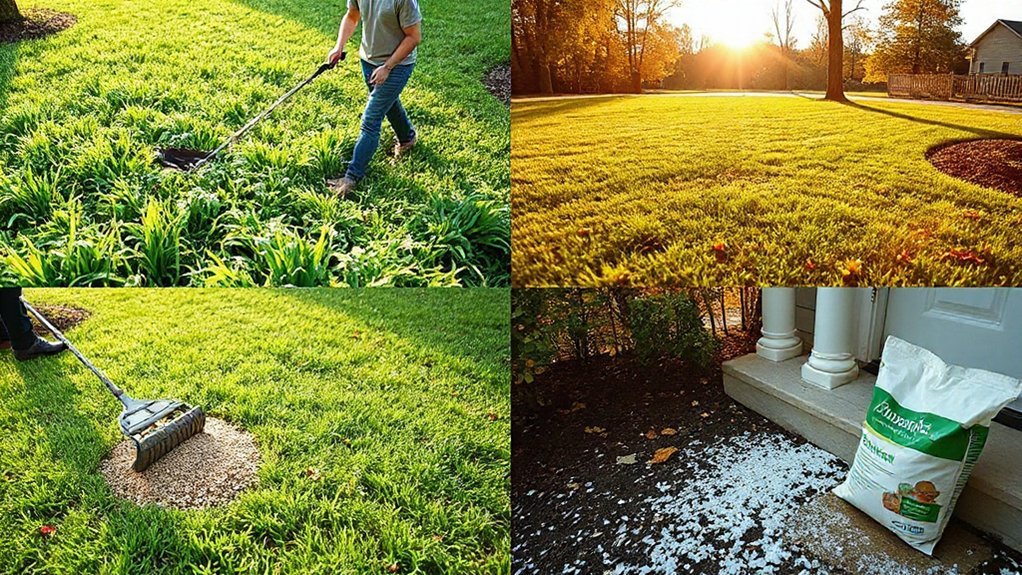
Now that you’ve got your cool-season grass identified, let’s map out your feeding schedule like a well-planned garden party—because these grasses have very specific appetites throughout the year.
We’ll start strong in early spring when soil temperatures hit 55°F and you’re making that first mow. Apply a slow-release, balanced fertilizer to jumpstart root and shoot growth. Follow up with a light feeding 6-8 weeks later if your lawn’s still looking hungry.
Come early fall, it’s time for the main event—a substantial feeding followed by a potassium-rich “winterizer” 6-8 weeks later. This builds root storage and cold tolerance for winter survival.
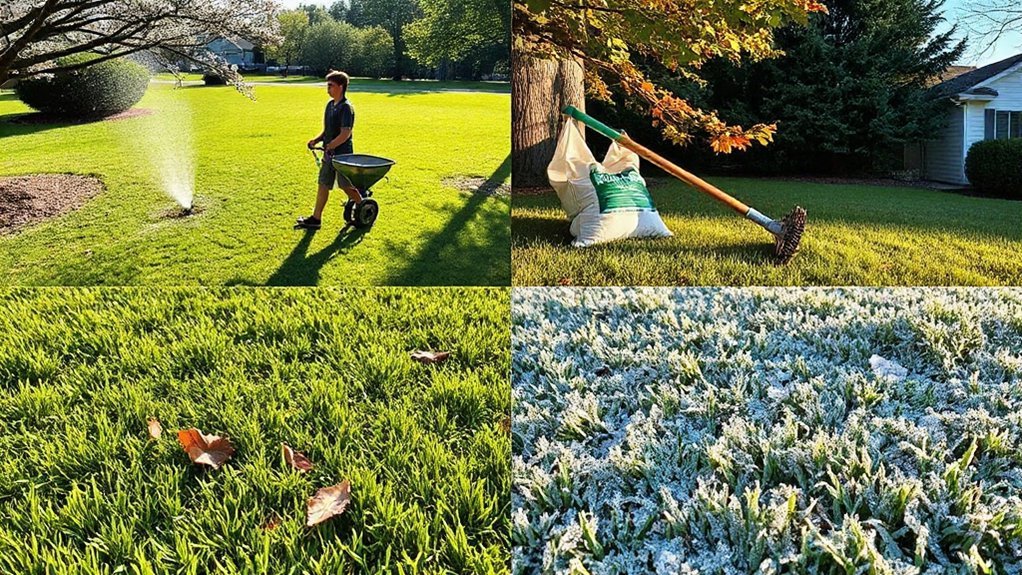
During summer’s heat, we’ll hold back unless your turf’s truly struggling.
When to Fertilize Warm-Season Lawns All Year
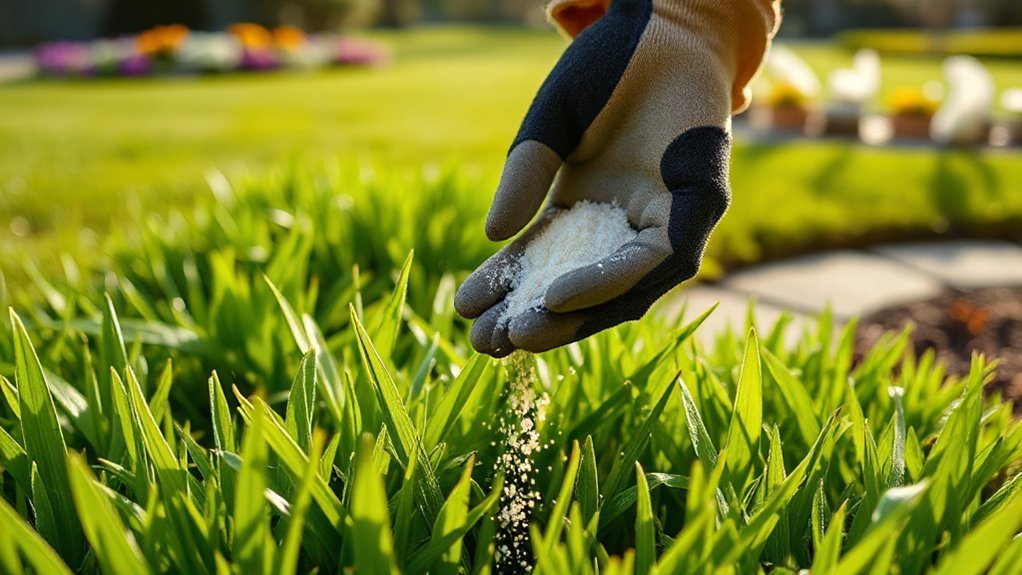
Switching gears to warm-season grasses means dancing to a different rhythm—these heat-loving beauties like Bermuda, Zoysia, and St. Augustine march to their own beat. We’ll wait patiently until they’re fully awake from winter’s slumber—when soil temps hit 65°F and every blade’s turned green. That’s our cue to start feeding.
Once they’re rolling, we’ll nourish them every 6–8 weeks through growing season with nitrogen-rich, slow-release fertilizer. Think 2–3 solid meals from late spring through late summer. Here’s the kicker: we’ll wrap up feeding by mid-September, giving them time to toughen up before winter’s return. Always water lightly afterward—it’s like washing down a good meal.
How Often to Fertilize Based on Your Climate
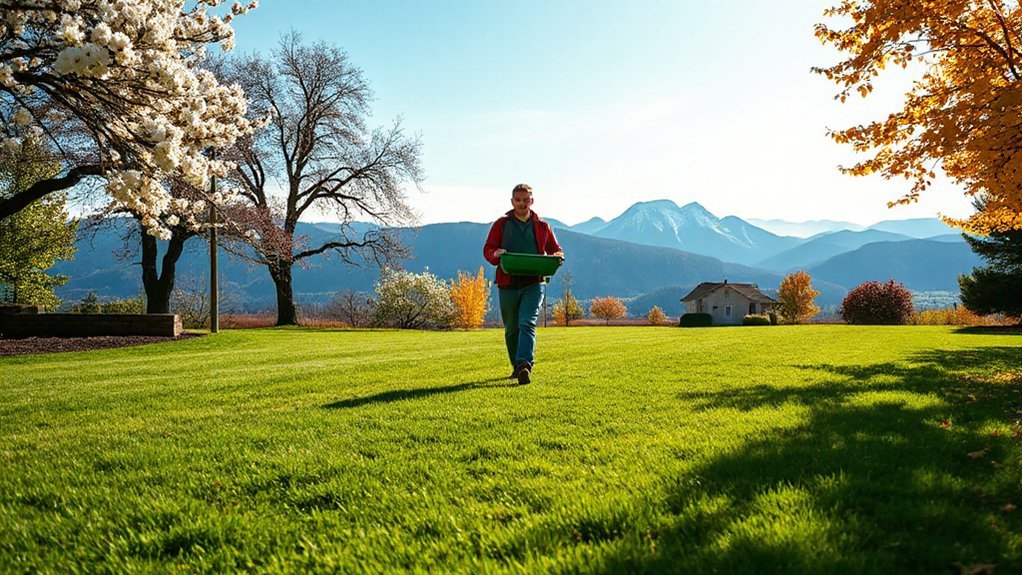
How does your local weather shape your lawn’s appetite? We’ve found that climate determines everything about your feeding schedule. Northern homeowners with cool-season grasses can stick to that reliable spring-and-fall rhythm, while southern folks need to feed during those scorching summer months when warm-season grasses thrive.
| Climate Zone | Grass Type | Feeding Schedule |
|---|---|---|
| Northern States | Cool-season | Spring & Fall (2-4 times) |
| Southern States | Warm-season | Late Spring-Summer (2-5 times) |
| Transitional Zone | Mixed | Staggered based on dominant type |
| High-traffic Areas | Any | Increase frequency as needed |
| New Lawns | Any | Wait 6-8 weeks after germination |
Most folks find success with our simple three-feed approach: spring startup, midsummer boost, and fall finale.
Timing Mistakes That Weaken Your Lawn
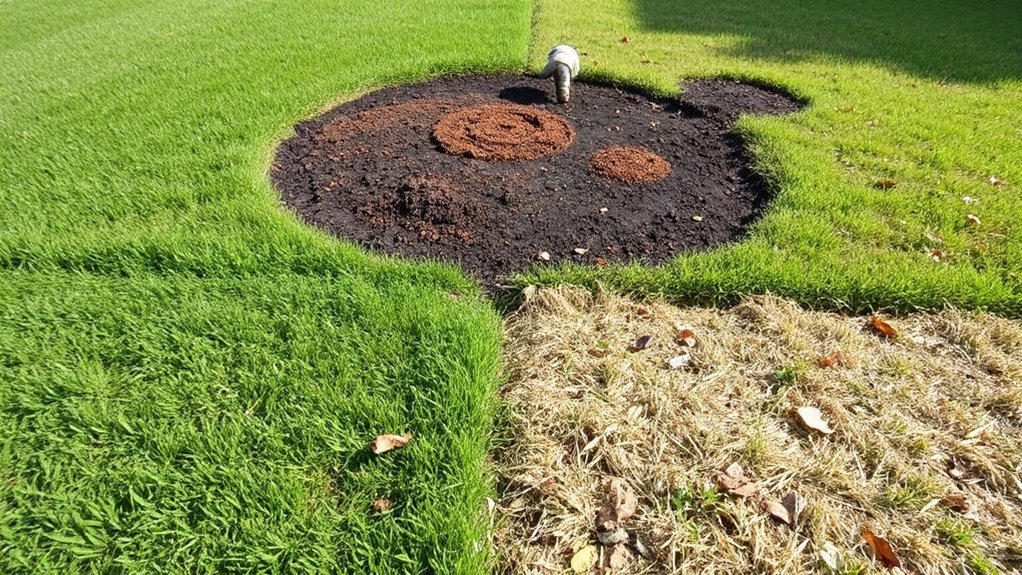
Even with the perfect schedule mapped out, we’ve watched plenty of well-meaning homeowners accidentally sabotage their beautiful lawns with poor timing choices. Trust me, we’ve all been there—eager to help our grass flourish, only to discover we’ve actually stressed it out.
Here’s what trips up most folks:
- Fertilizing dormant grass when soil temperatures haven’t warmed up yet—you’re basically throwing money away
- Feeding right before storms that’ll wash all those nutrients straight into the storm drains
- Summer feeding during heat waves when your cool-season grass is already struggling to survive
- Late fall applications too close to frost that create tender growth winter will destroy
Smart timing beats heavy feeding every single time.
Frequently Asked Questions
What Is the Best Schedule for Lawn Fertilization?
We’ll feed cool-season grasses 2-4 times yearly—early spring when soil hits 55°F, late spring if needed, then heavy fall applications including winterizer. For warm-season varieties, we’re looking at 2-3 feedings starting after full green-up in late spring, continuing through mid-summer, with optional early fall. Space ’em 6-8 weeks apart, use slow-release nitrogen, and let your lawn’s health guide the frequency.
When to Start Fertilizing Grass After Winter?
Like watching winter’s icy grip finally loosen its hold, we start fertilizing when our grass truly awakens from its slumber. We wait for that magical moment when consistent green-up appears and we’re mowing again—not some arbitrary calendar date. When soil temps hit 55°F for cool-season grass or 65°F for warm-season varieties, that’s our cue to feed freedom back into our turf.
So
Like our granddaddies used to say, “timing’s everything,” and that couldn’t be truer when we’re nurturing our lawns. We’ve walked through the seasons together, learned when cool-season grasses wake up hungry in spring and when warm-season varieties start stirring. By now, you’ve got the roadmap to feed your grass right—not too early, not too late, but just when Mother Nature says it’s time.