We’ve all been there—standing in the garden center in late October, wondering if we’re too late to plant those gorgeous tulip bulbs we’ve been eyeing. Here’s the thing: timing spring bulbs isn’t just about beating the first frost. It’s about understanding what’s happening beneath the surface, where soil temperature tells the real story. Get this timing right, and you’ll have neighbors asking how you created such stunning spring displays.
Key Takeaways
- Plant spring bulbs 6-8 weeks before your area’s first hard freeze when soil temperatures consistently drop below 60°F.
- Check your USDA zone: zones 3-5 plant late September to mid-October, zones 6-7 mid-October to November, zones 8-10 late November to December.
- Use a soil thermometer at 3-4 inches deep and wait for optimal root development temperatures of 50-55°F.
- Avoid planting too early in warm soil above 60°F or too late with insufficient establishment time before winter.
- Stagger plantings by bloom time categories (early, mid-season, late varieties) to create 6-8 weeks of continuous spring displays.
When to Plant Spring Bulbs in Fall
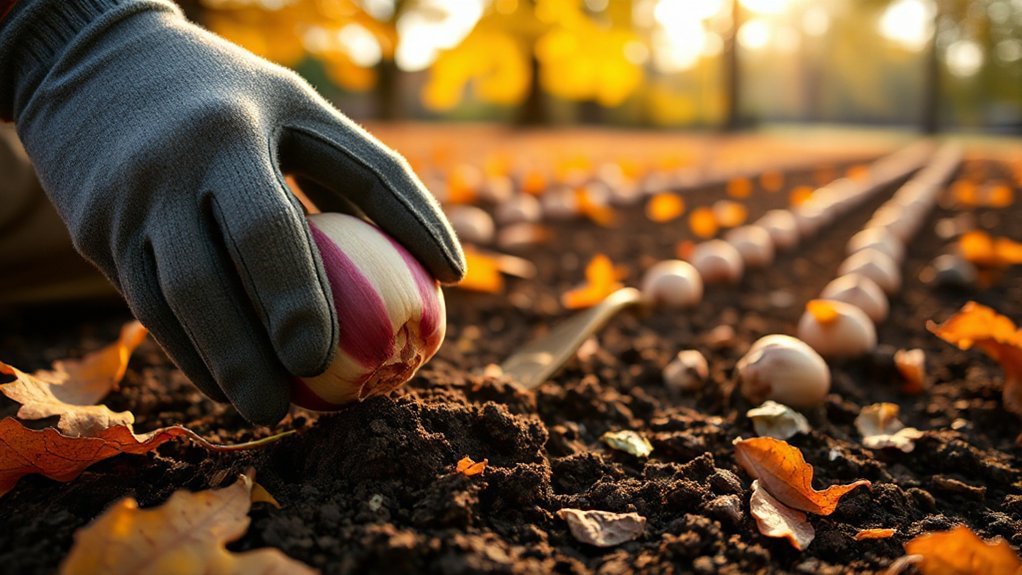
Most gardeners learn this timing lesson the hard way, but here’s the secret our grandparents knew by heart: spring bulbs need their beauty sleep during winter’s chill, which means we’ve got to tuck them into the ground while fall’s still painting the leaves. We’re aiming for that sweet spot between late September and November, before Jack Frost locks up the soil for good. The magic happens when we plant those bulbs about 6-8 weeks before our area’s first hard freeze. This gives them just enough time to grow strong roots without sending up shoots too early. Wait until soil temperatures drop below 60°F—warm, soggy ground will rot those precious bulbs faster than you can say “spring garden.”
How Soil Temperature Determines Spring Bulb Timing
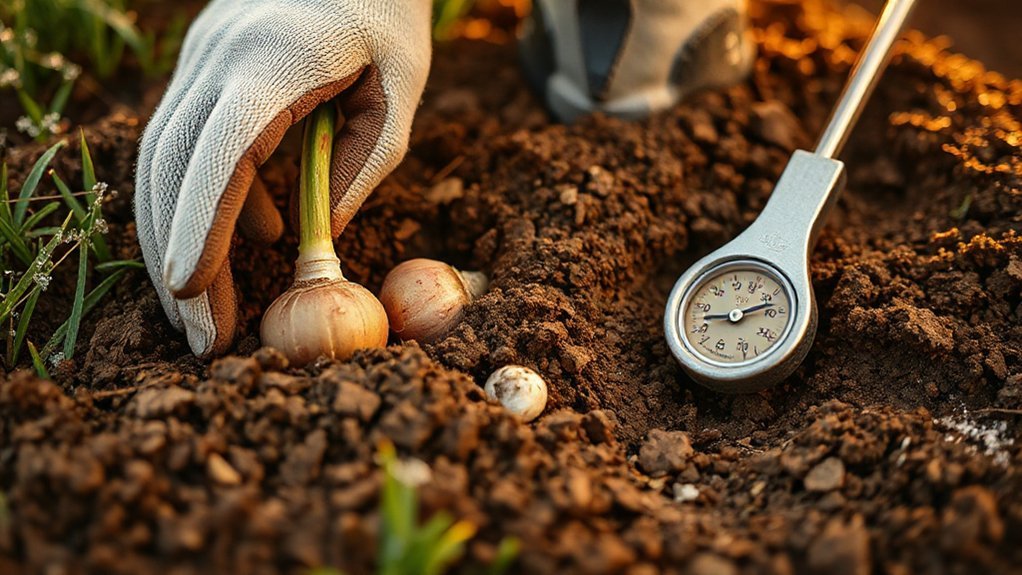
While we can circle dates on our calendars all we want, it’s the soil thermometer that tells the real story about when our bulbs are ready to go into the ground. We’re looking for that sweet spot when soil temperatures drop below 60°F at 3-4 inches deep—this prevents our bulbs from “cooking” or sprouting too early. The magic happens around 50-55°F, where roots develop beautifully without any unwanted top growth.
Don’t trust calendar dates alone; your garden’s microclimate writes its own rules. That south-facing slope heats up differently than the shaded north side. We need those bulbs experiencing 6-8 weeks of cool soil before hard freeze hits, giving them time to establish strong root systems for spectacular spring blooms.
When to Plant Spring Bulbs in Your Climate Zone
Now that we’ve covered soil temperature basics, let’s talk about how your specific climate zone shapes when you’ll want to get those bulbs in the ground. We can’t treat a gardener in chilly Minnesota the same as someone tending beds in balmy Georgia — each zone has its own sweet spot for timing. Your USDA hardiness zone becomes your roadmap, guiding you toward the perfect planting window that’ll give your spring bulbs their best shot at success.
Regional Timing Guidelines
Since Mother Nature doesn’t follow our neat calendar pages, we can’t rely on fixed dates when it comes to tucking our spring bulbs into their winter beds. Instead, we’ll let the soil temperature be our guide—waiting until it cools to 60°F or below.
In northern zones 3-5, we’re racing against winter’s early arrival, so we’ll plant from late September through mid-October. Those of us in moderate zones 6-7 get a bit more breathing room, planting mid-October to November. Lucky folks in warmer zones 8-10 can wait until mid-to-late fall when that stubborn soil finally cools down.
Here’s the real trick: count back 6-8 weeks from your area’s first hard frost date. That’s your sweet spot for perfect timing.
Zone-Specific Planting Windows
Though we’ve covered the general timing principles, let’s dig into the nitty-gritty of what works best in your particular slice of the country.
If you’re gardening in the harsh northern zones (3-5), we’re talking September through mid-October planting. Your bulbs need those vital 6-8 weeks to establish roots before winter locks everything down tight.
For folks in the middle zones (6-7), you’ve got breathing room from mid-October into November—aim for about six weeks before your first hard frost typically arrives.
Down south in zones 8-10, patience pays off. Wait until late November or December when soil temperatures finally drop below 60°F. Plant too early and you’ll literally cook those bulbs or trick them into sprouting prematurely.
Why Early Planting Causes Rot and Late Planting Reduces Blooms
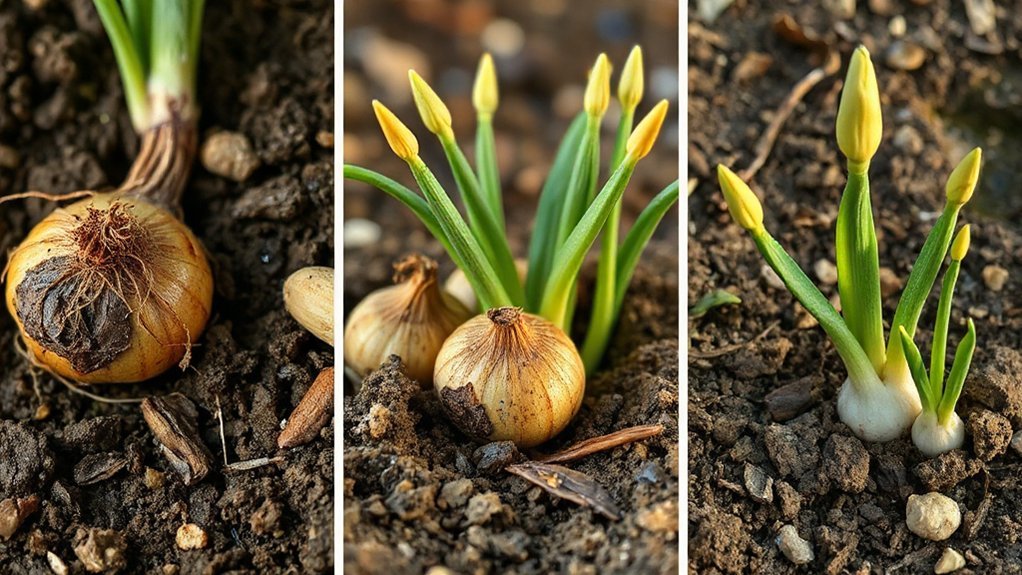
Timing your bulb planting feels a bit like Goldilocks searching for that perfect bowl of porridge—too early and you’ll cook those precious bulbs right in the ground, too late and they won’t have enough steam for a proper spring show.
When we plant in warm soil above 60°F, we’re basically giving those bulbs a false wake-up call. They’ll start sprouting tender shoots that fungal pathogens love to attack, and soggy, warm conditions turn bulbs into mush faster than you can say “flower garden.”
On the flip side, late planting robs bulbs of their 6-8 week establishment period. Without proper root development, they can’t store the carbohydrates needed for robust blooms. You’ll get weak, disappointing flowers—if any at all.
How to Test Soil Temperature and Drainage Before Planting
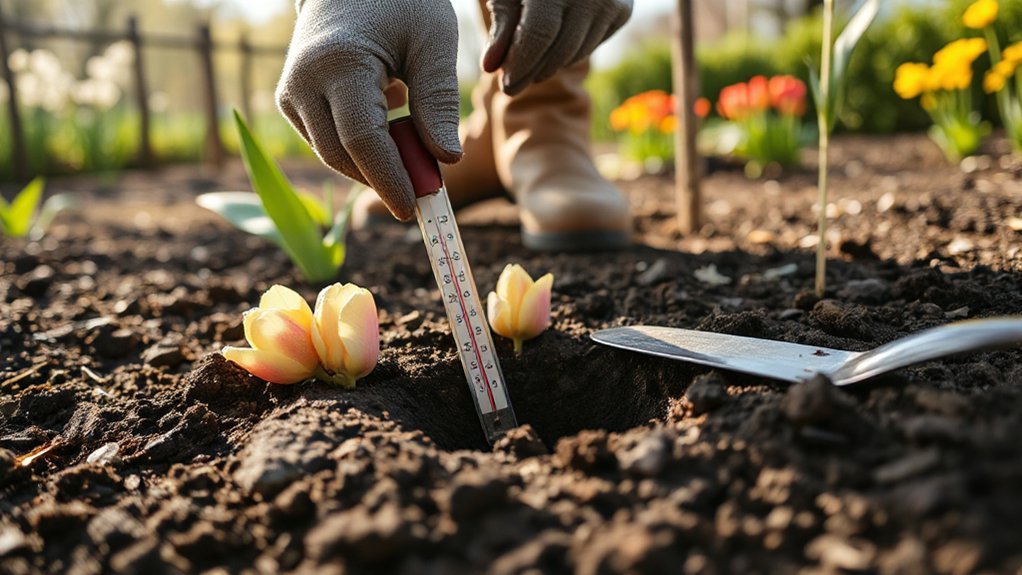
How do we determine when conditions are just right for our bulbs to thrive? We’ve got to test both soil temperature and drainage before we dig in.
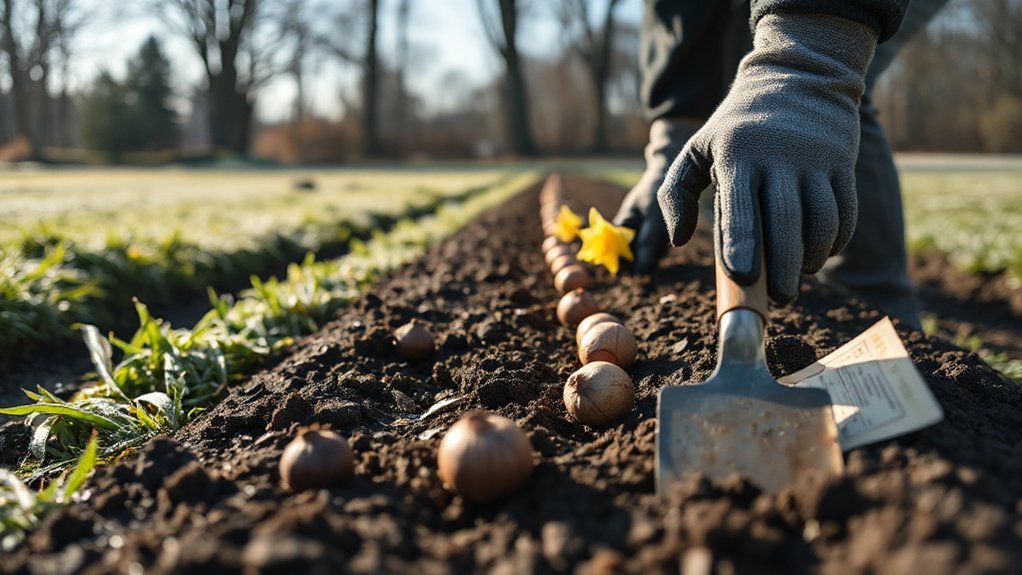
First, we’ll check soil temperature using a probe at planting depth (4–6 inches). We’re looking for that sweet spot of 55–60°F. Next, let’s test drainage with a simple percolation test—dig a hole 6–8 inches deep, fill it with water, and time the drainage.
| Test Method | What to Do | Good Result |
|---|---|---|
| Soil Temperature | Probe 4-6″ deep | 55-60°F |
| Percolation Test | Fill hole, time drainage | 1-2 hours |
| Visual Inspection | Dig 8-12″ test pit | Loamy texture, no gray mottling |
| Puddle Test | Walk beds after rain | No standing water |
These simple tests guarantee our bulbs won’t rot in soggy soil.
How to Time Different Spring Bulb Varieties for Best Results
When we’re mapping out our spring bulb planting strategy, we’ve got to think like Mother Nature herself—she knows exactly which flowers should wake up first and which ones can sleep in a bit longer.
We’ll start with our early birds—snowdrops and crocus—that brave late winter’s chill and announce spring’s arrival. These tough little warriors can handle whatever winter throws at them. Next up, we’ll plant daffodils and hyacinths for that gorgeous early-to-mid spring show when the world’s truly awakening.
Finally, we’ll tuck in our tulips for that grand finale in mid-to-late spring. By staggering these plantings and choosing varieties with different bloom times, we’re creating our own personal flower parade that’ll keep our gardens singing with color for months.
How to Store Spring Bulbs When You Miss Planting Season
Life happens, and sometimes those spring bulbs we bought with the best intentions end up sitting around while the planting window slips away. Don’t toss them in the trash just yet—we’ve got some tried-and-true ways to keep those bulbs happy until next season or coax them into blooming indoors. Whether you’re creating proper storage conditions, trying your hand at indoor forcing, or exploring late planting options, there’s still hope for those wayward bulbs.
Proper Storage Conditions
What happens when autumn slips away faster than we’d planned and those spring bulbs are still sitting in their bags, waiting for a home in the ground? Don’t panic—we’ve got options that’ll keep those bulbs happy until next season.
First, we’ll find them a cozy spot that stays between 50-65°F. Think basement corners or unheated garages where they won’t freeze or overheat. Next, we’ll ditch those plastic bags for something breathable—paper sacks or mesh bags work perfectly.
We’ll tuck them into slightly damp peat moss or sawdust, just enough moisture to keep things comfortable without getting soggy. Most importantly, we’ll keep them away from ripening apples or other fruit that’ll trick them into thinking it’s showtime.
Indoor Forcing Methods
Missing that autumn planting window doesn’t spell doom for our spring bulbs—it just means we’re pivoting to Plan B, and honestly, forcing bulbs indoors might be even more rewarding than waiting for outdoor surprises. We’ll grab our firmest, healthiest bulbs (toss anything soft or spotted) and nestle them into containers filled with quality potting mix. After watering to settle everything in, we’ll park these containers somewhere cool and dark while roots establish themselves. Once shoots start poking through, it’s showtime—we’ll move them into brighter, warmer spots where they’ll bloom beautifully. This method gives us front-row seats to nature’s spring awakening, right from our kitchen table.
Late Planting Alternatives
But let’s say we’ve got a bag of spring bulbs sitting around and the ground’s already frozen solid—what then? Don’t toss those bulbs! We can store them properly and reclaim our freedom from planting deadlines.
Here’s our survival plan:
- Find the sweet spot: Store bulbs somewhere cool (50–65°F), dry, and dark with good airflow
- Give them breathing room: Use paper bags or mesh sacks, never pile more than three layers deep
- Create their bed: Layer bulbs on slightly damp peat moss or vermiculite—just enough moisture to prevent shriveling
- Play inspector: Check every few weeks and toss any soft or moldy bulbs
We’ll plant them come spring thaw or force them indoors in pots right now.
How to Create a Spring Bulb Planting Schedule for Multiple Varieties
Since spring bulbs put on their show for just a fleeting few weeks, we’ll want to orchestrate our plantings like a well-rehearsed symphony—staggering different varieties so we’re not left with a garden that blooms gloriously for two weeks, then sits bare for months.
Let’s map our garden by bloom-time categories: early performers like snowdrops and crocus, mid-season stars including daffodils and alliums, then late bloomers like tulips and hyacinths. This staggered approach extends our color show across 6–8 weeks.
We’ll create a planting calendar that tracks dates, bed locations, bulb counts, and planting depths—generally 2–3 times the bulb’s height. Plant long-lasting daffodils and alliums first in early fall, then tackle tulips and hyacinths later when soil consistently cools to 55–60°F.
Frequently Asked Questions
What Is the Best Month to Plant Spring Bulbs?
October’s our golden ticket for planting spring bulbs in most places. We’re aiming for that sweet spot when soil temps drop to 60°F but haven’t frozen solid yet. Think of it as tucking those bulbs in for their winter nap about six weeks before hard frost hits. If we’re in warmer zones, we’ve got wiggle room into late November or December.
Should You Soak Spring Bulbs Before Planting?
We don’t typically soak spring bulbs—ironically, giving them a drink before planting can drown their chances! Plant those hardy tulips, daffodils, and crocuses bone dry to keep rot at bay. Now, if they’re shriveled from long storage, a quick 4-6 hour soak in room-temperature water won’t hurt. Just drain ’em well and get them in well-draining soil pronto—no mollycoddling with wet feet!
Which Spring Bulbs Flower the Longest?
Daffodils and alliums give us the most bang for our buck when it comes to long-lasting spring color. We’ve found daffodils reliably bloom for weeks, returning faithfully year after year without fuss. Alliums put on quite a show too, especially that first season. If you’re set on tulips, choose Darwin varieties—they’ll stick around longer than those fancy hybrids that peter out fast.
So
After all these years of gardening, we’ve learned that timing truly is everything with spring bulbs. Isn’t there something magical about knowing we’re tucking away tomorrow’s joy beneath today’s cooling earth? When we follow nature’s cues—testing that soil temperature, respecting our climate zones, and storing bulbs properly—we’re setting ourselves up for those breathtaking spring mornings when our gardens burst alive with color we planted months before.