So, when is flu season hitting us in 2026? Well, experts say it’ll likely kick off in early fall, around September or October, and peak between December and February. But here’s the thing — weather patterns, vaccine rates, and how the virus evolves can shake things up. We’re familiar with the routine, but this season, being prepared and aware can make all the difference. Curious how it all lines up for 2026? Let’s explore more.
Typical Timing of Flu Season Each Year

Most of us expect flu season to hit like clockwork each year, but the truth is, it’s a bit more unpredictable than you might think.
Typically, flu activity begins in the fall, usually starting around October or November, sometimes even late September. It peaks in the winter months—think December through February—and then gradually declines by late March or early April. That’s the usual pattern, but it can vary.
Some years, flu starts later or peaks earlier, making it tricky to predict exactly when to start taking extra precautions. The key is staying aware of local health reports and getting vaccinated before the start months, ideally in early fall. No two seasons are exactly the same, so while the timeline provides a helpful guideline, it’s always wise to stay flexible and watch for the signs that flu activity is ramping up.
Factors Influencing the 2026 Flu Peak
It’s known that changes in climate—from warmer winters to unexpected cold snaps—can shift when the flu hits its peak, almost like nature’s own unpredictable timing.
Plus, when people get vaccinated—whether early or late—those timing choices can seriously influence how quickly the flu spreads and when it reaches its highest point.
Climate Variability Impact
Climate variability plays a significant role in shaping when and how the flu peaks each year, and 2026 is no exception.
El Niño, a warm phase of the Pacific Ocean, often brings unpredictable weather patterns—like unusual rainfall or warmth—that can impact flu seasons.
When humidity shifts, the virus spreads more easily because it survives longer in drier air.
Higher humidity can slow the spread, while drier conditions help the virus linger.
These climate shifts influence timing and severity, making some years more intense or off-schedule.
In 2026, we’ll see how these factors align—will El Niño speed things up or cause delays?
Either way, understanding these patterns helps us prepare better, protect more people, and stay one step ahead of the flu’s tricky dance.
Vaccination Timing Effects
Timing matters when it comes to flu vaccination, especially in 2026, when the season’s peak can shift based on when people roll up their sleeves. Getting vaccinated too early might mean waning immunity, while waiting too long risks missing the rush.
Scheduling logistics play a big role—we need to plan vaccine clinics carefully, ensuring people get shot at just the right moment. The supply chain also matters; if vaccines aren’t available when demand surges, it can delay protection.
Coordinating distribution so vaccines arrive on time while keeping up with clinics is essential. Think of it as a dance—each step influences when the peak hits.
We want maximum coverage, peak immunity, and no wasted shots. Timing isn’t just a detail; it’s the difference between effective protection and wasted effort.
How Public Health Agencies Track Flu Trends
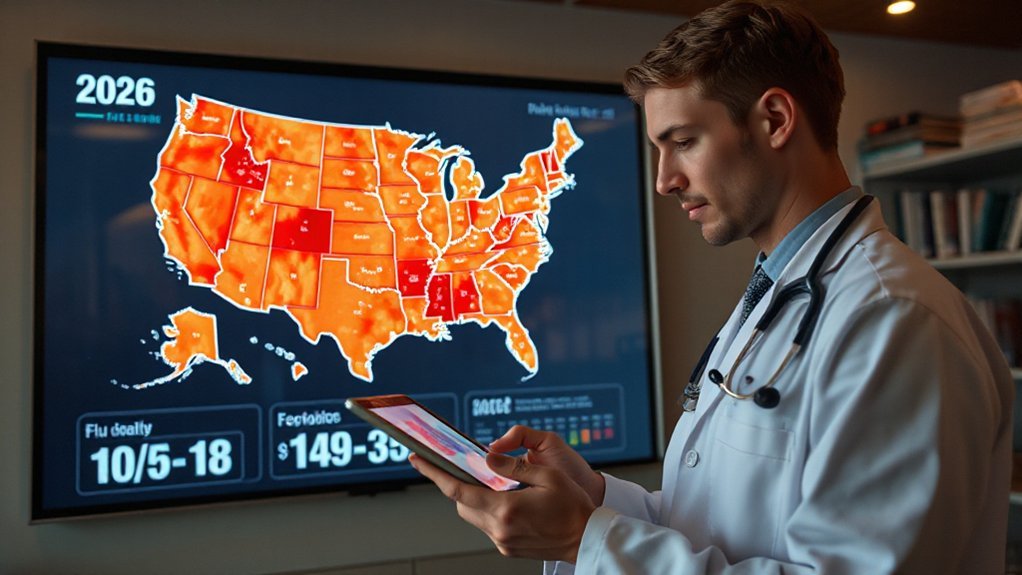
Tracking flu trends might sound like just collecting numbers, but it’s so much more strategic than that.
Public health agencies use tools like syndromic surveillance—monitoring health data from hospitals and clinics—to spot early signs of an upcoming flu wave. Think of it as a health gossip column, catching whispers of flu symptoms before they explode everywhere.
Then, there’s wastewater monitoring—yes, analyzing sewage! This method can reveal the presence of flu viruses in communities, even before people start feeling sick. It’s like a hidden radar for infections.
Agencies combine these approaches with traditional data, like lab reports and doctor reports, to piece together the bigger picture. The goal? Catch the trend early, allocate resources quickly, and notify the public in time.
This coordinated effort is what helps us get ahead of the flu season, rather than scramble once it’s in full swing. In short, tracking flu isn’t just science—it’s strategy.
Comparing Past Flu Seasons for 2026 Insights
Looking back at past flu seasons, we can spot patterns that shine a light on what’s coming next. For example, strain evolution shows how the virus changes each year—sometimes slowly, other times in leaps and bounds. These changes impact who gets sick; age distribution shifts based on which strains circulate.
For kids, new strains might cause more severe flu, while older adults often have some immunity. When we analyze data from recent years, we notice peaks tend to happen around specific months—usually late fall or early winter.
But the key is understanding how the flu virus evolves over time and shifts between age groups. That helps us prepare better—whether it’s timing vaccines or planning healthcare resources.
No two seasons are identical, but patterns from the past give us a valuable forecast. So, looking at strain evolution and age distribution isn’t just academic—it’s our roadmap for the unpredictable world of flu in 2026.
The Role of Vaccination in Timing and Severity
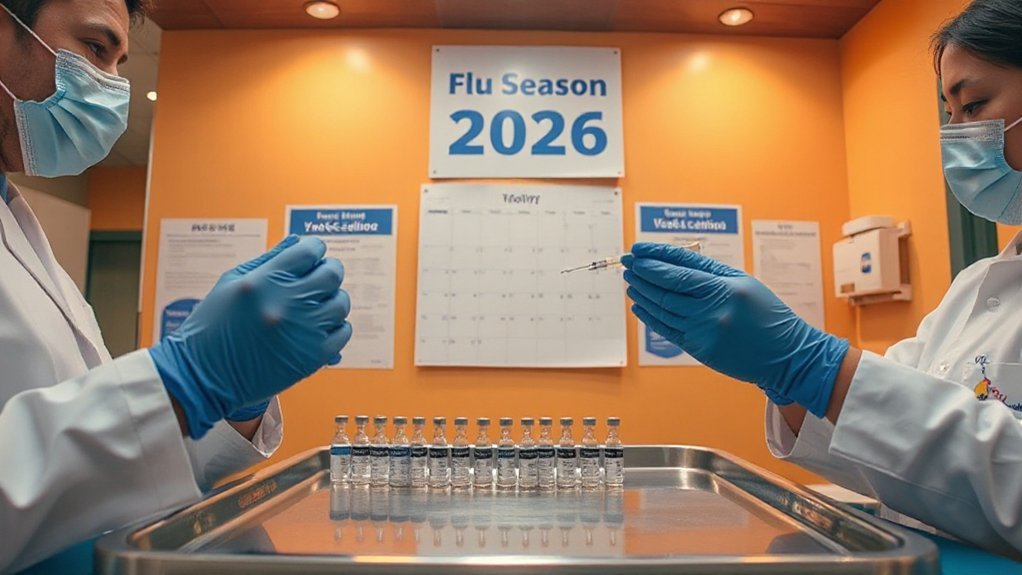
Vaccination is our best tool for handling how and when the flu hits.
It’s not just about preventing illness, but also about influencing how severe it can be.
When we get vaccinated, our immune system begins to recognize specific flu strains, creating a sort of “immune imprinting”—a mental map for future encounters.
This helps our bodies respond faster and more effectively.
But here’s the tricky part: strain interference can occur when multiple flu strains circulate, and our immune system gets “confused,” possibly reducing vaccine effectiveness.
Timing the vaccination properly is critical because immunity can wane over months.
Ideally, we should get vaccinated before flu peaks, but too early and immunity may weaken.
So, yes, vaccines matter—they can reduce severity, even if they don’t block every strain.
It’s an ongoing balancing act, but staying up-to-date with your shot is a practical, proven step.
Preventive Measures to Stay Protected
Getting vaccinated at the right time can make a big difference in how well we’re protected, and it’s never too early to plan ahead—trust us, missing a shot can leave us vulnerable when we least expect it.
But vaccines are just the start; good hygiene habits like handwashing, covering coughs, and avoiding touching our faces can cut down the risk even more.
Plus, simple lifestyle choices like staying hydrated, getting enough sleep, and staying active help our immune systems stay strong, so let’s make these small practices a daily routine—after all, prevention is better than cure.
Vaccination Timing and Benefits
To stay ahead of the flu this season, timing your vaccination perfectly can make all the difference.
Experts say getting vaccinated at the right time guarantees maximum protection—usually before the flu starts spreading widely.
Don’t fall for vaccine misconceptions, like thinking it’s unnecessary if you’re healthy or that the shot gives you the flu—that’s not true.
Knowing your insurance coverage helps, too, so you’re not caught off guard.
Many plans cover flu shots fully, so there’s no excuse to skip it.
Schedule your shot early enough, ideally by October, but do it before flu peaks hit your area.
Remember, flu vaccination is your best defense, a small step that brings big peace of mind.
Stay proactive, stay protected!
Hygiene and Lifestyle Habits
Practicing good hygiene and making smart lifestyle choices play a huge role in keeping the flu at bay. Simple steps like washing hands regularly, covering coughs, and sanitizing surfaces help stop germs before they spread.
But don’t forget about gut health — a strong immune system starts there, so eat plenty of fiber, yogurt, and probiotics.
Managing stress is equally vital; high stress weakens your defenses, making you an easy target for the flu. Try deep breathing, exercise, or even a quick walk to keep stress levels low.
Sleep well, stay hydrated, and limit contact with sick people. Little habits, like proper hygiene and balanced lifestyle choices, build a fortress around you. Staying protected isn’t just about vaccines — it’s about how we live every day.
Predictions and Preparations for Flu Season 2026
As we gear up for Flu Season 2026, it’s clear that predictions and preparations are more important than ever.
Experts say this year could be more unpredictable, so planning ahead is essential.
First, check your insurance coverage—for vaccines, meds, and doctor visits.
Knowing what’s covered can save you stress and money if you fall ill.
And don’t forget mental health; flu season often takes a toll emotionally.
Make sure you have support systems in place, whether talking with loved ones or seeking professional help if needed.
Stock up on supplies—flu shots, hand sanitizer, tissues—and keep good hygiene habits fresh.
Remember, prevention isn’t just about avoiding the virus; it’s about overall well-being.
Be proactive—schedule your vaccine early, stay informed about local outbreaks, and prioritize your mental and physical health.
Prepare now so flu season doesn’t catch you off guard—staying healthy is a year-round job!
Conclusion
So, here’s the deal: flu season in 2026 is probably happening between September and November, peaking around December to February. We can’t predict exact dates — weather, virus changes, and vaccination rates affect everything. But we can stay ahead by getting our flu shot early, practicing good hygiene, and managing stress. No need to panic, just stay informed, be prepared, and do what we’ve found works. Let’s dodge the worst and keep healthy!